
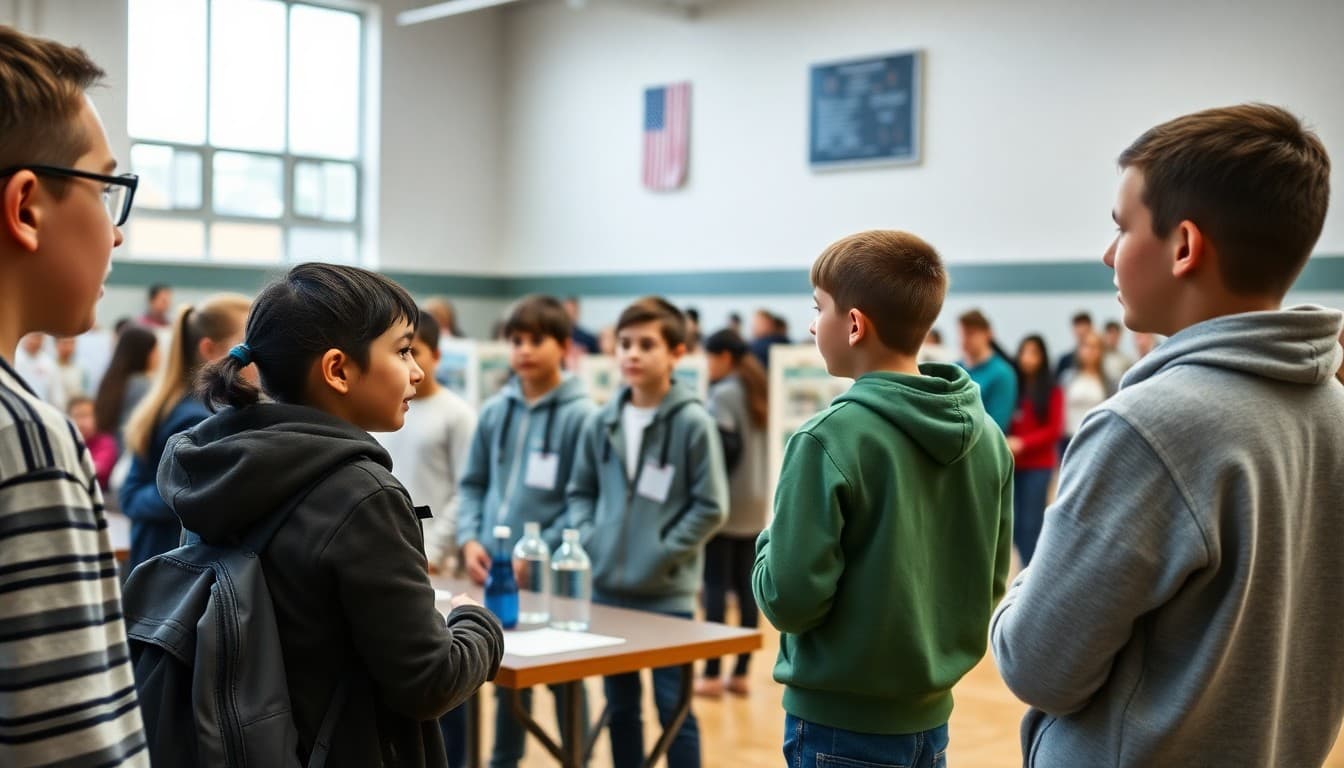
March Science Class Newsletter: What We Are Learning

March is often the biggest science month of the year. Science fair projects culminate, the classroom unit is deepening, and the energy in science class is usually at its highest. Parents who were informed all year through your newsletters are the most prepared for this month. A clear March newsletter covers science fair, regular instruction, and any upcoming assessments without overwhelming families.
Acknowledge the Dual March Agenda
Start by naming both priorities honestly: science fair and regular unit instruction. Tell parents that you are doing both and briefly describe the timeline. This prevents confusion about why students come home talking about two very different things on alternating days.
Science Fair Update
Give families the current status. Where should student projects be by now? What is the due date for the final board? When is the science fair? Can relatives attend? What do judges focus on when evaluating projects? A brief but specific science fair update is the most useful thing you can include in a March newsletter for most families.
Tell Parents What Judges Look For
Most families do not know what judges evaluate at a school science fair. Tell them: is it the visual presentation, the scientific method, the student's ability to explain their own work, or a combination? If students will be asked questions, tell families that the student who can answer "what did you learn?" and "what would you do differently?" is far better prepared than one who memorized a script.
A Template Excerpt for March
Here is a section to adapt:
"March is science fair month. Project boards are due March 18, and our school science fair is March 20 from 5:00 to 7:00 pm. Families are welcome to attend. Students will present their projects to two judges, who will ask questions about the investigation. The most important thing students can do to prepare is be able to explain: what question did you test, what did you do, what happened, and what did it mean? A clear verbal explanation matters more than a polished display board. In our regular science class, we are finishing our chemistry unit with a reaction rate investigation."
Describe the March Classroom Science Unit
Tell parents what you are teaching in class alongside science fair preparations. Name the unit, the central investigation, and the expected learning outcome. Parents appreciate knowing that regular instruction is continuing and that the curriculum is not on pause for the whole month.
Connect to a Spring Science Phenomenon
March brings noticeable changes to the natural world. Use your newsletter to connect classroom science to something families can observe outside. Budding trees, longer days, migrating birds, or spring weather patterns all connect to life, earth, or physical science depending on your unit. One specific observation question is enough.
Note Any Upcoming End-of-Unit Assessment
If there is a unit test or lab practical at the end of the current chemistry or physical science unit, give parents the date and how to prepare. For science assessments, reviewing lab notes, explaining concepts to a family member, and drawing labeled diagrams are the most effective study strategies.
Close With Appreciation and Contact Information
March is a big month and parents deserve acknowledgment for supporting science fair at home. Thank them for helping their child select a topic, gather materials, and practice their presentation. Close with your contact information and a direct offer to help families who have last-minute questions before the science fair date.
Get one newsletter idea every week.
Free. For teachers. No spam.
Frequently asked questions
How do I cover science fair in my March newsletter?
Give families the event date, the setup time, whether relatives can attend, and what students should expect on the day. If projects are still due, give a final deadline reminder. Tell parents what judges look for so families who want to help their child prepare for the presentation know what matters most.
How do I balance science fair updates with regular unit instruction in my newsletter?
Name both explicitly. Tell parents that March includes two parallel things: the science fair culmination and regular unit instruction. Acknowledge that both are happening and briefly describe each. Parents appreciate honesty about a busy month rather than a newsletter that pretends only one thing is happening.
What science content is typically taught in March alongside science fair?
March classroom science often continues the second semester unit. Depending on your scope and sequence, students might be in the middle of a chemistry, physics, or earth science unit while preparing science fair projects. Tell parents both what you are teaching and where science fair preparations stand.
How do I address parents who did all the science fair work for their child?
This is worth naming generally in the newsletter. Tell families that judges at science fair ask students questions directly, and that a student who cannot explain their own project will not score well regardless of how polished the board looks. Frame it as practical advice, not an accusation.
What newsletter tool works best for a busy March?
When you are managing science fair, regular instruction, and parent communication simultaneously, Daystage saves time because it handles all the formatting and delivery. You write the content once, send it to your class list, and it is done. Many science teachers find that keeping the newsletter habit going in March pays off in parent engagement through the rest of the spring.

Adi Ackerman
Author
Adi Ackerman is a former classroom teacher and curriculum writer with 8 years in K-8 schools. She writes about school communication, parent engagement, and what actually works in real classrooms.
More for Subject Teachers
Ready to send your first newsletter?
3 newsletters free. No credit card. First one ready in under 5 minutes.
Get started free