

How to Write a Social Studies Newsletter to Parents
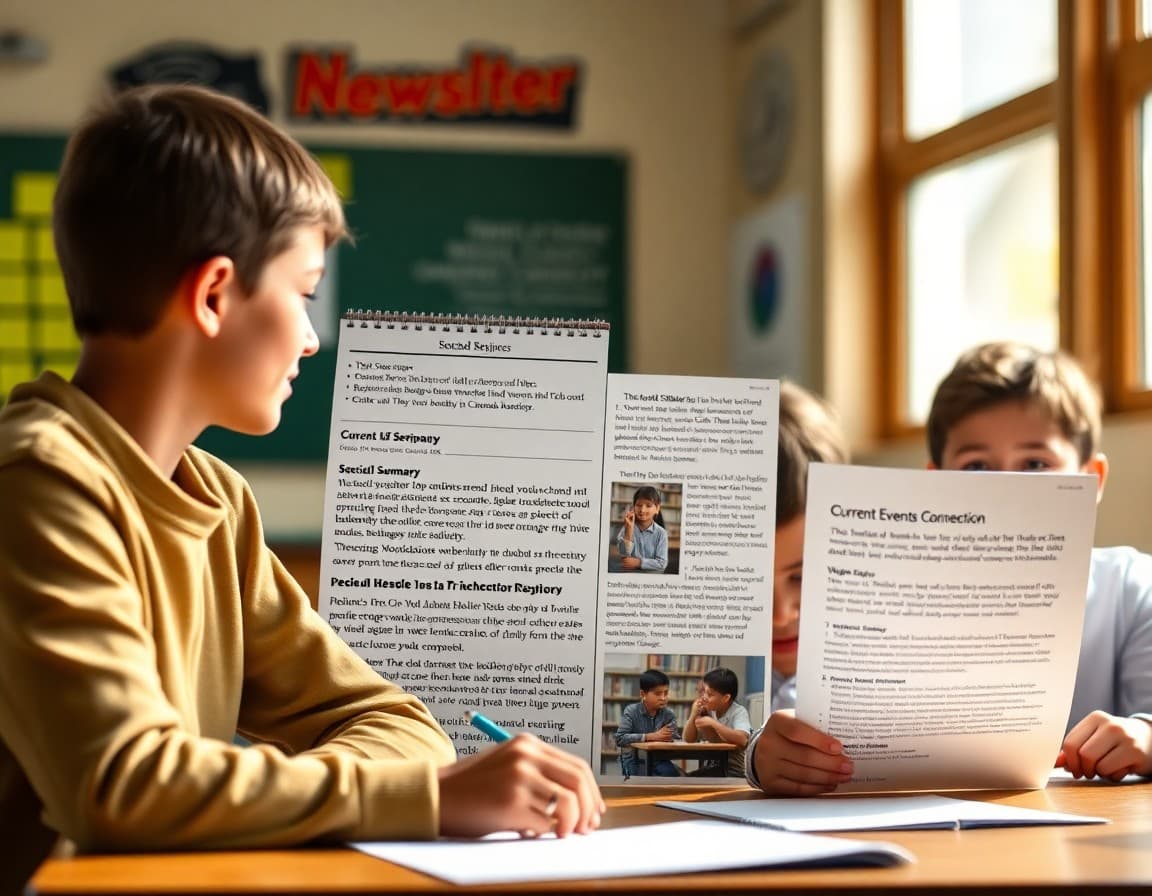
Social studies newsletters are uniquely positioned to connect classroom content to the world families live in. History, civics, geography, and economics all have direct applications to the news families consume and the decisions they make as citizens. Here is how to write a newsletter that makes those connections clear and keeps families engaged.
Open With a Hook From the Real World
Start with a question or a current event that connects to what students are studying. If the class is covering the Civil War, open with: How do societies rebuild after internal conflict? We are seeing versions of that question play out in the news right now, and students are examining historical cases that offer some answers. This kind of opening signals that the class is studying relevant ideas, not just distant history.
Summarize the Current Unit
Follow the hook with a clear, plain-language description of the current unit. Name the period, region, or concept students are studying. Describe the key questions the unit is designed to answer. What happened and why? How did this shape the world we live in? What should citizens understand about this topic? Framing the unit around questions makes it feel like an intellectual pursuit rather than a content dump.
Connect to Current Events
Include one specific current event that connects to the unit. Be concrete: name the event, describe the connection to classroom content, and explain how students are analyzing the parallel or contrast. Avoid making this section partisan. The goal is to help families see that history and civics are not just about the past, without steering families toward a particular political view.
If the connection is to a news story that has run recently, link to it if it is publicly available.
Primary Source Spotlight
Share one primary source the class worked with this week. Include a short excerpt and a sentence about what question students were analyzing it to answer. Primary source analysis is one of the most distinctive activities in social studies, and sharing a glimpse of the actual document or artifact students engaged with makes the work visible to families.
You do not need to explain the full context of the document. A brief note on what it is, who wrote it, and what the class was looking for is enough.
Handle Sensitive History Directly
If the current unit covers difficult historical content, acknowledge it briefly. Explain why studying it matters. Note how the class approaches it: with attention to primary sources, with attention to the experiences of people most affected, with analytical rigor rather than judgment. Parents who understand the purpose of studying difficult history are more supportive than parents who are surprised by what their child brings home.
Civic Connection and Family Activity
For civics units, suggest one way families can engage with the civic processes being studied. Watch a local government meeting. Look up who represents your family in the state legislature. Read the text of the amendment students are discussing. These suggestions connect classroom learning to real civic life without requiring families to have strong prior knowledge.
Discussion Starters
End with two or three open-ended questions families can use to extend the conversation at home. Good social studies discussion starters are questions without obvious right answers: What would you have done in that situation? Do you think the decision made was the right one? How is what we are studying connected to something happening today? Questions like these turn the newsletter into a conversation tool rather than a one-way information delivery.
Contact and Upcoming Assessments
Close with your email, upcoming test and project dates, and any field trips or guest speakers related to the unit. A brief note about the next newsletter date keeps families oriented in the communication schedule. Keep the close to three to four sentences.
Get one newsletter idea every week.
Free. For teachers. No spam.
Frequently asked questions
How do social studies teachers avoid political controversy in newsletters?
Describe what students are studying without taking sides on current partisan issues. If students are analyzing a piece of legislation, describe what it does and what arguments have been made for and against it without indicating which side is correct. If the class is studying an election as a civic process, focus on how the process works, not which outcome to prefer. Teaching students to analyze political questions critically is not the same as telling them what to think.
What is the best structure for a social studies newsletter?
A four-section structure works well for most social studies newsletters: current unit summary, current events connection, primary source or document spotlight, and family discussion starters. This structure works across history, civics, geography, and economics. The sections are short enough to be scanned quickly and long enough to be genuinely informative.
How do social studies newsletters handle sensitive historical content?
Be direct and give parents context. If the class is studying a difficult period in history, genocide, slavery, colonialism, war crimes, acknowledge that the content is challenging and explain why studying it matters. Note how the class approaches the material: through primary sources, through survivor accounts, through analysis of causes and consequences. Parents who understand the pedagogical purpose of studying difficult history are more supportive than parents who feel blindsided.
How can social studies newsletters help families support civic engagement?
Include one civic action families can take together: registering to vote if parents are not registered, watching a local city council meeting, attending a community board meeting. Connect it to what students are learning about civic participation in class. Families that practice civic engagement together reinforce the classroom learning in the most direct way possible.
What tool works best for subject teacher newsletters?
Daystage is a good fit for social studies newsletters because you can embed maps, historical images, and links to primary sources alongside your written content. A structured template with your standard sections makes monthly updates efficient without requiring a full redesign each time.

Adi Ackerman
Author
Adi Ackerman is a former classroom teacher and curriculum writer with 8 years in K-8 schools. She writes about school communication, parent engagement, and what actually works in real classrooms.
More for Subject Teachers
Ready to send your first newsletter?
3 newsletters free. No credit card. First one ready in under 5 minutes.
Get started free