

How to Write a Psychology Teacher Newsletter to Parents
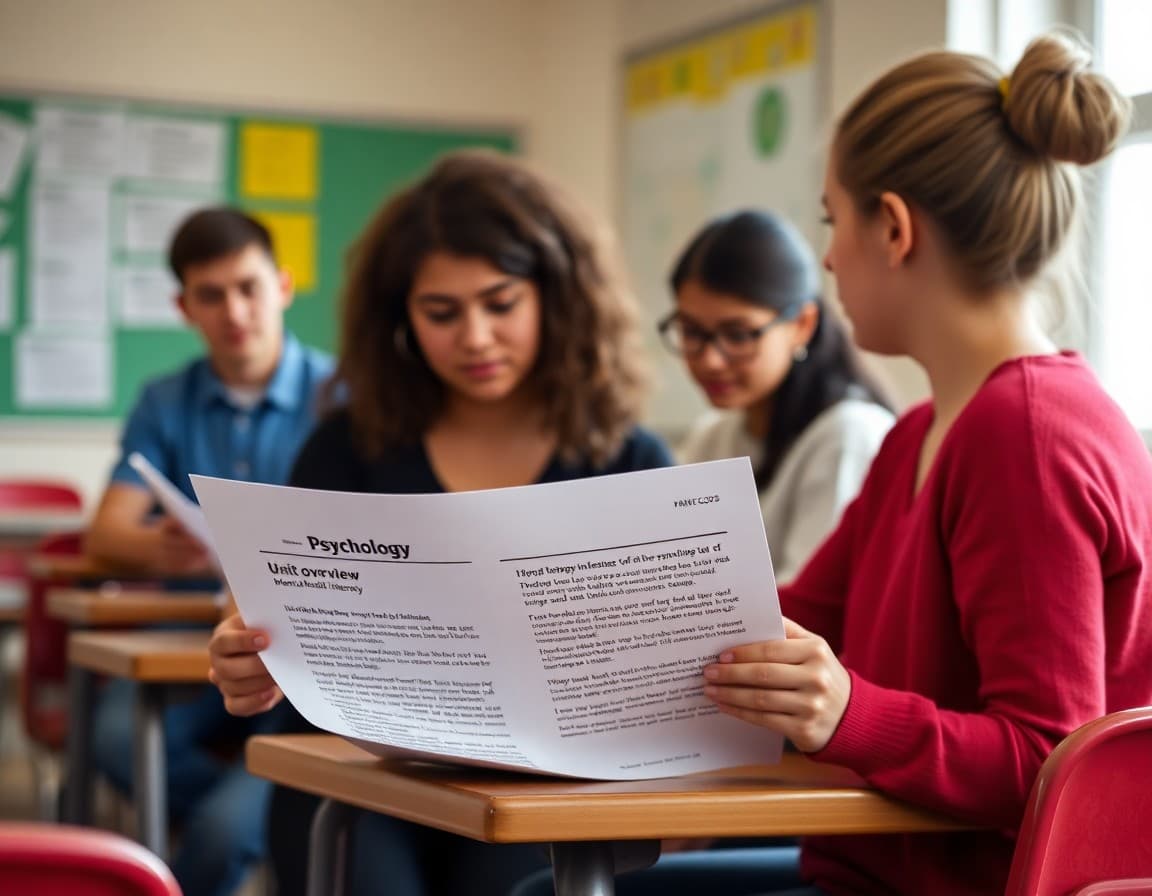
Psychology Is Both Accessible and Occasionally Controversial
Psychology is one of the most immediately relevant subjects in any high school curriculum. Students recognize the concepts in their own lives within days of starting the course. That relevance makes your newsletter relatively easy to write: psychology connects to things parents already think about and care about. But a few units, particularly abnormal psychology and classic experiments with ethical concerns, require proactive communication to prevent misunderstanding.
Lead With Real-Life Applications
Every psychology newsletter should open with the current unit and its most direct real-life application. "We are studying classical and operant conditioning this month. These are the mechanisms behind how habits form, how behavior modification works, and why advertising is effective. Students are learning to recognize these patterns in their own daily routines." Parents who see their student's class content in terms of everyday relevance engage with the newsletter differently than parents who read a unit name without context.
Research Methods Newsletters Build Lifelong Thinking Skills
When you are in a research methods unit, frame the newsletter around critical thinking. Explain the difference between a correlation and a cause-and-effect relationship. Explain what a control group is and why it matters. Tell parents that students who understand how psychological research works are better equipped to evaluate claims they encounter in news media and social media for the rest of their lives. This framing makes the research methods unit feel important to parents who might otherwise view it as dry.
Address Sensitive Content Units Proactively
Before any unit on abnormal psychology, psychological disorders, or controversial historical experiments, send a newsletter that describes what students will study and how. Explain that the abnormal psychology unit covers the diagnostic categories in the DSM, how evidence-based treatment works, and why mental health literacy matters for every adult. Be direct and clinical. The parents who are most reassured by this kind of communication are the ones who would otherwise be most likely to contact administration with concerns.
Connect Psychology to Practical Life Skills
Psychology students learn skills that translate directly to better relationships, communication, and decision-making. Name these skills in the newsletter. Understanding cognitive biases helps students recognize when their own thinking is being influenced. Learning about memory improves study strategies. Understanding social psychology helps students navigate peer pressure and make more autonomous decisions. These connections make parents feel the course is worth the seat time it takes from other subjects.
Close With One Connection to Home
End every newsletter with one way parents can engage with psychology at home. Ask their student to identify one cognitive bias they noticed this week. Discuss how operant conditioning applies to a pet's behavior or a family routine. Ask what they found most surprising or counterintuitive in the current unit. These invitations are easy to extend and they give parents a way into conversations they might not start on their own.
Get one newsletter idea every week.
Free. For teachers. No spam.
Frequently asked questions
How do I explain psychology units to parents who have never studied the subject?
Use real-life applications. The biological bases of behavior unit connects to why sleep, exercise, and nutrition affect mood and cognition. The social psychology unit explains why people conform to group norms and how persuasion works. Most psychological concepts have immediately recognizable real-world applications.
How should psychology newsletters handle units on mental illness and abnormal psychology?
Be direct and clinical. Explain that students are studying the diagnostic categories and evidence-based treatments for common psychological disorders, using the DSM framework. Emphasize that the goal is mental health literacy, not diagnosis. Students who understand anxiety, depression, and OCD are better equipped to seek help if they or someone they know struggles.
What should psychology newsletters cover when teaching research methods?
Explain what the scientific method looks like in psychology, the difference between correlation and causation, and why replication matters. Parents who understand how psychological research works are better equipped to evaluate the psychology-adjacent claims they encounter in news and social media.
How do I communicate about Milgram and Stanford Prison Experiment in my newsletter?
Address them proactively. Explain the studies, their findings, the ethical concerns that led to the APA ethical guidelines, and how your class discusses them. Parents who hear about controversial studies in context from you are less alarmed than parents who hear their student's version of them without context.
What tool helps psychology teachers send newsletters to all class families?
Daystage makes it easy to build and send structured newsletters. For psychology classes, consistent newsletters build the parent trust you need when teaching content that occasionally prompts questions or concerns.

Adi Ackerman
Author
Adi Ackerman is a former classroom teacher and curriculum writer with 8 years in K-8 schools. She writes about school communication, parent engagement, and what actually works in real classrooms.
More for Subject Teachers
Psychology Teacher Newsletter Ideas for Every Unit of the Course
Subject Teachers · 6 min read
Psychology Teacher Newsletter: Teacher Newsletter Examples That Actually Work
Subject Teachers · 7 min read
Health Teacher Newsletter: Teacher Newsletter Examples That Actually Work
Subject Teachers · 7 min read
Ready to send your first newsletter?
3 newsletters free. No credit card. First one ready in under 5 minutes.
Get started free