

How to Write a Math Newsletter to Parents: A Step-by-Step Guide
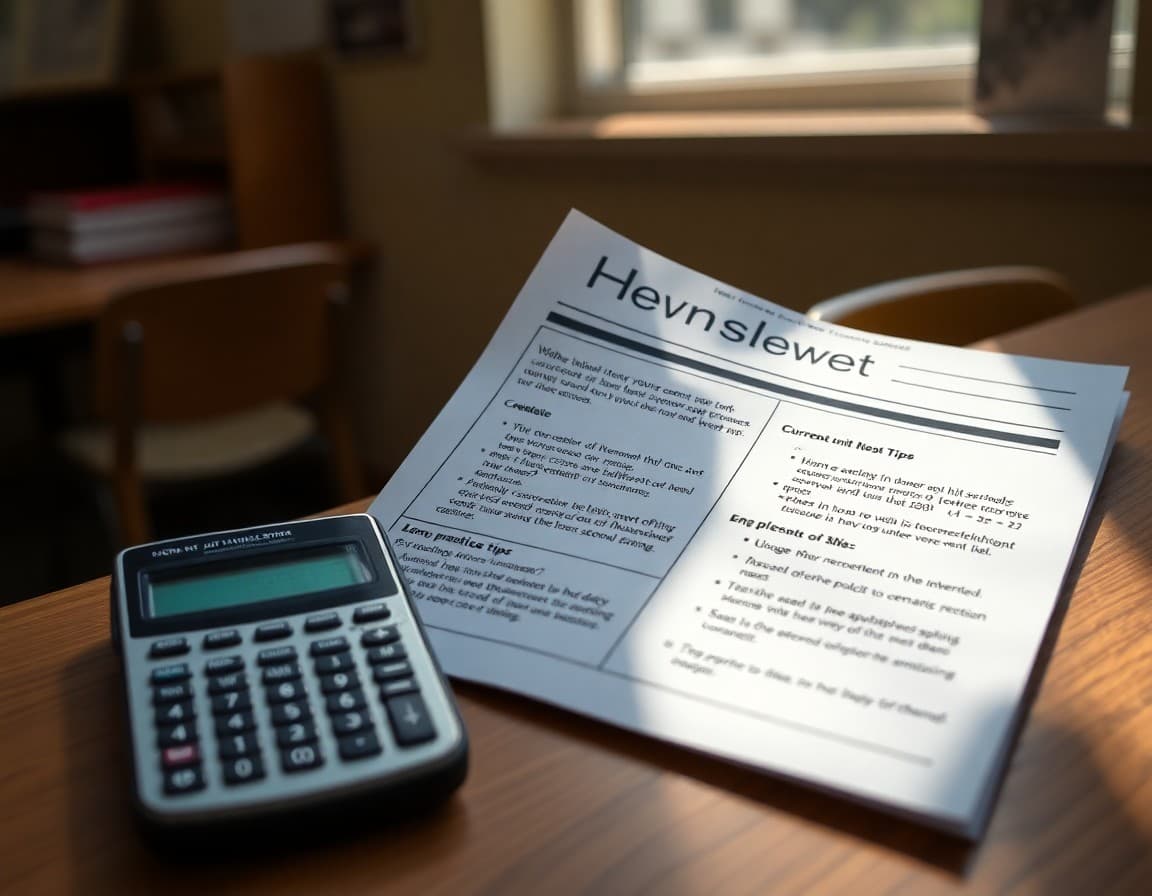
Math newsletters have one persistent challenge: the content of the class is increasingly unfamiliar to parents as students move into higher-level courses. A parent who struggles to remember what a quadratic equation is cannot help their student with homework on that topic. Your newsletter's job is not to re-teach parents math. It is to give them enough context to support their student without needing to understand every concept themselves.
Name the Current Unit in Plain Language
Start with the unit name and a plain-English description of what students are learning. Avoid jargon. Instead of "students are working on polynomial factorization," write: this week students are learning how to break apart a mathematical expression into simpler parts, a skill that makes solving equations more manageable. That description is accurate and accessible to a parent who has not studied algebra recently.
Include a real-world application if you can. Even a brief note that these skills apply to financial calculations, engineering problems, or data analysis makes the unit feel relevant.
One Worked Example
Include one sample problem with a brief step-by-step walkthrough. Keep it simple: choose a problem that represents the core concept, not the most complex version. Write the steps in plain language, not just notation. This section gives parents enough familiarity with the content to recognize it when their student brings home homework, even if they cannot solve the problem independently.
Explain Instructional Methods Honestly
If your class uses an approach that differs from what parents learned, address it briefly. Acknowledge that math instruction has changed in some ways since parents were in school, and explain the reasoning behind the current approach. Parents who understand why something is taught a certain way are less likely to confuse their student by insisting on a different method at home.
Keep this section factual and non-defensive. You are giving context, not justifying yourself.
How to Help at Home Without Teaching the Math
This is the section parents most want and most struggle to find elsewhere. Give specific suggestions that do not require parents to know the content. Ask your student to explain the concept to you in their own words: if they can teach it, they understand it. Work through a practice problem together with your student solving and you asking questions. Be a study session partner by sitting nearby while your student works, available for questions without jumping in. Check that homework is complete rather than checking that each problem is solved correctly.
Address Math Anxiety Directly
Math anxiety is real and often comes partly from home. A brief section on language to use (or avoid) at home can be valuable. Phrases like "I was never good at math" or "math isn't your thing" normalize struggle as permanent rather than temporary. Suggest instead: "This part is hard right now, but that means you're learning something new." Framing growth as possible makes a measurable difference in student persistence.
Upcoming Assessments and What They Cover
List upcoming quizzes and tests with dates and a description of the content they assess. If a test covers two specific skills, name them. If students are allowed to use a formula sheet or calculator, note that. Concrete information helps students study more efficiently and prevents the anxiety of not knowing what to prepare for.
Calculator and Technology Policy
If your class has specific policies about calculator use or mathematical software, include that information in the newsletter. Parents who help with homework should know when calculators are appropriate and when students are expected to work by hand. This prevents the common situation where a parent encourages calculator use for a skill the class is specifically building through pencil-and-paper practice.
Contact and Resources
Close with your email, tutoring availability if applicable, and any recommended online resources for additional practice. If your school provides access to Khan Academy or a similar platform, remind families how to access it. A clean close with two or three specific resources is more useful than a general encouragement to practice.
Get one newsletter idea every week.
Free. For teachers. No spam.
Frequently asked questions
How do math teachers explain new instructional methods to parents who learned math differently?
Acknowledge directly that methods may look different from what parents remember. Then explain the reasoning behind the current approach without being defensive. If students are using area models for multiplication instead of the standard algorithm, explain that area models build conceptual understanding of what multiplication actually means before students automate the process. Framing the explanation in terms of what students will be able to do, not just what they are doing differently, helps parents accept new approaches.
What math newsletter topics generate the most parent response?
Home practice tips and math anxiety strategies are consistently the most responded-to content in math newsletters. Parents worry about helping with math homework, especially in middle and high school when the content is beyond what they remember easily. Specific, low-pressure suggestions for how to support their student without needing to re-learn the content themselves are genuinely appreciated.
Should math newsletters include example problems?
A single worked example with a brief explanation of the steps is useful. One problem is enough. The goal is not to teach parents the math, it is to give them enough context to recognize what their student is working on and ask useful questions. More than one or two examples can make a newsletter feel like a quiz, which is not the tone you want.
How do math teachers address parents who push back on the curriculum or grading approach?
Acknowledge the concern without immediately capitulating or escalating. A newsletter can preemptively address common concerns by explaining the reasoning behind assessments, grading policies, and instructional choices. If you know retakes are a common question, explain your retake policy and why it exists. Proactive explanation in the newsletter reduces the number of reactive conversations you need to have individually.
What tool works best for subject teacher newsletters?
Daystage works well for math newsletters because you can include simple equation formatting, worked examples, and resource links alongside your written content. The platform handles the formatting so you can focus on the mathematical content rather than layout decisions.

Adi Ackerman
Author
Adi Ackerman is a former classroom teacher and curriculum writer with 8 years in K-8 schools. She writes about school communication, parent engagement, and what actually works in real classrooms.
More for Subject Teachers
Ready to send your first newsletter?
3 newsletters free. No credit card. First one ready in under 5 minutes.
Get started free