

How to Write an ELA Newsletter to Parents
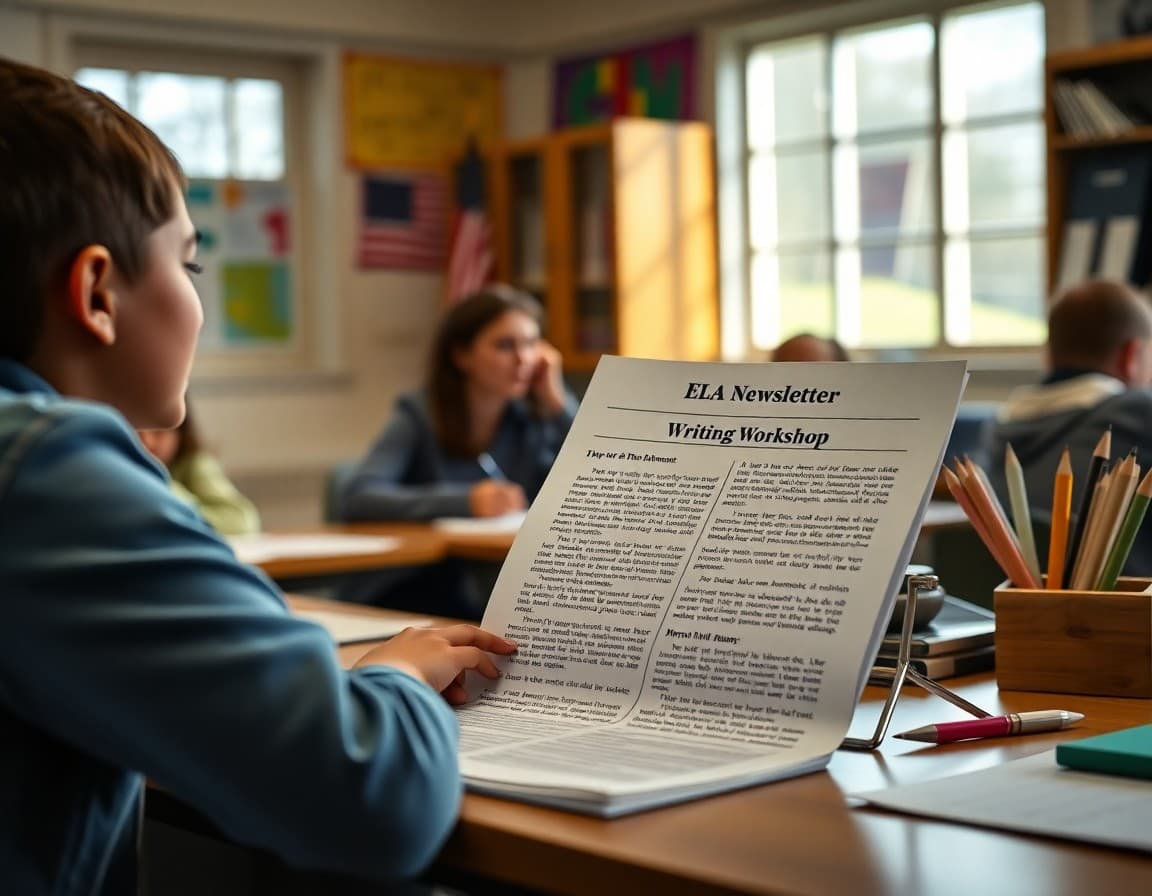
English language arts newsletters serve families who are already familiar with reading and writing as activities but may not know what "close reading," "argument essay structure," or "author's craft" look like in a classroom context. Your newsletter bridges that gap. Here is how to write one that does that well.
Name the Text and Why It Matters
Start with what students are reading. Title, author, and a two to three sentence description of why this text is in the curriculum. If it is a novel with mature themes, say what those themes are and how the class is approaching them. Parents who know why a text was chosen trust the curriculum more than parents who wonder why their child is reading something difficult or unfamiliar.
Give parents one question to ask their student about the text: What character surprised you most and why? What is the central conflict, and do you think it will be resolved? Good questions at home extend the thinking from class.
Describe the Writing Assignment in Plain Language
Name the current writing assignment, its genre, and what stage students are in. If students are drafting a literary analysis essay, say what argument they are being asked to make and what the essay needs to include. If they are revising a personal narrative, describe what good revision looks like in this context.
A one-sentence description of how parents can help is also useful: if your student brings home a draft, ask them to read one paragraph aloud to you and explain what they were trying to say. That is better help than line-editing the grammar.
Grammar or Mechanics Focus
Pick one grammar or mechanics skill the class is working on and explain it briefly with an example. Avoid jargon. Instead of "students are working on subordinating conjunctions," write: this week students practiced using words like "because," "although," and "since" to create more complex sentences. Include one before-and-after example. Parents can then notice when their student uses the skill correctly and reinforce it.
Vocabulary and Word Study
Include three to five vocabulary words from the current unit. Format each with the word, a brief definition, and a sentence using it in context. If the words come from the novel or text, even better. Seeing the words in the context of something students are reading makes them stickier than isolated vocabulary lists. Challenge families to use one word each day before the next newsletter arrives.
Reading at Home Strategies
Many parents want to support their child's reading but do not know how beyond "read more." Include two or three specific strategies. Read aloud together, even in high school, builds comprehension and vocabulary. Ask your student to summarize the chapter they just finished. If they are stuck on a word, encourage them to figure out the meaning from context before looking it up. Simple, specific strategies are more useful than general encouragement.
Upcoming Assessments
List upcoming tests, essays, and projects with dates and a brief description. For an essay, mention the prompt if it has been assigned. For a reading quiz, note the chapters it will cover. For a presentation, describe the format. Clear advance notice allows families to support their student in ways that actually align with what is being assessed.
Book Recommendations for Independent Reading
Include two or three books students might enjoy independently, chosen to complement what the class is reading or studying. Match the recommendations to the age and interest level of your students. A one-sentence description for each title helps parents and students choose quickly without needing to research the recommendation further.
Contact and Next Steps
Close with your email, preferred contact method, and any important upcoming dates or events. If a parent-teacher conference window is coming, note it. If the class has a public writing showcase or performance, include the date. Keep the close brief and action-oriented.
Get one newsletter idea every week.
Free. For teachers. No spam.
Frequently asked questions
What is the most important section to include in an ELA newsletter?
The current text or reading assignment is the foundation of every ELA newsletter. Parents who know what their child is reading can ask better questions, help with homework more effectively, and have more meaningful conversations about what the class is studying. Start with the text title, author, and a brief note about what themes or skills it addresses. Everything else, the writing focus, vocabulary, grammar, builds from there.
How long should an ELA newsletter be?
One to two pages is the right length. ELA covers a lot of ground, and the temptation is to include everything. Resist it. Pick the most important update for reading, one for writing, and one practical suggestion for families. Six to eight focused sections with short paragraphs are more useful than a comprehensive summary that parents will not read in full. Scan-ability matters as much as content.
How do ELA teachers explain grammar instruction without sounding dry?
Frame grammar as a tool for clarity rather than a set of rules to memorize. Write something like: this week we worked on comma splices, which are one of the most common errors in student writing that make sentences harder to read. Correction: split the sentence or add a conjunction. This framing makes the grammar lesson useful rather than punitive. Include one example of the rule in action.
Should ELA newsletters address reading levels or Lexile scores?
Only if a significant number of parents are asking about them. Most parents care whether their child is reading and enjoying books, not what their Lexile score is. If you do share reading level information, pair it with specific book recommendations at and slightly above that level. Numbers without actionable context are not particularly useful to families who are not reading researchers.
What tool works best for subject teacher newsletters?
Daystage is a strong choice for ELA newsletters because it handles long-form text formatting cleanly and lets you build a reusable template with your standard sections. Once the template is set up, updating it monthly takes very little time, and families receive a consistent, polished newsletter every cycle.

Adi Ackerman
Author
Adi Ackerman is a former classroom teacher and curriculum writer with 8 years in K-8 schools. She writes about school communication, parent engagement, and what actually works in real classrooms.
More for Subject Teachers
Ready to send your first newsletter?
3 newsletters free. No credit card. First one ready in under 5 minutes.
Get started free