

How to Write an AP Chemistry Newsletter to Parents That Works
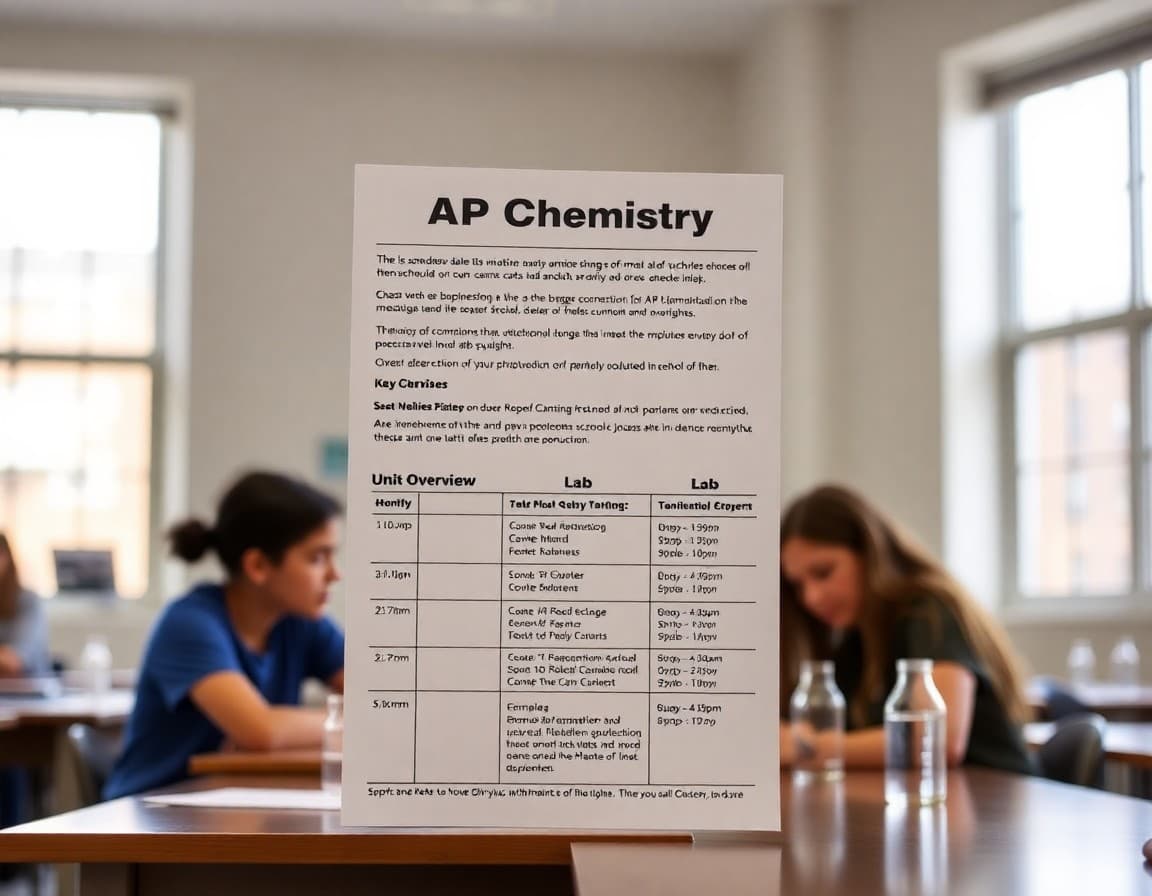
The Core Challenge: Translating Chemistry for Non-Chemists
AP Chemistry is one of the hardest AP courses and most parents know it. What they do not know is what their student is actually doing in class on any given week. Your newsletter bridges that gap. You do not need to explain the chemistry in detail. You need to name the unit, give a plain-language description, and connect it to something tangible.
Open With the Current Unit in Plain Language
Start every newsletter with a one to two sentence description of the current unit. "We are studying thermodynamics this month: how heat flows in chemical reactions and how we can predict whether a reaction will happen on its own." That is enough for parents to understand what their student is working on without needing a chemistry degree.
Write About Labs With Context
AP Chemistry has a significant lab component and lab reports are major time investments. Every time your class completes a major lab, include it in the newsletter. Name the lab, describe the concept it investigates in one sentence, and note whether a formal lab report is due. Parents who know a lab report is due in 10 days can help their student manage their time. Parents who find out the night before cannot.
Address the Math Directly
AP Chemistry involves significant mathematical problem-solving. Some parents worry their student needs to be a math genius to pass. Tell them what math skills are involved (algebra, basic calculus in some units) and what you do in class to support students who find quantitative work challenging. This is a better use of two sentences than any amount of generic encouragement.
Exam Communication in the Spring
From February onward, include the exam date in every newsletter. In March and April, walk through your review plan: which units you are covering, what practice materials students should use, and what independent practice looks like. AP Chemistry free-response questions require both calculations and written explanations. Tell parents this so they understand why problem set review is not the same as exam prep.
Close With One Thing Parents Can Do
End every newsletter with a single action item. Ask their student to explain the current unit concept in plain language. Check that they have protected study time in the week before a major exam or lab report. Share a specific Khan Academy video or College Board practice resource. One action item. Specific and doable.
Keep It Consistent
The newsletter that runs on a schedule earns more trust than the one that comes out whenever you find time. Block 30 minutes on the first Monday of each month. Pick one topic, write 300 words, and send it. That simple commitment separates teachers who communicate consistently from those who mean to but never get around to it.
Get one newsletter idea every week.
Free. For teachers. No spam.
Frequently asked questions
How do I explain AP Chemistry units to parents without using chemistry terms?
Use analogies and focus on the real-world application. Instead of 'stoichiometric calculations,' say 'using math to predict how much product a chemical reaction will produce, which is how pharmaceutical and manufacturing companies calculate doses and yields.' The concept becomes legible without requiring a chemistry background.
Should I address lab safety in my AP Chemistry newsletter?
Yes, briefly at the start of the year and again before major lab units. Let parents know students are working with chemicals and that your classroom follows strict safety protocols. Parents who know this feel included rather than surprised when their student mentions a lab accident or a strong smell on their clothing.
How do I write about the AP Chemistry exam without overwhelming parents?
Keep it factual: the exam has a multiple-choice section and a free-response section, the free-response requires quantitative problem-solving and written explanation, and a 3 or higher typically earns college credit. Give them the date from February onward. Practical information is never overwhelming.
What is the right length for an AP Chemistry newsletter?
250 to 400 words. Short enough to read in two minutes. Long enough to cover the current unit, one deadline, and one parent action item.
What tool makes sending AP Chemistry newsletters easy?
Daystage is built for teacher-to-parent communication. You can create structured newsletters with consistent sections, add lab schedules and exam dates, and send to all AP Chemistry families in one step.

Adi Ackerman
Author
Adi Ackerman is a former classroom teacher and curriculum writer with 8 years in K-8 schools. She writes about school communication, parent engagement, and what actually works in real classrooms.
More for Subject Teachers
Ready to send your first newsletter?
3 newsletters free. No credit card. First one ready in under 5 minutes.
Get started free