
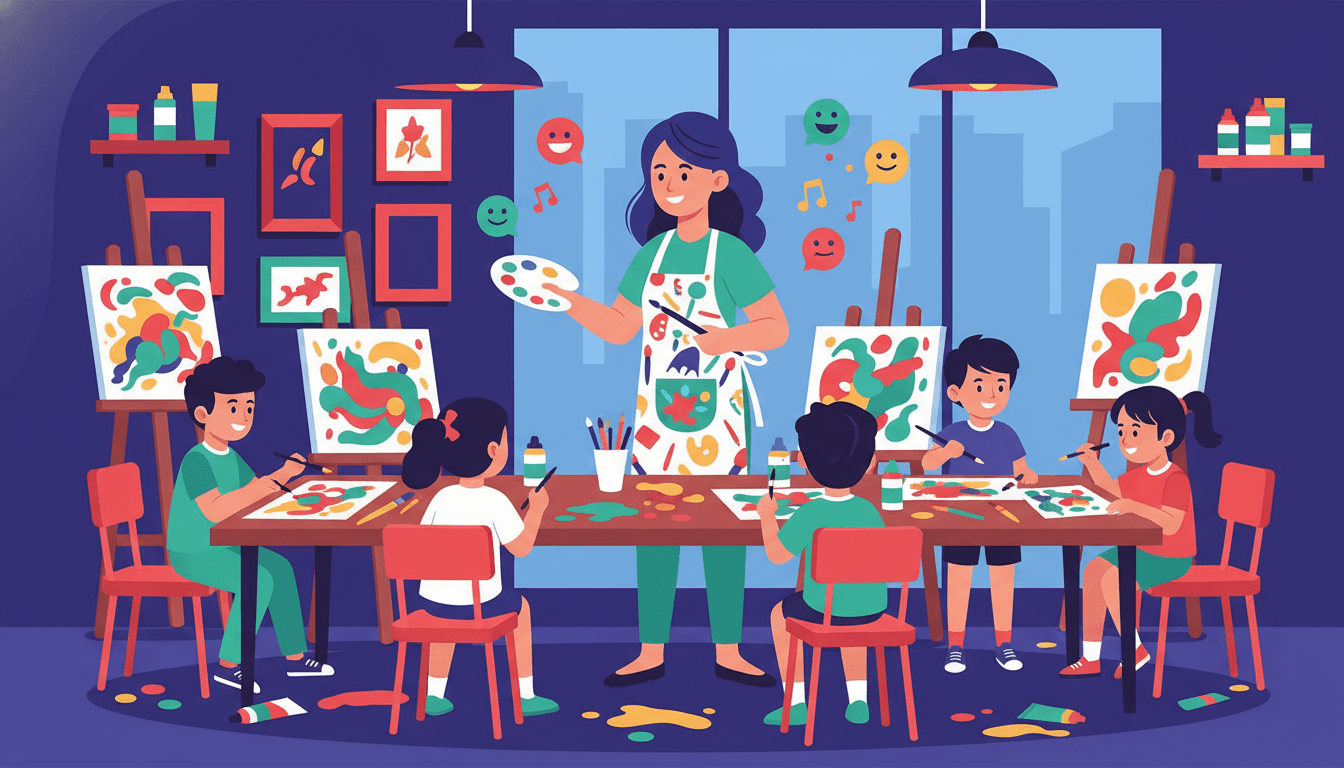
Art Teacher Newsletter to Parents: How to Share Creative Learning With Families

Art class is often the highlight of a student's week. But parents rarely hear anything about it. Not because they do not care, but because art communication falls through the cracks. When families finally see finished work at the end-of-year show, they have missed everything: the process, the decision-making, the frustration, and the growth.
A consistent art newsletter closes that gap. It gives families a window into creative learning, helps them understand that art class teaches far more than how to draw, and builds support for the arts program that makes a real difference at budget time.
Why art teachers need newsletters more than most
Arts programs are the first target when school budgets tighten. The strongest defense against cuts is a community of families who understand the value of what you teach and can speak to it. That community does not form by accident. It forms because you communicate consistently.
An art newsletter that shows families what students are learning, why specific skills matter, and how the art room develops transferable abilities like problem-solving, revision, and self-expression is advocacy built into your regular communication. Every newsletter you send is a small investment in program sustainability.
How often to send an art class newsletter
Monthly newsletters work well for most art teachers. Because you typically see students once or twice a week, monthly communication captures enough work to share without requiring you to write every week.
If you teach multiple grade levels, consider one newsletter per grade level per month, or a combined newsletter with a section for each grade. Families want to know what their child specifically is working on, not what the school's art program covers in the abstract.
What to include in an art class newsletter
- The current project or unit and the skills behind it. Name what students are making and explain the skills you are teaching through it. "Students are creating self-portraits using contour line drawing, which develops careful observation skills and hand-eye coordination" tells parents more than "students are drawing self-portraits." The skill framing helps families see the learning, not just the product.
- The artist or art movement students are studying. If you are teaching through artists or historical periods, name them and give a one-sentence context. "We are studying the Impressionists, focusing on how Monet used color and light instead of sharp lines to create mood" gives parents a dinner table conversation starter and positions art class as a subject with intellectual content.
- The materials and techniques in use. Parents are curious about what their child touched and worked with. "This month, students are working with watercolor and learning wet-on-wet technique" is the kind of specific detail that makes families feel included. It also sets expectations for why a child might come home with paint on their shirt.
- A photo of student work in progress. This is the most important element in an art newsletter. A photo of students working, a detail shot of a project mid-process, or a display of finished work tells the story better than any text. Check your school's photo policy, but most allow photos of student work without identifying information.
- Upcoming events or display opportunities. If there is an art show, a hallway display change, or a juried submission coming up, give families enough notice to plan to attend or look for their child's work. Community art shows are powerful relationship-builders, but only if families know about them in advance.
How to explain the "why" of art education
Some parents view art as a nice extra, not a core subject. The newsletter is your opportunity to reframe that. You do not have to argue the case directly. Just show it.
When you describe a project, include the process alongside the product. "Students revised their compositions three times before moving to final paper" signals that art class teaches revision and persistence, not just aesthetics. "Students critiqued each other's work using specific vocabulary" shows that art builds communication skills. Let the description do the advocacy work for you.
Avoiding comparison and celebrating process
Art newsletters carry a specific risk that other subject newsletters do not: they can inadvertently make families compare their child's work to others. Avoid language that highlights specific students' work as exceptional in a newsletter that goes to the whole class. Instead, celebrate the effort, the process, and the risk-taking.
"Students have been incredibly brave in this unit, experimenting with techniques they have never tried before" is the kind of language that every parent reads and feels good about, regardless of where their child's work landed technically.
Daystage helps art teachers communicate without extra work
Art teachers often do not send newsletters because putting one together takes too long. Daystage makes it fast. You draft the newsletter in blocks, drop in a photo of student work with the image block, and send to your class list in under fifteen minutes.
The branded email that arrives in parents' inboxes looks polished and professional, which matters for an arts program that needs to signal its value to the community. You can also track who opened each newsletter, which is useful when you want to understand whether your art show attendance was limited by awareness or by interest.
Your newsletter is the gallery families never visit
Most parents never see the inside of the art room. They do not see the work in progress, the failed attempts, the breakthroughs, or the finished pieces displayed on the wall. Your newsletter is the closest thing they have to a window into that space.
Keep it visual, keep it specific, and keep it coming. The families who feel connected to the art program are the ones who show up to the art show, who advocate when budgets are cut, and who raise children who think of creativity as a real and valuable skill.
Get one newsletter idea every week.
Free. For teachers. No spam.
Frequently asked questions
When should art teachers send newsletters to parents?
Monthly newsletters align well with most art programs, since students typically see the art teacher once or twice a week. Sending one newsletter per month captures enough completed work to share without requiring you to write every week.
What should an art teacher newsletter include?
Cover the current project and the skills behind it, the artist or movement students are studying, the materials and techniques in use, and at least one photo of student work in progress. The photo matters most: it gives families a window into the art room that no text can replicate.
How often should art teachers communicate with parents by newsletter?
Monthly is the right cadence for most art teachers. If you teach multiple grade levels, either write one newsletter per grade or use a combined newsletter with a section for each. Families want to know what their specific child is working on, not a general program overview.
What are common mistakes art teachers make in parent newsletters?
The most common mistake is leaving out the learning rationale: describing what students made without explaining the skills behind it. A second mistake is accidentally encouraging comparison by singling out specific students' work. Celebrate process and effort for the whole class, not standout individuals.
What tool helps art teachers send newsletters without extra work?
Daystage makes it fast: draft in blocks, drop in a photo of student work with the image block, and send to your class list in under fifteen minutes. The open rate data also tells you whether families actually saw your art show announcement, which helps you decide whether to follow up.

Adi Ackerman
Author
Adi Ackerman is a former classroom teacher and curriculum writer with 8 years in K-8 schools. She writes about school communication, parent engagement, and what actually works in real classrooms.
More for Subject Teachers
Alternative Education Teacher Newsletter: Rebuilding Family Trust and Communicating Progress in Non-Traditional Settings
Subject Teachers · 6 min read
First Grade Teacher Newsletter Guide: Communication That Builds on Kindergarten
Subject Teachers · 6 min read
School Counseling Department Newsletter: Coordinating Team Communication Across a Multi-Counselor Program
Subject Teachers · 6 min read
Ready to send your first newsletter?
3 newsletters free. No credit card. First one ready in under 5 minutes.
Get started free