
AP Calculus Teacher Newsletter Ideas for the Full School Year
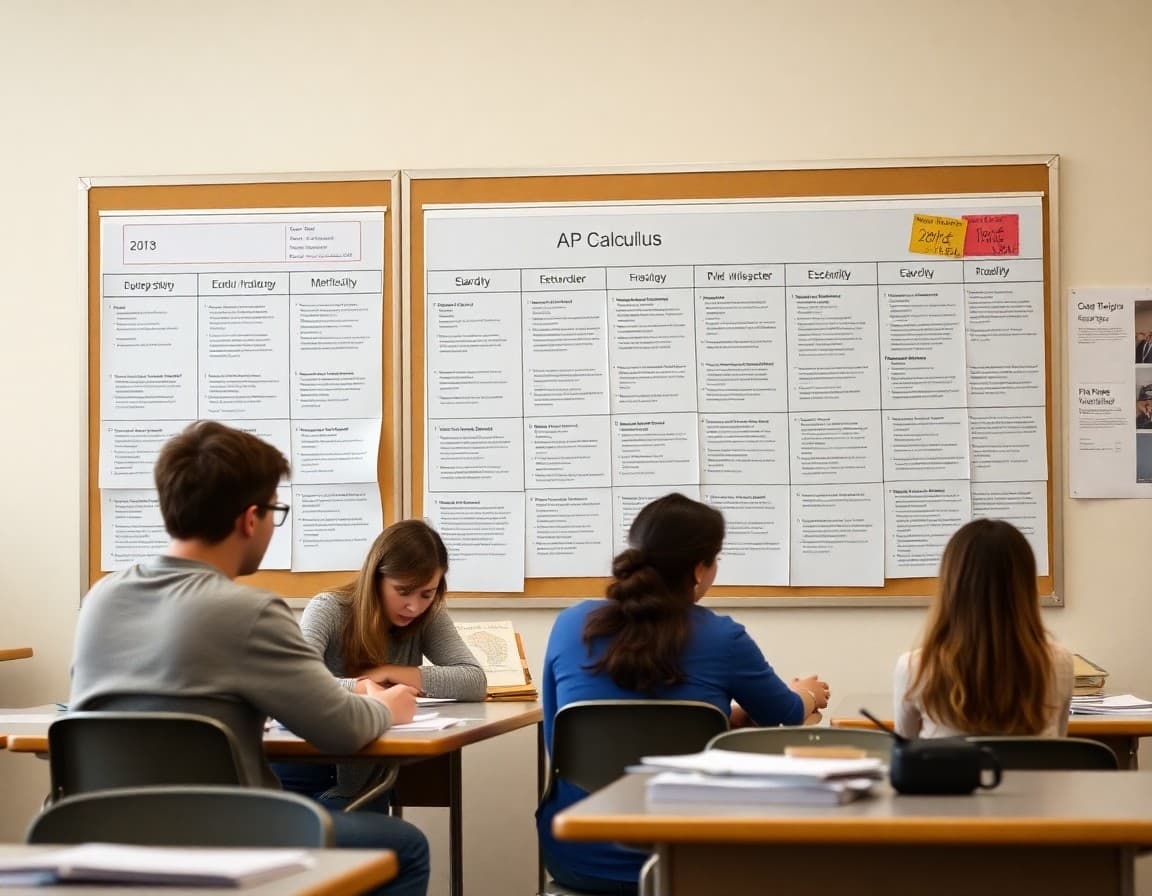
Plan Your Topics in August
Eight topics, eight dates, blocked before school starts. That is the system that makes consistent communication possible. The writing itself takes 30 minutes per newsletter. The planning takes 20 minutes once a year. Spend the 20 minutes now and you will never have to wonder what to write about when the first Monday of October arrives.
Fall Topics
September: Course orientation. Explain what calculus is, which course students are in (AB or BC), what the AP exam involves, and what the workload looks like. October: Limits unit. Explain the concept of a limit in plain language and why it is the foundation of all calculus. November: Derivatives unit. Use the rate-of-change explanation and mention real-world applications. December: Semester reflection and winter break guidance. Acknowledge the work done and give parents a specific suggestion for over break, like reviewing function types or doing one practice problem set.
Winter Topics
January: Integration introduction. Explain the concept of accumulation and how it connects to the derivatives students already know. February: AP exam announcement and review overview. Give parents the date and a high-level look at your spring review plan. March: Free-response format explained. Walk parents through what a free-response question asks students to do, how justification is graded, and what good written mathematical work looks like.
Spring Topics
April, first send: Week-by-week review schedule with specific topics and practice resources. Name the College Board released free-response questions students should be working through. April, second send: Exam logistics. Date, time, location, calculator requirements, what to bring and eat the night before. May: Final encouragement and exam mindset. Keep it short. Students are tired and stressed. A calm, specific message is more useful than a long one.
Post-Exam Topics
After the exam: Acknowledge the hard work. Explain when scores come out. July: Score interpretation guide. What each score means, which colleges grant credit for a 3 versus a 4 or 5, and how to submit scores to prospective colleges. Families need this information and rarely know where to find it.
Evergreen Topics
Calculator skills update: explain which sections of the exam permit calculators and what graphing calculator functions students need to master. Study strategy: share a specific review technique, like working backward from the answer on multiple-choice questions or using color-coded notes for different calculus concepts. Common mistake spotlight: describe a mistake you see often and how students can avoid it.
Get one newsletter idea every week.
Free. For teachers. No spam.
Frequently asked questions
What is the most important AP Calculus newsletter topic of the year?
The September orientation, where you explain what calculus actually is, set workload expectations, and give parents the exam date. Families who start the year with accurate expectations are significantly easier to work with than families who are surprised in February.
What newsletter ideas work well mid-year for AP Calculus?
The integration unit launch, a calculator skills update (since parts of the exam allow calculators and parts do not), and a midpoint check-in explaining where students are relative to the AP exam timeline. These three cover the most common parent concerns mid-year.
Should AP Calculus newsletter topics include real-world applications?
Yes, occasionally. Showing parents how derivatives relate to physics or how integrals connect to economics helps justify the time and effort the course demands. But keep these connections brief. One sentence per application is plenty.
What newsletter topic helps most in March for AP Calculus?
A detailed preview of the free-response section: what it looks like, how it is scored, what written justification means, and how students can practice it. Most parents have never seen an AP free-response question and have no idea what the expectations are.
What tool makes planning and sending AP Calculus newsletters manageable?
Daystage lets you schedule sends in advance and save newsletter templates for recurring topics. Blocking 30 minutes per newsletter and having your topics planned ahead of time is all it takes to communicate consistently all year.

Adi Ackerman
Author
Adi Ackerman is a former classroom teacher and curriculum writer with 8 years in K-8 schools. She writes about school communication, parent engagement, and what actually works in real classrooms.
More for Subject Teachers
Ready to send your first newsletter?
3 newsletters free. No credit card. First one ready in under 5 minutes.
Get started free