
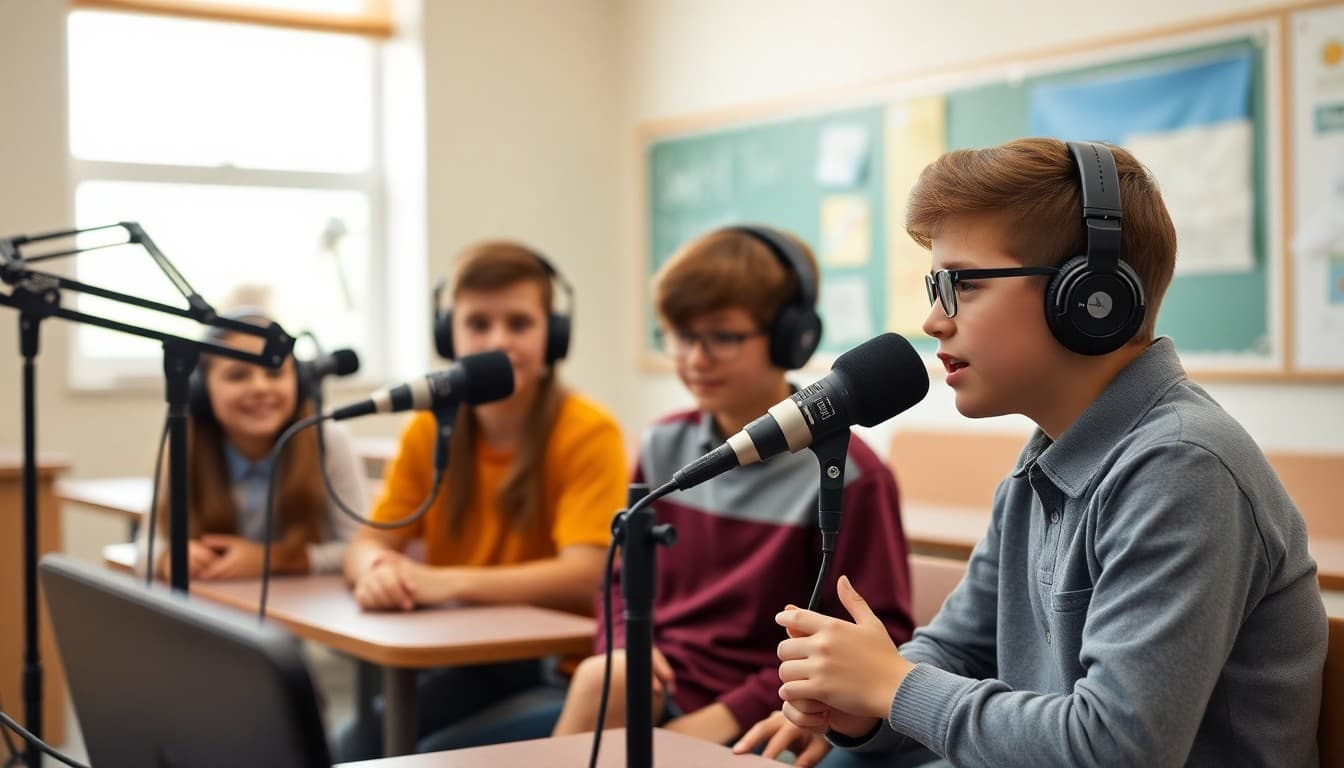
Student Podcast Newsletter: Broadcasting from School
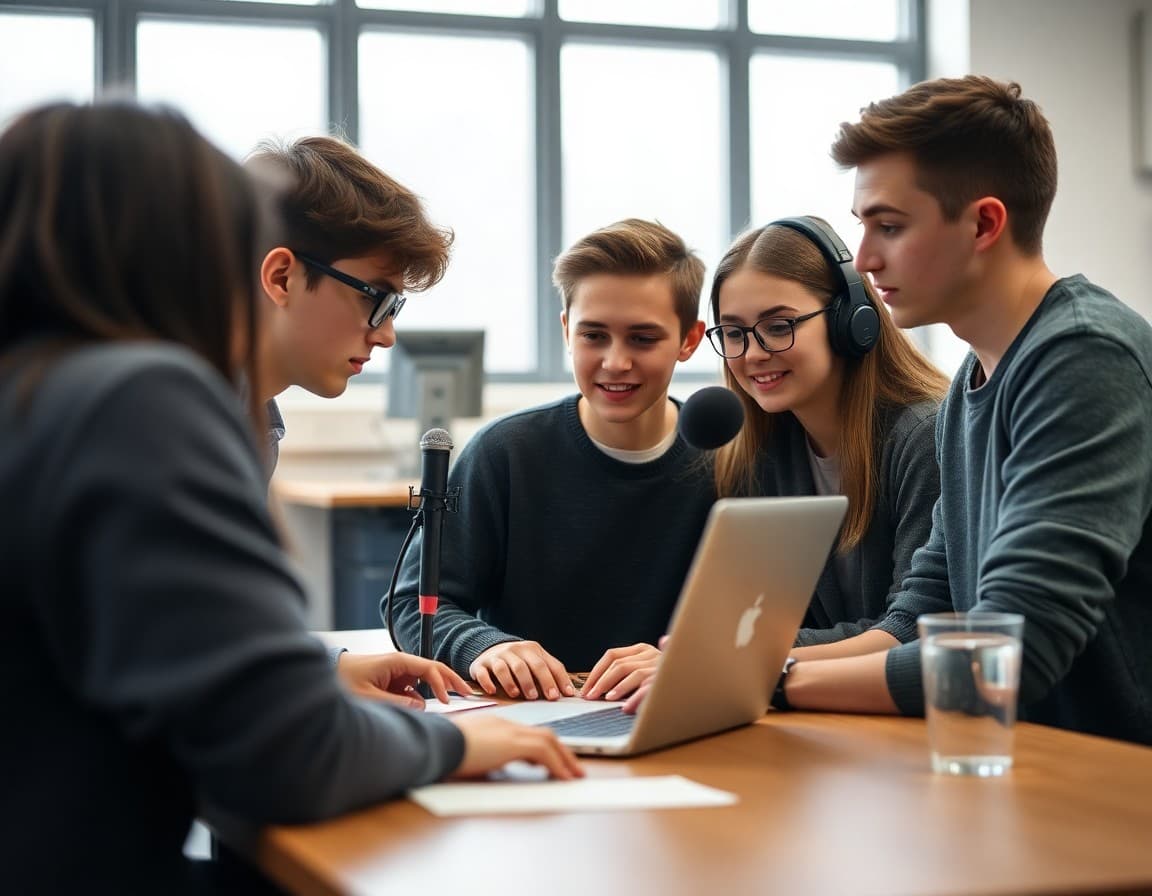
A school podcast companion newsletter solves the most persistent problem for student media programs: discovery. The podcast might be excellent, but students who do not know it exists never become listeners. A newsletter that reaches every inbox in the school when a new episode drops converts potential listeners into actual ones without requiring the audience to seek out the content themselves.
Why a School Podcast Is Worth the Effort
Audio production skills are among the most in-demand competencies in the current media landscape. A student who can plan and conduct an interview, edit audio cleanly, write and deliver a scripted introduction, and publish to a public platform has demonstrated skills that are valued by college media programs and professional employers in podcasting, broadcasting, public relations, and communications broadly. The podcast is also one of the most accessible student media formats: it requires no visual design, no print distribution, and the barrier to decent quality is lower than it has ever been.
For the school community, a student podcast that covers school life with a student perspective provides something that adult-produced school communications cannot: authentic student voice about the experience of being a student at that specific school.
Planning an Episode Before Recording Begins
The most common student podcast failure is arriving at the recording session without adequate preparation, producing an episode that rambles, loses its point, and requires far more editing time than it would have if the hosts had planned it. Episode planning does not mean scripting every word, but it does mean: defining the episode's central question or topic (what is the listener supposed to understand after hearing this?), preparing 5-8 interview questions for any guest that progress from context-setting to substantive to memorable, writing an opening that hooks the listener in the first 30 seconds, and determining the episode's ending (does it end with a conclusion, a question, or a call to action?).
A 15-minute episode that is well-planned takes about 20 minutes to record and 45 minutes to edit. A 15-minute episode recorded without planning takes 40 minutes to record and 3 hours to edit. The planning pays for itself in production time.
Audio Quality: The Minimum Standard
Listeners tolerate bad video far longer than they tolerate bad audio. An episode with room echo, background noise, or audio level inconsistency loses listeners in the first two minutes regardless of how interesting the content is. The minimum standards for a listenable school podcast: record in a quiet room with soft surfaces (a walk-in closet with clothes on both sides is an effective improvised studio), speak close enough to the microphone that the voice fills the audio without background noise dominating, and check audio levels before recording the full episode. Free audio checks take two minutes and prevent recording an entire episode at the wrong input level.
A Template for the Episode Announcement Newsletter
This template can be adapted for any episode and sent to the school community when a new episode drops:
"[Podcast Name] Episode [Number] is live. In this episode: [one sentence description of what the episode covers]. We talked to [guest name and one-sentence credential] about [specific topic]. Highlight: [quote or memorable moment from the episode]. Listen here: [link]. Duration: [X] minutes. New episodes every [day]. Follow us on [social platform] for behind-the-scenes content. Questions or story ideas? Email us at [address]."
Conducting a Strong Interview
The interview is the core skill of student podcasting, and it is more learnable than most students believe. The essential techniques: prepare questions in advance but be willing to abandon the script when the conversation goes somewhere interesting. Start with context questions (tell us about your role here) before moving to substantive ones (what is the hardest decision you have made in this position). Listen for the unexpected answer and follow it: if a guest says something you did not expect, ask the next logical question rather than returning to the prepared list. End with an open-ended invitation: "Is there anything I should have asked that I did not?" produces some of the best content in any interview.
The most common interview mistake is dominating the conversation: talking too much as the host, adding commentary to every guest statement, and not allowing silence after a guest finishes speaking. Silence after a guest's answer produces reflection. Reflexive talking produces a performance rather than a conversation.
Building a Regular Publication Rhythm
The most reliable way to grow a podcast audience is to publish on a consistent, predictable schedule. Listeners who enjoy an episode will return for another one if they know when to expect it. An episode every two weeks on the same day produces more listener retention than sporadic publishing of varying quality. Set a production calendar at the beginning of the semester: when each episode records, when editing is due, when the episode publishes, and when the newsletter goes out. Missing one date is an anomaly. Missing three dates in a semester signals to the audience that the podcast is unreliable, and unreliable media loses its audience.
Get one newsletter idea every week.
Free. For teachers. No spam.
Frequently asked questions
What equipment does a school podcast need to get started?
A functional school podcast requires less equipment than most students assume. At minimum: a USB microphone (the Blue Yeti or Audio-Technica AT2020 are popular and cost $80-$150), headphones for monitoring, a computer with free audio editing software (Audacity is free and widely used), and a quiet recording space. Optional upgrades that significantly improve audio quality include a portable sound booth (a small closet works well), a pop filter ($10-$20), and a mixer for multi-guest recording. The most common beginner mistake is spending money on equipment before establishing a consistent production workflow, which matters more than gear quality.
How long should student podcast episodes be?
Episode length should match the content type and audience. News and announcements podcasts work well in the 5-10 minute range. Interview and feature episodes typically run 15-25 minutes. Deep-dive investigation or narrative episodes can run 30-45 minutes if the content sustains listener interest. Most student audiences at the secondary level prefer shorter, more frequent episodes over long, infrequent ones. Publishing every two weeks consistently outperforms monthly publishing for most school podcast programs in terms of listener retention.
How do student podcasts get listeners at school?
School podcast discovery happens through three channels: classroom promotion (teachers playing an episode or sharing the link in class), social media clips (30-60 second audio clips or quotes shared as graphics on Instagram or TikTok), and a companion newsletter that announces new episodes to all school email accounts. The most sustainable growth comes from producing content that students talk about with each other, which means covering topics with genuine stakes for student life: school policy debates, student achievement stories, and cultural moments the student body is already discussing.
What topics work best for school podcasts?
The most listened-to school podcast episodes typically cover: interviews with interesting people connected to the school (teachers with unexpected side careers, alumni with unusual jobs, community leaders the student body respects), investigation of school topics that students care about (why did the cafeteria change its menu, how does the school budget work, what happened to the previously planned renovation), student achievement stories beyond sports (the student doing scientific research, the student artist who just got into a conservatory), and opinion episodes where student hosts debate issues the school community is genuinely divided on.
How can a podcast newsletter help a school podcast grow its audience?
A newsletter announcing each new podcast episode is the most reliable way to reach listeners who have not yet built the habit of checking a podcast platform regularly. The newsletter should include the episode title, a two-sentence description of what listeners will hear, a direct link to listen, and a brief quote or highlight from the episode. Using a tool like Daystage, students can send professional-looking episode announcement newsletters to the whole school community without requiring technical skills beyond writing and a few clicks.

Adi Ackerman
Author
Adi Ackerman is a former classroom teacher and curriculum writer with 8 years in K-8 schools. She writes about school communication, parent engagement, and what actually works in real classrooms.
More for Student-Led
Ready to send your first newsletter?
3 newsletters free. No credit card. First one ready in under 5 minutes.
Get started free