
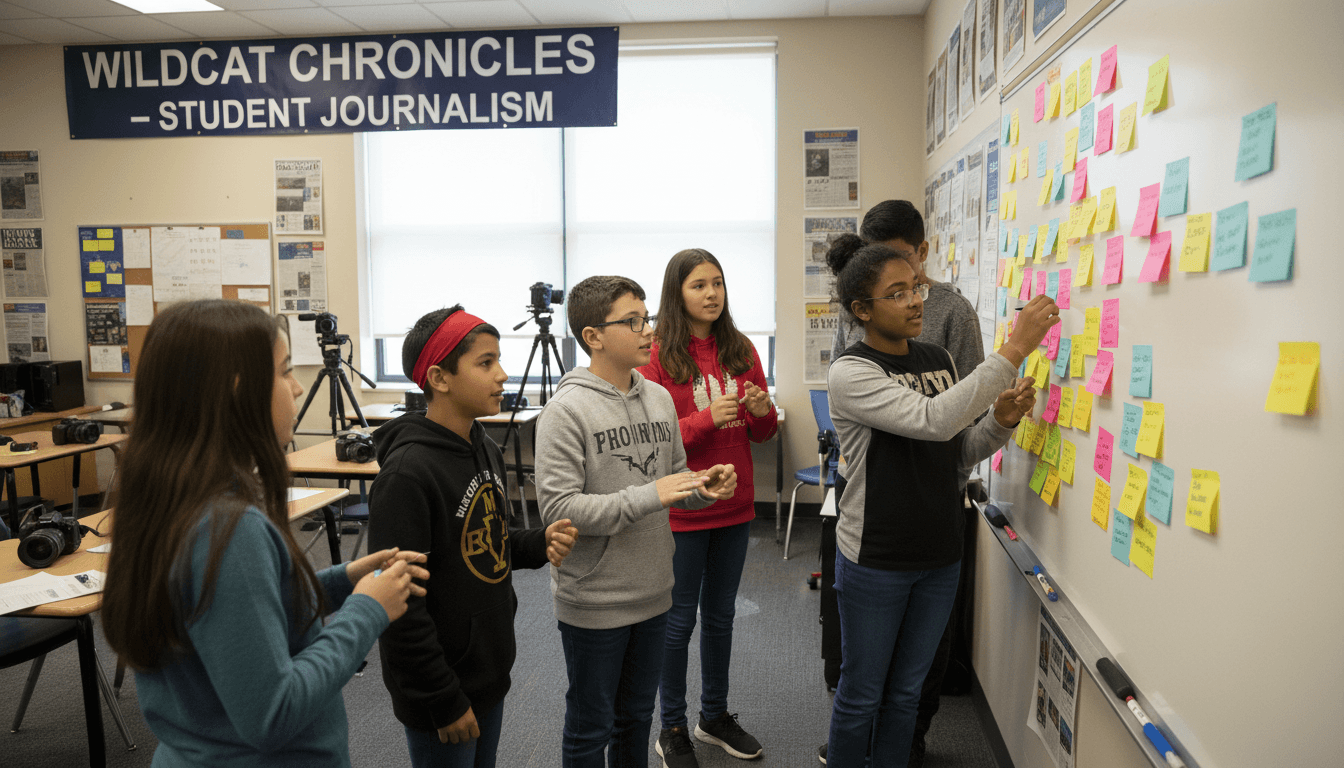
Student Newsletter Crowdsourcing Guide: How Student Publications Collect Content from the School Community

A student publication that collects content only from its own staff produces content only its own staff can produce. A publication that opens pathways for the broader school community to contribute gets access to stories, perspectives, and experiences that the staff could never generate independently. Crowdsourcing is not a supplement to journalism. It is a journalism strategy.
What to crowdsource and what not to
Not all content should be crowdsourced. Investigative stories, accountability reporting, and any content that requires verification and editing expertise should be staff-produced. Opinion submissions, letters, event announcements from student organizations, creative work, and reader responses to publication-posed questions are all strong candidates for community submission.
The distinction matters because crowdsourced content requires editorial oversight. Every submission needs to go through review before publication. The volume of crowdsourced content the publication can accept is limited by the editorial capacity to review it.
Building simple submission systems
The submission process should be as simple as possible. A form that asks for name, submission type, the submission itself, and contact information covers what the editorial team needs. Complex, multi-step submission processes produce fewer submissions than simple ones.
Separate forms for different content types (letters to the editor, event announcements, photos, creative submissions) help the editorial team route submissions to the right people without sorting through a mixed inbox.
Making submission calls specific
Open calls produce better results when they are specific. "Submit a letter to the editor" is vague. "Do you have a response to our coverage of the new schedule policy? Submit a letter to the editor by Friday" gives readers a specific prompt and a deadline. Specific calls produce more responses than general ones.
The editorial review process for submissions
All submissions go through the editorial process. Fact-check anything that makes specific claims. Edit for clarity, accuracy, and compliance with publication standards. Communicate the decision to every submitter: acceptance with a publication timeline, conditional acceptance pending revisions, or rejection with a brief explanation. Submitters who hear back are more likely to engage with the publication again.
Letters to the editor as dialogue
The letters section is the most direct form of community dialogue a publication can run. Letters that respond to specific coverage, raise new perspectives on covered topics, or push back on editorial positions all make the publication feel like a living conversation rather than a broadcast. Publish letters that disagree with the publication's editorial positions. That credibility is worth more than the discomfort.
Get one newsletter idea every week.
Free. For teachers. No spam.
Frequently asked questions
What kinds of community content can student publications collect?
Letters to the editor, student opinion submissions, community event announcements from clubs and student organizations, submitted photos from school events, guest columns from teachers or staff on specific topics, student poetry or creative work for an arts section, and reader responses to specific questions posed by the publication all work well as crowdsourced content.
How do student publications maintain editorial standards with submitted content?
All submitted content goes through the same editorial process as staff-produced content: fact-checking, editing for clarity, and review for compliance with publication standards. The publication has the right to reject, edit, or hold any submitted content. A clear submission policy communicated publicly prevents misunderstandings about whether submission guarantees publication.
How do student publications promote their submission systems?
Include submission links in every issue, post submission calls on social media, announce open calls in homeroom or advisory periods, and put submission information in the school's communication channels. Students and community members who do not know a submission pathway exists cannot use it.
How do student publications handle submitted content that does not meet quality standards?
A brief, specific rejection note that explains why the submission was not accepted and what would make a revised version publishable is more useful than silence or a generic decline. Writers who receive specific feedback sometimes revise and resubmit. Writers who receive no response often never submit again.
How does Daystage support student publications that want to build community content systems?
Daystage gives student publications a newsletter platform to distribute their issues broadly and include clear submission calls in every issue, helping build a community content pipeline by reaching the full school family audience with each publication.

Adi Ackerman
Author
Adi Ackerman is a former classroom teacher and curriculum writer with 8 years in K-8 schools. She writes about school communication, parent engagement, and what actually works in real classrooms.
More for Student-Led
How Student Journalists Can Cover Diversity and Inclusion in the School Newsletter
Student-Led · 5 min read
How to Run a Student Opinion Column in the School Newsletter
Student-Led · 5 min read
Student Government Newsletter Guide: How Student Council Communicates with the School Community
Student-Led · 5 min read
Ready to send your first newsletter?
3 newsletters free. No credit card. First one ready in under 5 minutes.
Get started free