
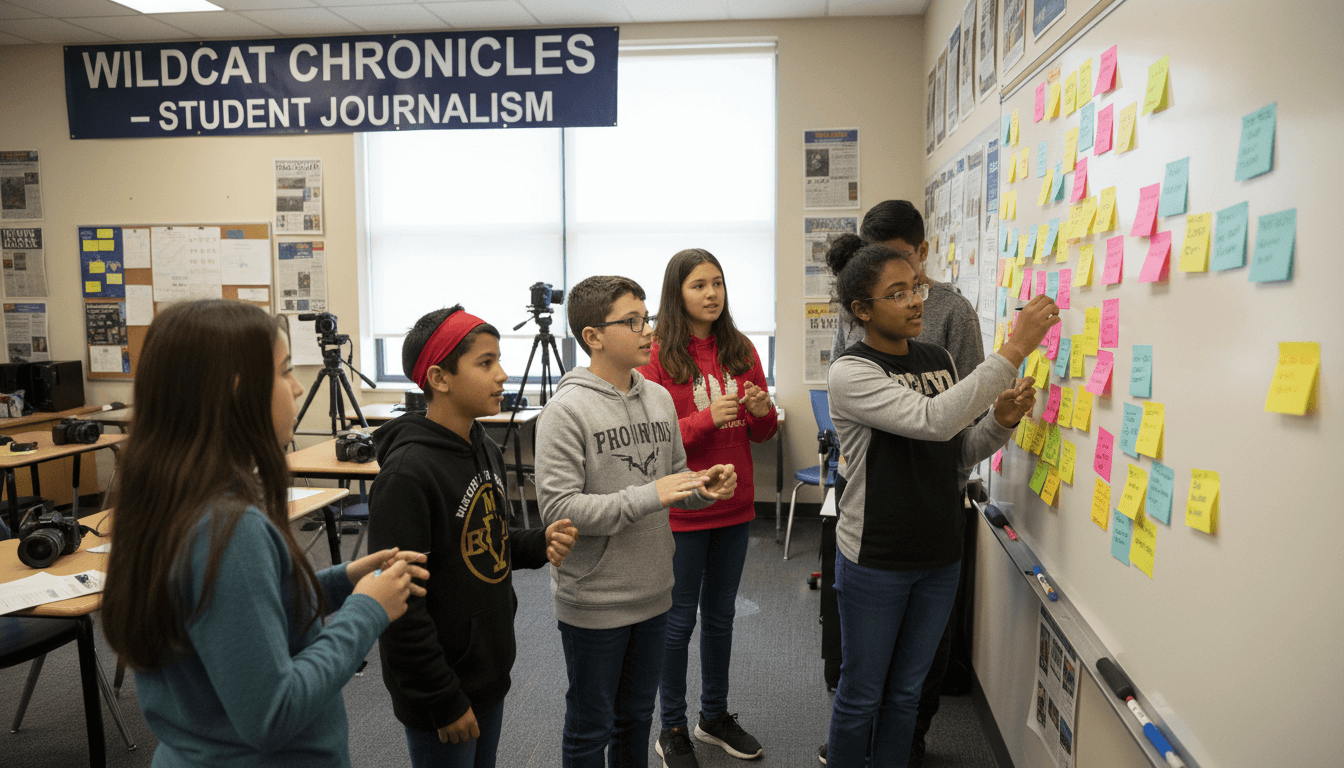
Starting a Student-Led Newsletter in Elementary School
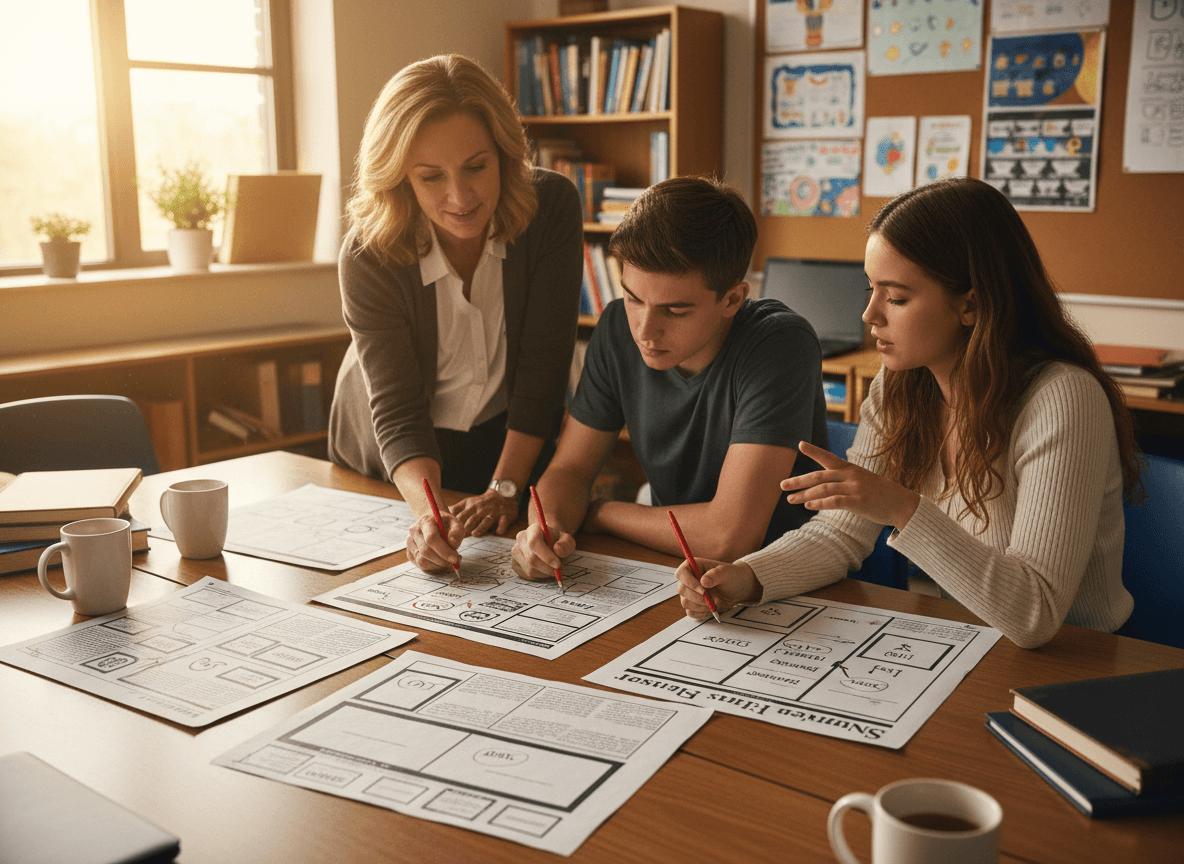
A third grader who writes a sentence for a class newsletter that goes home to every family in the class has an audience. That audience changes how the student approaches the writing. The pride of being published, even at the most elementary level, builds the communication skills and the motivation that the writing instruction itself cannot fully produce.
Start with a Class Newsletter, Not a School Newsletter
Elementary student-led newsletters work best at the class level before scaling to the school level. A class newsletter produced by one classroom's students, distributed to that class's families, is a manageable scope that a single teacher can guide. A school-wide student newsletter requires coordination infrastructure that is better built in middle school.
A class newsletter that families read every week is more valuable than a school newsletter that arrives irregularly and struggles to maintain quality.
Design Roles for Every Student
Not every elementary student can write a newsletter article. Every elementary student can contribute to one. Photographers document class activities with a shared device. Illustrators draw images for articles or section headers. Interviewers ask questions and report back to a student writer. Proofreaders check that names are spelled correctly. Title creators suggest headings for articles.
A class newsletter where every student has a role is a class newsletter that every family reads, because every family has a child who contributed to it.
Provide the Right Scaffolding for the Grade Level
Second graders can dictate content that a teacher types. Third graders can fill in templates with structured prompts. Fourth graders can write paragraphs independently with a guiding question. Fifth graders can select their own topics and produce content with minimal guidance. Matching the scaffolding to the readiness level produces publishable content at every grade level.
Publish Consistently and on a Real Schedule
A class newsletter that publishes every Friday, or every two weeks on a Tuesday, builds the audience habit that makes families look for it. A newsletter that appears whenever it is ready trains families not to expect it and not to miss it when it does not arrive.
Even a simple one-page document produced by students on a consistent schedule is more valuable than an elaborate production that arrives unpredictably.
Celebrate Bylines
Every student contribution, whether a sentence, a drawing, a photograph caption, or a full article, should carry the student's name. "Illustrated by [name], Grade 3" or "Reported by [name]" is a byline. A byline is an audience and a responsibility and a source of pride. Students who see their names published take the next contribution more seriously than those who contributed anonymously.
Get one newsletter idea every week.
Free. For teachers. No spam.
Frequently asked questions
What newsletter content can elementary students realistically produce with guidance?
Class news recaps (what the class studied or did this week), student book recommendations, drawings or artwork with student-written captions, interview features where one student interviews another student or a teacher, descriptions of class projects in the student's own words, and student-generated questions for the principal or a community guest. Elementary students can produce genuine, readable content in all of these formats with the scaffolding appropriate to their age level.
What is the right level of scaffolding for elementary student newsletter production?
Third and fourth graders benefit from sentence starters, structured interview prompts, and a template that defines each section they need to fill. Second graders may need to dictate content that a teacher or older student transcribes. Fifth graders can work with minimal scaffolding and produce content independently. The scaffolding should decrease as the grade level increases and as individual students demonstrate readiness for more independence.
How do you involve the full class rather than only the strongest writers?
Design roles that do not require writing: photographers who document classroom activities, illustrators who create artwork for the newsletter, interviewers who ask questions and report back, and editors who check that names are spelled correctly. A class newsletter where every student has a role produces broader skill development and broader community investment than one where the newsletter is a writing assignment for the advanced students.
How do you publish a class newsletter so it reaches families effectively?
Email distribution to every class family on a consistent schedule, with a PDF or link. A printed copy sent home with students who have parents who do not regularly check email. A copy displayed on the class bulletin board or school website. A brief mention in the school's official newsletter directing families to the class newsletter. Consistent distribution builds the habit of reading that makes the newsletter valuable.
How does Daystage support elementary student newsletter programs?
Daystage helps elementary teachers build class newsletter programs that give students real communication experience in a format that families actually read. Schools use it to develop the early journalism habits, the pride in publication, and the audience awareness that students carry into more independent newsletter programs in middle and high school.

Adi Ackerman
Author
Adi Ackerman is a former classroom teacher and curriculum writer with 8 years in K-8 schools. She writes about school communication, parent engagement, and what actually works in real classrooms.
More for Student-Led
Student-Run School Store Newsletter: How Student Managers Communicate Operations and Sales
Student-Led · 5 min read
Student-Led Club Spotlight Newsletter: How Student Journalists Cover Extracurricular Life
Student-Led · 5 min read
Student-Led Science Coverage Newsletter: How Student Journalists Report on STEM Programs and Research
Student-Led · 5 min read
Ready to send your first newsletter?
3 newsletters free. No credit card. First one ready in under 5 minutes.
Get started free