
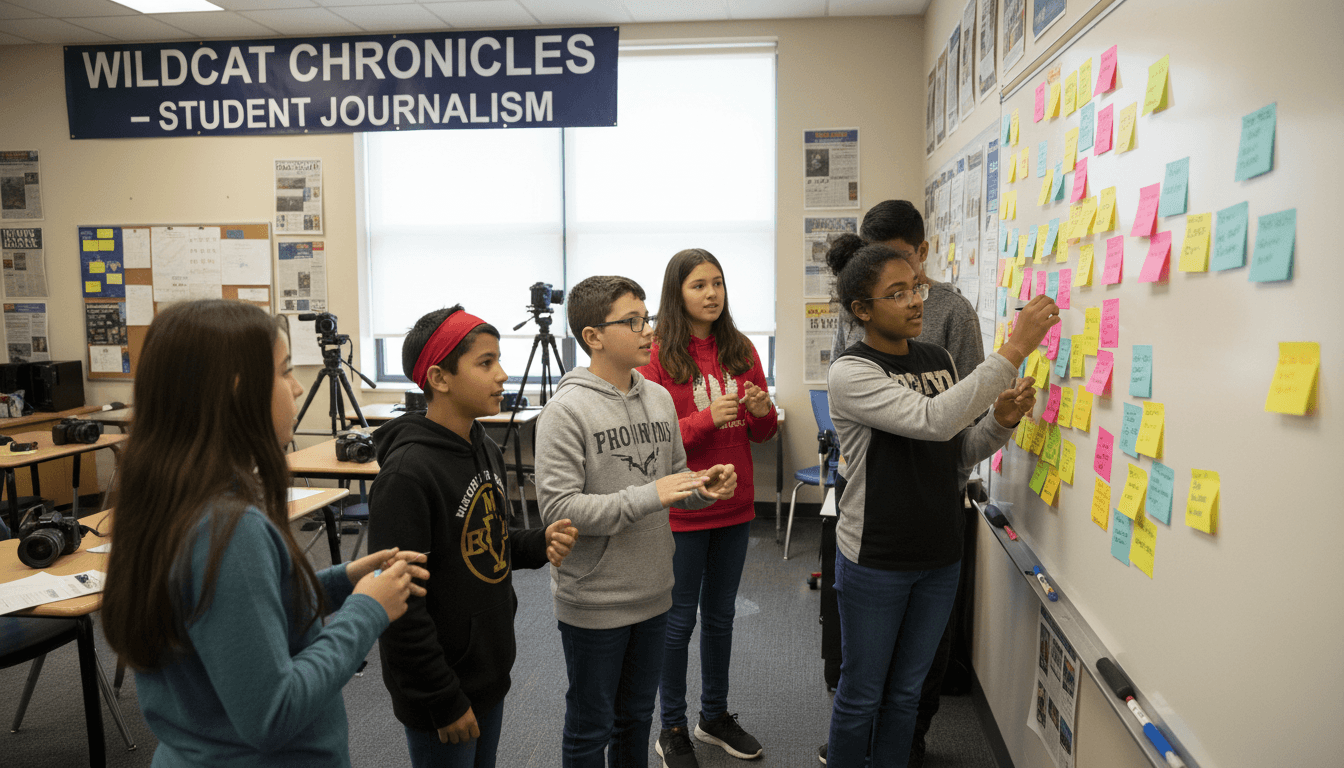
Student Editorial Board Newsletter: How Student Editors Lead the Newsroom

Student editorial boards run the newsroom. When they function well, the publication produces consistent, quality journalism. When they function poorly, deadlines slip, reporters lose confidence, and the advisor ends up doing editorial work the students should be doing. Clear communication about roles and responsibilities at the start of the year is the most effective investment in making the board work.
Defining the editorial structure
The newsletter or orientation document should lay out the full editorial structure: every role, what it owns, and how it connects to other roles. An org chart alongside written descriptions helps editors visualize who they report to and who reports to them.
Be specific about decision-making authority. A section editor who does not know whether they can reject a story without consulting the managing editor will default to asking, which creates bottlenecks. Clear scope prevents that.
Editor-in-chief responsibilities
The editor-in-chief role deserves its own section. It is the most complex student leadership position in the publication and the one most likely to be misunderstood. Include what the EIC owns outright (publication direction, final editorial decisions, staff culture), what they coordinate on (section coverage plans, design decisions), and what they do not own (individual story quality, which is each section editor's job).
Also include how the EIC relates to the advisor. Students who have never held a leadership role often either defer everything to the advisor or resist all advisor input. A clear description of the collaborative relationship prevents both extremes.
Section editor responsibilities
Each section editor needs a description of their beat coverage expectations, their reporter management responsibilities, and their role in the editing process. A news editor who knows they are responsible for assigning, editing, and verifying every story in their section approaches the job differently than one who thinks editing means reading for grammar.
Editorial meeting structure
Describe how editorial meetings work: how often they happen, who attends, what the agenda covers, and what decisions get made versus deferred. Editorial boards that have structured, consistent meetings make better decisions than those that meet when things need to get resolved.
Handling editorial disagreements
Disagreements about coverage, framing, and story decisions are normal in a newsroom. Communicate the process for resolving them: who gets a vote, who has final say, and what happens when an editor and a reporter are in conflict over a story. Students who have a process to fall back on during disagreements resolve them more cleanly than those who escalate every conflict to the advisor.
Get one newsletter idea every week.
Free. For teachers. No spam.
Frequently asked questions
What roles should a student editorial board include?
Editor-in-chief, managing editor, section editors (news, opinion, arts, sports), copy editor, and photo editor are the core roles. Larger publications may add digital editor, social media editor, or multimedia editor. Each role needs a clear description of responsibilities and decision-making authority so editors know what they own.
How should editorial board responsibilities be communicated to student editors?
Share a written description of each role at the start of the year. Include what the role is responsible for producing, what decisions the role makes independently, what decisions require coordination with other editors, and how the role interacts with the advisor. Editors who have documented responsibilities are more accountable than editors given only verbal guidance.
How do advisors communicate the difference between being an editor and being a reporter?
Editors make decisions about other people's work. That involves giving feedback that improves a story without taking it over, rejecting work that does not meet standards, and managing reporter relationships that sometimes involve conflict. Advisors who communicate this distinction explicitly prepare student editors for the harder parts of the role.
How are editorial board decisions communicated when the board disagrees?
Describe the decision-making process in advance: who breaks a tie, whether the editor-in-chief has final say, and what happens when a story decision is disputed. Editorial boards that operate without a clear decision-making framework tend to either defer everything to the advisor or escalate minor disagreements into conflicts.
How does Daystage support student-led editorial boards in communicating with their school community?
Daystage gives student publications a newsletter platform to distribute their work to families, staff, and the school community, so student editors can focus on journalism decisions rather than figuring out how to reach their audience.

Adi Ackerman
Author
Adi Ackerman is a former classroom teacher and curriculum writer with 8 years in K-8 schools. She writes about school communication, parent engagement, and what actually works in real classrooms.
More for Student-Led
Student-Led Peer Recognition Newsletter: How Students Spotlight Fellow Students
Student-Led · 5 min read
Student Newsletter Data Journalism Guide: How Student Reporters Use Data to Tell School Stories
Student-Led · 5 min read
What Students Learn from Writing School Newsletters (Beyond Writing)
Student-Led · 5 min read
Ready to send your first newsletter?
3 newsletters free. No credit card. First one ready in under 5 minutes.
Get started free