

Model Railroad Club Newsletter: Building and Learning
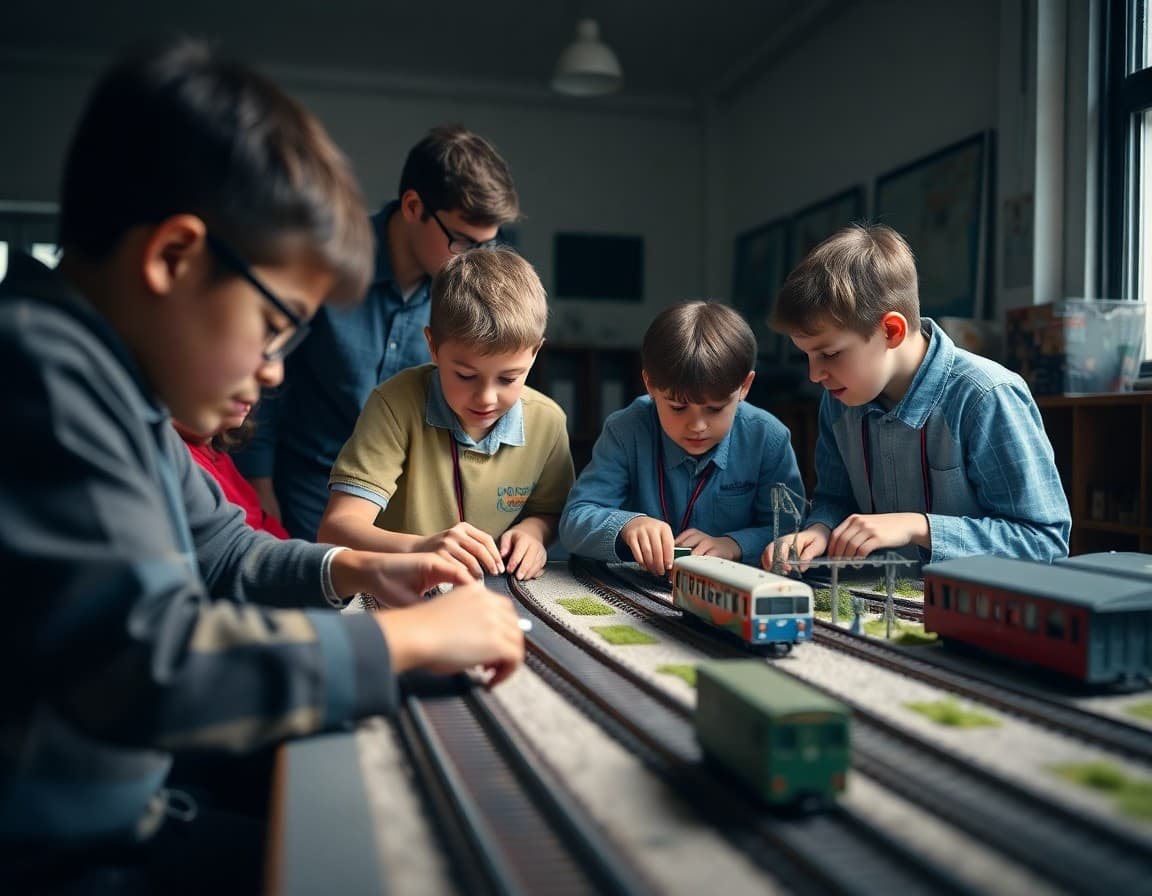
Model railroad clubs are among the most project-focused extracurricular activities in any school. The layout they're building this year will still be running in five years. The newsletter documents that building process and makes families feel like they're watching something real take shape.
The Ongoing Narrative of Layout Progress
What separates a model railroad club newsletter from most other club communications is the long-form project arc. Every issue can include a "Layout Progress" section that shows where the project stands today versus last month. Over a school year, these sections compile into a complete documentary of the layout's construction. Families who've followed the newsletter from September are genuinely invested in seeing the mountains get their tree cover in April.
Layout Progress Report Template
Layout Status - October Update
Track plan: 100% complete. Track laying: 60% complete (main line finished, staging yard in progress). Wiring: 35% complete (DCC bus installed, individual turnout wiring ongoing). Scenery: 15% complete (benchwork terrain shaped, no ground cover applied yet). Structures: 3 of 12 planned buildings placed and weathered.
This month: the club installed 18 feet of new flex track on the mountain grade, wired two additional turnouts for automated switching, and completed the first operating session with a steam locomotive running the completed main line at reduced speed. Three members earned their first operating certificate by demonstrating correct dispatch procedures.
Skills Featured This Month
Each newsletter should highlight one or two skills students are currently developing. Model railroading covers more academic territory than most parents expect, and the newsletter is the right place to make those connections visible. "This month: DCC programming. Three members learned to program locomotive addresses and sound files using a ProCab controller. The skill requires reading a technical decoder manual and following a precise programming sequence - excellent preparation for technical documentation reading in any field." This framing helps parents see club time as skills development, not just hobby time.
Template Excerpt: New Member Feature
New Member Spotlight: Jordan Martinez
Jordan joined the club in September with no prior model railroading experience. In six weeks, Jordan has completed a weathered freight car build, learned basic track wiring, and is now working on scenery techniques for the staging yard approach. "I thought it was just toy trains at first," Jordan says. "But there's actually electrical engineering, woodworking, and history in every part of it. My grandfather collected Lionel trains and I'm starting to understand why."
We currently have 3 open spots for new members. Interested students can visit Room 104 any Tuesday after school.
Historical Research Connections
Many model railroad clubs set their layout in a specific historical era, such as 1950s steam-to-diesel transition, or a specific geographic region. This creates natural research projects: what did freight operations look like in the Colorado Rockies in 1958? What industries existed along the specific railroad line the club is modeling? Students who research these questions are doing genuine historical and geographical work. Share one research finding per issue: "This month the research team confirmed that the town we're modeling had a coal tipple on the east side of the main line in 1952. We're building it using documentation from the State Historical Society."
Open House and Public Display
Many model railroad clubs invite the public to see the layout one or two times per year. The newsletter is essential for building anticipation around these events and drawing attendance beyond the club families. A well-announced open house with a clear date, location, and operating schedule can draw a broad community audience, especially if the school is in a community with existing model railroad interest. Include information about the club's history, scale, and era so visitors know what to expect.
Fundraising and Equipment Needs
Model railroad layouts require ongoing materials: track, scenery products, structures, electronic components. A brief "Materials Needed" section in each newsletter lets supportive families and community members contribute. Be specific: "We currently need: two switches (turnouts) for the staging yard expansion, Woodland Scenics fine turf in various colors for scenery, and any donated HO scale structures in industrial or commercial themes." Specific asks get better responses than general donation requests.
Get one newsletter idea every week.
Free. For teachers. No spam.
Frequently asked questions
What makes a model railroad club newsletter unique compared to other club newsletters?
Model railroad clubs are building long-term projects. The newsletter can document the layout's progress over months and years in a way that other club newsletters can't. Families who read the newsletter from September to June can see a tangible landscape take shape, which creates an ongoing narrative that keeps readers engaged across the entire year.
What skills should a model railroad club newsletter highlight?
Model railroad building touches a surprising range of skills: electrical wiring, woodworking for the benchwork, landscape modeling using sculpting materials, historical research for era-accurate details, programming for DCC decoders, and photography for layout documentation. Highlighting these skills in the newsletter connects the hobby to academic and career skills.
Should a model railroad club newsletter include photos of the layout?
Absolutely, and this is what makes the newsletter worth reading. Progression photos showing the layout before and after a session give families a visual sense of the work. A before and after photo from the same angle taken a month apart often shows dramatic progress that a text description can't capture.
How do you recruit new members through a newsletter?
Include a brief description of what new members do at their first session, what skills they can expect to learn, and that no prior experience is required. A line like 'We meet Tuesdays at 3:15 PM in Room 104. New members get started on a personal project in the first session while helping on the club layout' gives potential members a concrete picture of what joining looks like.
Can Daystage support photo-heavy newsletters like a model railroad club update?
Yes. Daystage is built for newsletters with photos as core content. You can add a multi-image gallery block that shows layout progress photos in a clean grid, add individual captioned photos throughout the text, and include a hero image of the full layout. The newsletter looks good on both desktop and mobile without any design work.

Adi Ackerman
Author
Adi Ackerman is a former classroom teacher and curriculum writer with 8 years in K-8 schools. She writes about school communication, parent engagement, and what actually works in real classrooms.
More for Student-Led
Ready to send your first newsletter?
3 newsletters free. No credit card. First one ready in under 5 minutes.
Get started free