
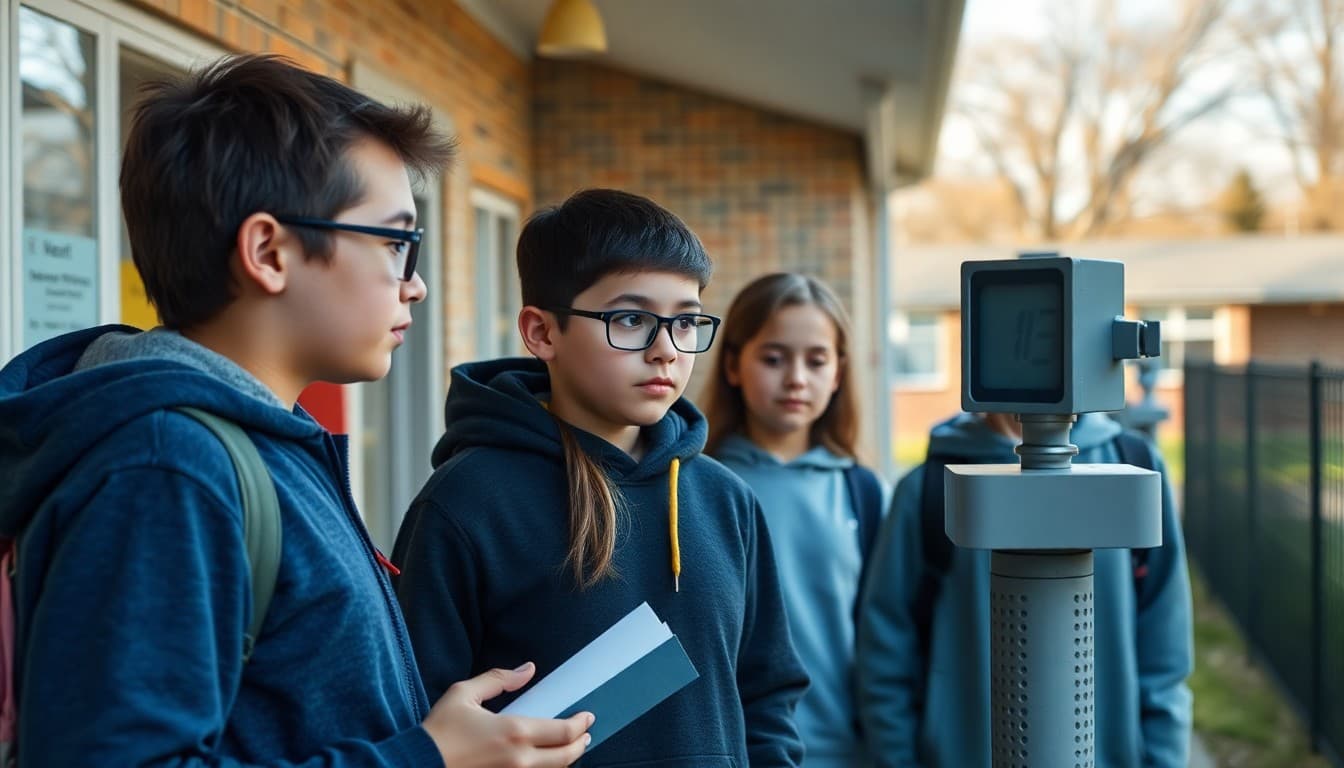
School Weather Station Newsletter: Meteorology in Action
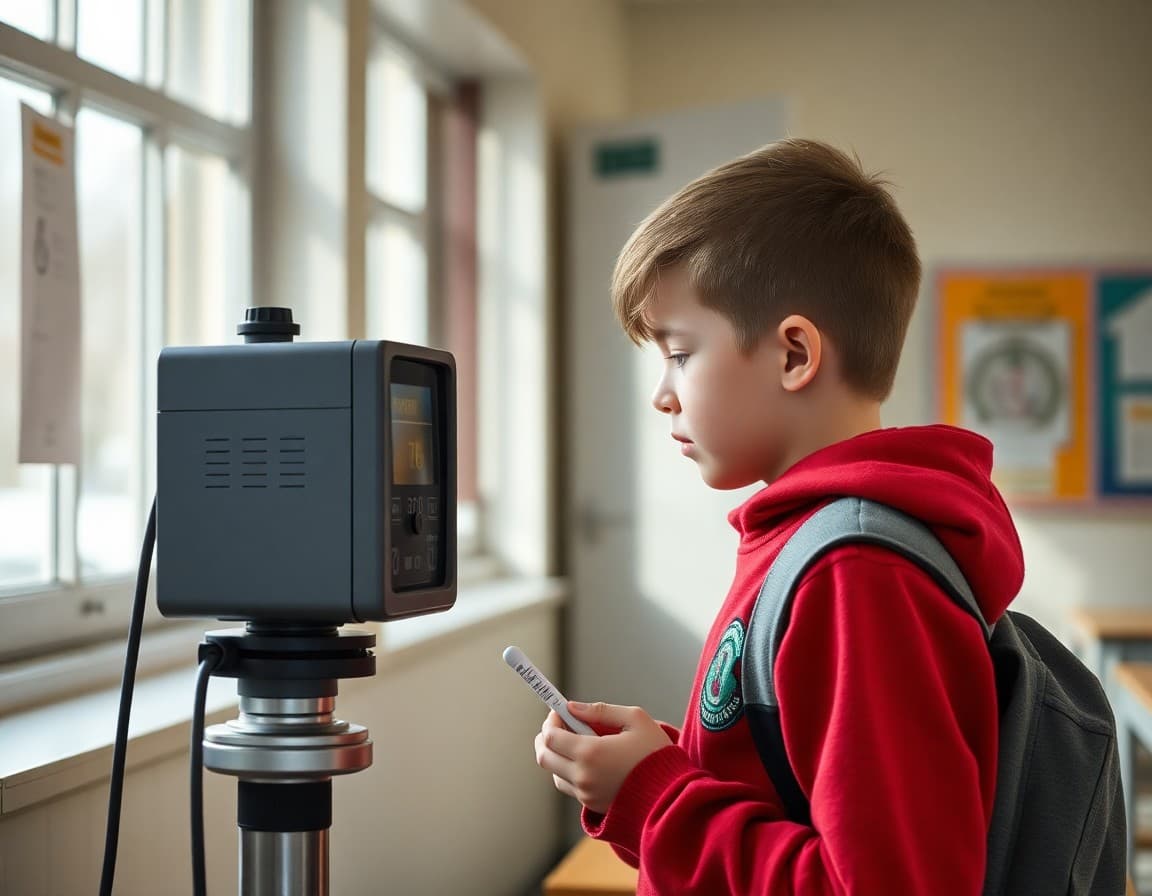
A weather station newsletter has a built-in content advantage: the data changes every day. Students collecting real measurements from real instruments in real time have something worth reporting. Your job is to explain what that data means and why collecting it matters.
Describe the station's instruments and what they measure
Start the year with a clear inventory of the station's capabilities. Families who understand what their child's school is measuring will engage more with the data updates you share throughout the year.
"Our weather station has an anemometer that measures wind speed to the nearest 0.1 mph, a tipping bucket rain gauge accurate to 0.01 inches, a thermometer-hygrometer combination for temperature and humidity, a barometric pressure sensor, and a UV index sensor. All readings upload automatically every five minutes to our school's weather dashboard and to the Weather Underground public network."
Share actual data readings and what they mean
Numbers are the point of a weather station. Do not just say "students collected weather data this week." Share the numbers: last month's total precipitation, the range from highest to lowest temperature, the average wind speed. Then explain what those numbers mean relative to historical averages or what effects they had on the local environment.
"October precipitation total: 4.3 inches. The 30-year average for October at our location is 2.8 inches. This October was 54% wetter than normal. Students graphed the daily rainfall against the historical average and identified the specific storm systems responsible for the above-average readings."
Connect the data to what students are studying in class
Weather station data is most powerful when it drives classroom curriculum. Describe the specific unit or topic that the station's data is currently supporting. Families who see the connection between the equipment outside and the science being taught inside understand that the station is a teaching tool, not just decoration.
"We are currently in the atmospheric pressure unit. Students are using our station's pressure data to practice weather prediction. Each day, students record the pressure reading and make a 24-hour forecast for temperature and precipitation. They compare their forecast to what actually happens the next day and analyze where their reasoning went right or wrong."
Describe student roles in data collection and analysis
Families want to know specifically what their child does with the weather station, not just that a station exists. Describe the rotation system, the data recording protocols, and the analysis tasks students complete.
"Each class period, two students are assigned as data collectors. They visit the station at the start of class, record all six measurements in the class logbook, enter the data into the spreadsheet, and flag any readings that fall outside the normal range for investigation. By the end of the year, every student will have completed at least eight data collection shifts."
Sample newsletter template excerpt
Weather station data summary for October:
Highest recorded temperature: 84 degrees F (October 3). Lowest recorded temperature: 31 degrees F (October 29). Total precipitation: 4.3 inches. Highest wind gust: 38 mph (October 15, during storm front passage). Lowest barometric pressure: 29.72 inHg (October 15).
Students noted the correlation between the pressure drop on October 14-15 and the subsequent storm on October 15. They used that observation to practice pressure-based forecasting for the remainder of the month. Their accuracy rate for 24-hour precipitation forecasts was 71% during the last two weeks of October.
Share connections to national data networks
Schools that contribute data to national networks like CoCoRaHS or Weather Underground are contributing to real scientific databases. That contribution is worth communicating to families because it shows that their child's measurements matter beyond the classroom.
"Our school's precipitation data is submitted to the CoCoRaHS national network every morning. Our readings are used alongside data from over 20,000 other observers to produce high-resolution precipitation maps for the entire country. Students are not practicing data collection. They are contributing to real scientific infrastructure."
Connect meteorology to career pathways
Meteorology careers span weather forecasting, climate science, aviation safety, agricultural planning, and emergency management. When the work students are doing in the weather station program connects to one of these fields, name it. "The data quality practices students follow in this program are directly aligned with National Weather Service observer standards. Students who want to pursue atmospheric science in college already have hands-on observing experience."
Get one newsletter idea every week.
Free. For teachers. No spam.
Frequently asked questions
What data does a school weather station collect?
A typical school weather station collects temperature (air and sometimes soil or surface), relative humidity, barometric pressure, wind speed, wind direction, precipitation amounts, and UV index. More advanced stations add solar radiation, dew point, and particulate matter readings. Some stations transmit data continuously to a school dashboard visible on monitors in the hallways. The Weather Underground and CoCoRaHS (Community Collaborative Rain, Hail and Snow Network) both accept data submissions from school stations, connecting students to national networks.
What math and science skills does weather station work develop?
Weather station work develops data collection precision, statistical analysis including mean, median, and range over time periods, graphing and trend identification, hypothesis testing through comparing predictions to measured outcomes, unit conversion across metric and imperial systems, and scientific writing through observation logging. Students also study how atmospheric pressure, temperature, and humidity interact, which connects to chemistry, physics, and earth science standards.
How do students use weather data in their classroom curriculum?
Weather station data can drive multiple classroom projects: creating daily weather reports, conducting seasonal temperature comparison studies, analyzing the urban heat island effect by comparing school readings to rural stations, predicting storm fronts using pressure trends, and correlating temperature and attendance or energy use data. Earth science classes often build their entire atmospheric unit around real local data from the school station rather than textbook averages.
Can weather station programs participate in national science networks?
Yes. CoCoRaHS accepts precipitation data from any registered observer including schools. The Weather Underground's Personal Weather Station network accepts temperature and wind data. GLOBE (Global Learning and Observations to Benefit the Environment) is a NASA-connected program that specifically supports K-12 schools in contributing scientific data to global research databases. Schools that contribute data regularly become part of something larger than a classroom project.
How does Daystage help weather station teachers communicate with families?
Daystage lets weather station teachers share actual station data, trend charts, and student observations in newsletters sent directly to families. When families receive a newsletter showing the temperature and precipitation trends their child collected over the past month alongside what those trends mean scientifically, weather station work becomes a real science program rather than a piece of equipment that sits outside the building.

Adi Ackerman
Author
Adi Ackerman is a former classroom teacher and curriculum writer with 8 years in K-8 schools. She writes about school communication, parent engagement, and what actually works in real classrooms.
More for STEM
Ready to send your first newsletter?
3 newsletters free. No credit card. First one ready in under 5 minutes.
Get started free