
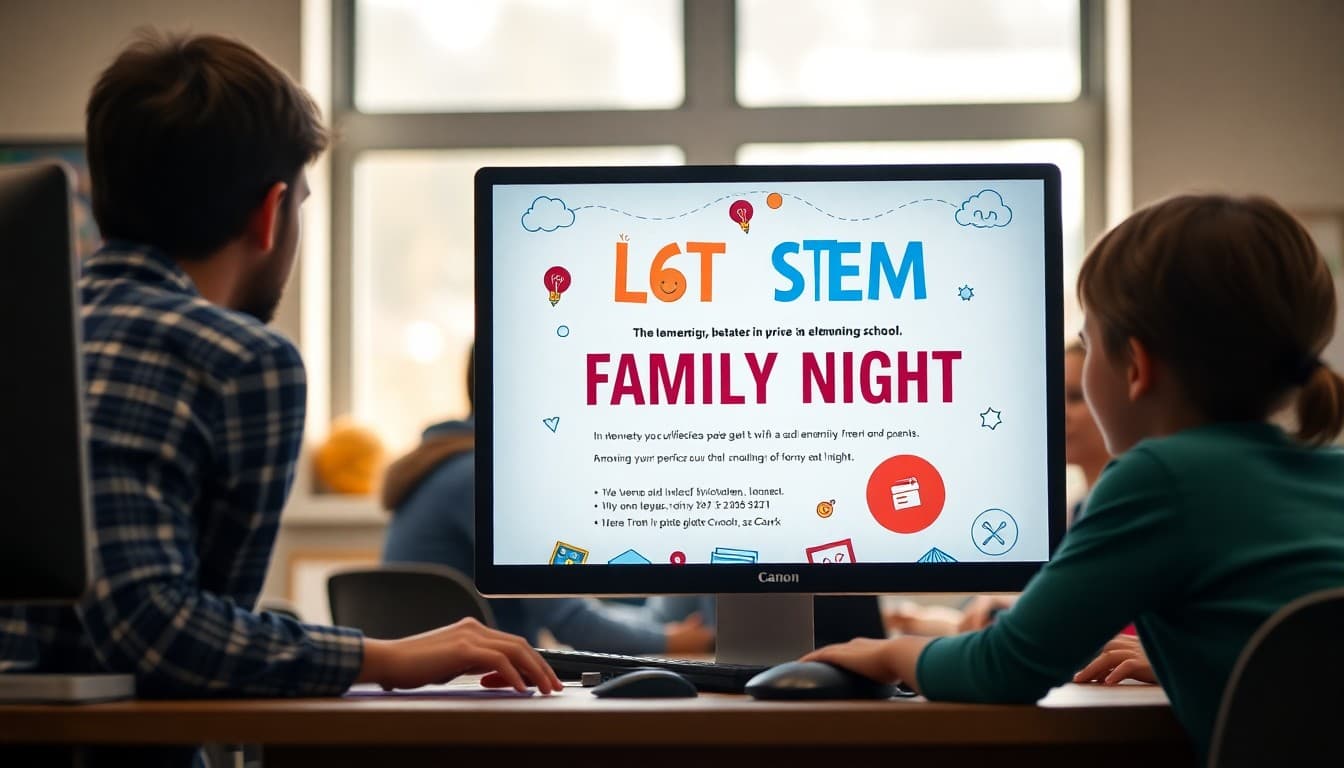
STEM Night Newsletter Template for Elementary Schools

STEM night has a natural advantage over most school events: it is designed to be hands-on and experiential, which makes it genuinely fun for families. The newsletter invitation's job is to communicate that fun before the event happens so families prioritize attending over other evening options.
This template and guide covers how to describe STEM activities in ways that create anticipation, how to connect the event to classroom learning, and what take-home materials turn one evening into ongoing exploration at home.
The Opening: Make It Sound Like Play
Lead with an activity, not a learning objective. "Can you build a bridge out of index cards and tape that holds 20 pennies? Find out at STEM Night on March 7" is more compelling than "Join us for a STEM-focused evening of hands-on science and engineering activities."
The challenge or question frame works particularly well for STEM events because it mirrors how the activities themselves are structured. Starting with a question immediately puts families in the mindset of the event.
Activity Preview with Specific Descriptions
Name the stations and describe what families will actually do at each one. Keep each description to one sentence. The goal is to give families enough of a picture that they can imagine the experience, not to explain the science behind it.
Six to eight stations is typical for a well-organized STEM night. Listing all of them in the newsletter, even briefly, signals a substantial and varied event worth attending.
Sample Newsletter Template Excerpt
Here is a template you can adapt:
Subject line: STEM Night is March 7 - Experiments, Building Challenges, and Free Take-Home Kit
Opening: Lincoln Elementary Family STEM Night is Friday, March 7 from 6:00 to 8:00 p.m. Spend two hours exploring hands-on science and engineering activities with your child, and leave with a take-home experiment kit to keep the exploration going over the weekend.
Station highlights:
- Bridge Challenge: Build the strongest bridge from index cards and tape
- Volcano Lab: Classic baking soda and vinegar eruption, plus variations
- Paper Circuits: Make a simple LED circuit using copper tape and coin batteries
- Catapult Engineering: Design and launch a small catapult
- Coding Corner: Scratch Jr. programming on iPads (grades K-3)
- Mystery Materials: Identify unknown substances using scientific observation
Take-home kit: Every family receives a bag with materials for two at-home experiments and a guide with simple instructions.
Event Details:
Date: Friday, March 7, 2026
Time: 6:00 to 8:00 p.m.
Location: Lincoln Elementary Gymnasium and Science Classrooms
Free admission. All ages welcome. Siblings encouraged.
Connecting to Current Classroom Units
A brief section connecting the STEM night activities to current classroom units makes the event feel immediately relevant rather than supplemental. "This month, our third and fourth graders are studying simple machines and engineering design. The bridge challenge and catapult station connect directly to what they are working on in class" gives families a specific reason to attend based on their child's current schoolwork.
The Free Take-Home Kit
If your school is providing take-home experiment kits, this is worth highlighting prominently in the newsletter. The kit should be simple enough that families can complete the experiments at home without any special supplies. Pre-measuring and bagging the materials is all the preparation you need. The guide should have clear instructions with expected outcomes so parents know what they are looking for.
Making the Event Work for Different Ages
STEM nights at elementary schools typically span students from kindergarten through fifth grade. Note in the newsletter which stations are best suited for which age groups if applicable, or simply note that all activities are designed to be accessible and engaging for students of all elementary ages. Families with multiple children want to know whether younger siblings will be bored or engaged.
Post-Event Communication
Send a brief post-event newsletter with two or three photos from the evening, the take-home experiment instructions for families who could not attend, and a note connecting the night to upcoming science-related events like the science fair or a field trip. Closing the loop after STEM night builds anticipation for the following year and keeps science visible as a school priority.
Get one newsletter idea every week.
Free. For teachers. No spam.
Frequently asked questions
What should STEM night include to make it worthwhile for families?
STEM night is most effective when it has a variety of hands-on stations that students and parents do together, at least one demonstration that creates visible curiosity or surprise, take-home materials for independent exploration, and brief connections to what students are studying in class. Events that feel like active play rather than passive observation generate the strongest engagement and the most positive feedback.
How do you make STEM night feel accessible for families who did not excel in science or math?
Frame every activity in terms of what you will do, not what you need to know. 'Build a tower out of marshmallows and spaghetti and see whose stands highest' requires no background knowledge. 'Learn about structural engineering' implies expertise that many families do not feel they have. Activity descriptions in the newsletter should focus on the experience, not the content domain.
What take-home materials work best for STEM night?
A simple experiment guide using materials available in most homes, such as baking soda and vinegar, paper and tape, or coins and a cup of water, is the highest-value take-home because it extends STEM exploration beyond the event. Small kits with materials for one or two experiments are more memorable than printed information sheets.
How do you connect STEM night to the school's curriculum in the newsletter?
Mention the science or engineering units currently underway at the grade levels attending the event. 'Fourth and fifth graders are studying ecosystems and engineering design this spring. Tonight's activities connect directly to both units' gives families a reason to care about the event beyond general curiosity.
Can I use Daystage to send a STEM night newsletter with photos from last year's event?
Yes. Daystage lets you include photos, activity previews, event logistics, and an RSVP section in one structured newsletter. Adding a photo from a prior year's STEM night gives families a visual sense of the energy and scale of the event and makes the invitation more compelling.

Adi Ackerman
Author
Adi Ackerman is a former classroom teacher and curriculum writer with 8 years in K-8 schools. She writes about school communication, parent engagement, and what actually works in real classrooms.
More for STEM
Ready to send your first newsletter?
3 newsletters free. No credit card. First one ready in under 5 minutes.
Get started free