
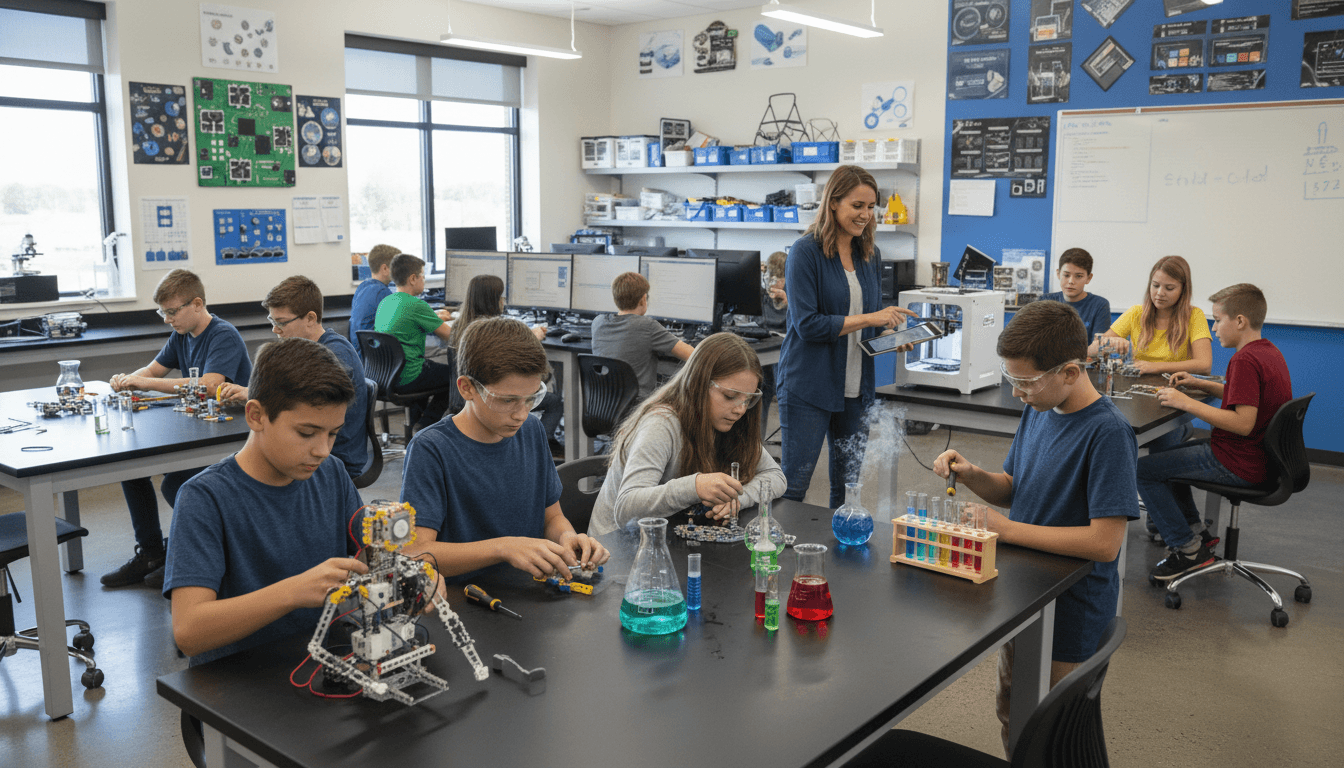
STEM End-of-Year Newsletter for K-12 Families
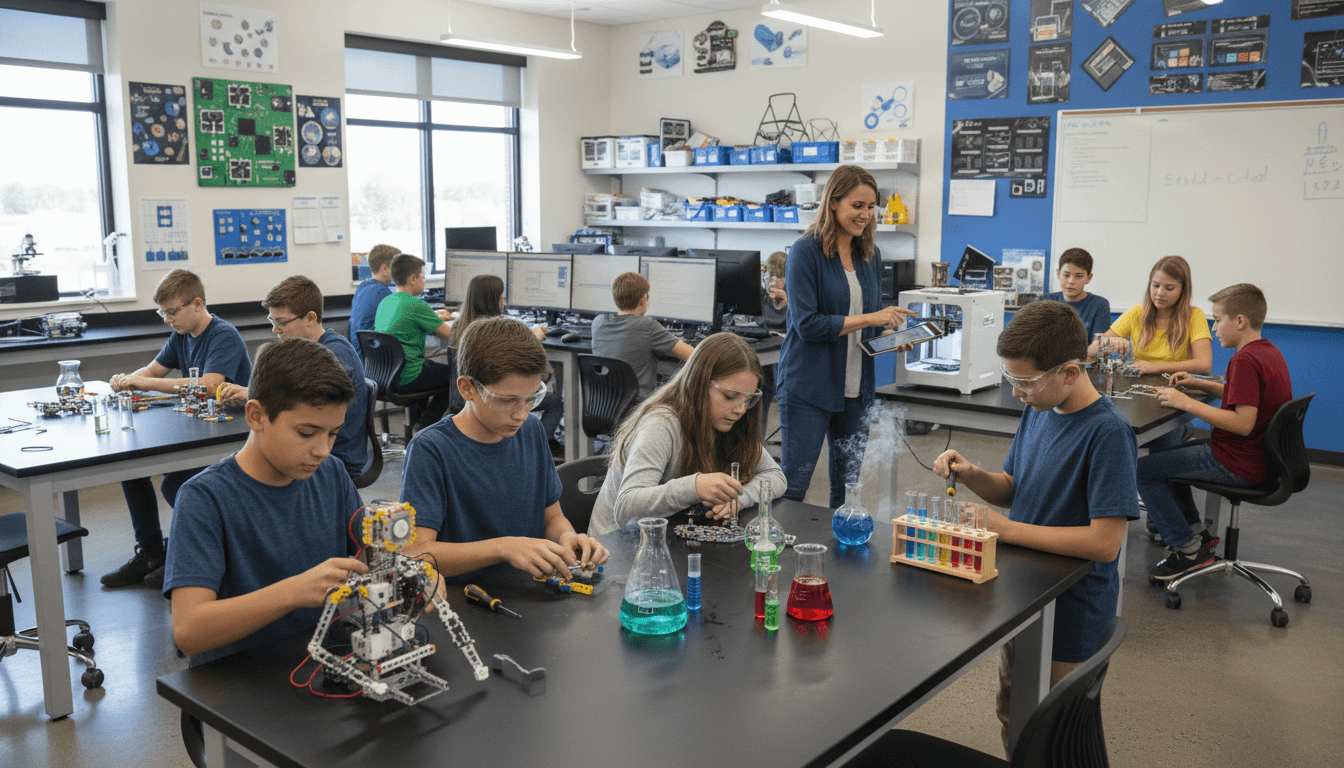
The end-of-year newsletter is the STEM teacher's final communication with families for the year, and it is worth spending real time on. A good year-end letter does three things: it shows families what their child accomplished in your class, it gives them something to carry forward over the summer, and it closes the year in a way that reflects what the classroom was actually like. A form letter does none of those things.
Name the specific things students built and did
End-of-year newsletters that say "students had a great year exploring science and engineering concepts" give families nothing to hold onto. What did students actually build? What problem did they actually solve? What moment in the classroom was genuinely surprising?
Describe two or three concrete moments from the year. The time a student's bridge design held three times the expected weight. The moment the class realized their hypothesis about plant growth was wrong, and what they did next. The final project presentations where a student who had struggled all year gave the best explanation of the class. Specific stories outlast everything else in a year-end letter.
Acknowledge what was hard as well as what worked
The most trustworthy end-of-year letters are honest about difficulty. If a unit took longer than planned, if a project did not go the way anyone expected, if the class hit something genuinely hard and had to work through it, saying so is more credible and more interesting than a uniformly positive review of the year.
"Our robotics unit was more challenging than I expected this year. Students struggled with the programming for several weeks before it clicked. Watching that click happen was one of the best moments of my teaching year." That kind of honesty builds parent trust and reflects the real experience of STEM learning.
Give families one or two summer activities worth doing
The summer STEM activity section of a year-end newsletter fails when it becomes a listicle. Resist the urge to share everything. Pick one or two activities that are genuinely interesting, require minimal materials, and connect directly to what students worked on this year.
Write each suggestion with enough detail that a family can actually do it. Not "try some kitchen chemistry experiments" but "mix baking soda and vinegar in a cup and ask your child to predict what will happen, then ask them to design a way to test whether the amount of baking soda changes the reaction. That is a real experiment, and it takes about ten minutes."
Tell families what to expect next year
If you know what the next STEM course looks like, tell families. "Students who complete this course are well prepared for the algebra-based physics they will encounter in tenth grade. The strongest preparation they can do over the summer is to keep using equations in any context, cooking measurements, sports statistics, anything numerical that requires calculation." That kind of forward-looking guidance is something most year-end newsletters skip entirely.
If you do not know the next course, tell families what the key skills from your class will support across many STEM disciplines. The investment families make in their child's STEM confidence over the summer is directly connected to whether they understand that those skills are genuinely valuable.
Thank families in a specific and genuine way
Generic thanks at the end of a year-end newsletter feel perfunctory. A specific thank you, naming things families actually did, lands differently.
"Thank you to the families who drove to our science fair at 7pm on a Tuesday, who sent in materials for three separate projects, and who asked your student the right questions when they came home confused about something. I noticed, and it made a real difference to how the class went this year." That kind of closing is the one families read twice and sometimes keep.
Get one newsletter idea every week.
Free. For teachers. No spam.
Frequently asked questions
What should a STEM end-of-year newsletter include?
Cover what the class accomplished over the year in specific terms, one or two moments that represent the best of what students did, summer STEM activities families can try that do not require special equipment, what students should expect in the next grade level if you know it, and any summer programs, competitions, or resources worth knowing about.
How do I summarize an entire year of STEM learning without the newsletter becoming too long?
Do not try to summarize everything. Pick the two or three moments that best represent what students accomplished this year and describe each one specifically. A newsletter that tells one rich story is more memorable and more likely to be read than a list of every unit covered.
What summer STEM activities can I recommend to families?
Focus on activities that match the skills students built this year. If the class worked on data analysis, suggest having students track daily temperatures and graph them. If the class built circuits, suggest an inexpensive kit. If the class focused on biology, suggest a backyard species survey. Connect the recommendation to the year's work so families see it as continuation, not homework.
How do I keep families engaged with STEM over the summer without overwhelming them?
Give one or two genuinely interesting activity suggestions and then step back. A summer newsletter that includes ten activities, a reading list, and three websites produces guilt rather than action. One activity described in enough detail that a family can actually do it without prior knowledge is worth more than a comprehensive resource guide.
How does Daystage help STEM teachers close the year with families?
Daystage lets STEM teachers send a final newsletter to their family list at the end of the year that reflects the class's work and maintains the communication relationship through summer, making the fall restart feel like a continuation rather than a fresh start.

Adi Ackerman
Author
Adi Ackerman is a former classroom teacher and curriculum writer with 8 years in K-8 schools. She writes about school communication, parent engagement, and what actually works in real classrooms.
More for STEM
Ready to send your first newsletter?
3 newsletters free. No credit card. First one ready in under 5 minutes.
Get started free