
South Dakota STEM Program Newsletter: Local Resources and Guide
South Dakota has a STEM asset that very few people outside the state know about: a mile underground in the Black Hills, scientists are hunting for dark matter and conducting physics experiments at the Sanford Underground Research Facility. That single fact can transform how a physics student in South Dakota sees their own state. A STEM newsletter that brings these local connections to light gives South Dakota families a sense that extraordinary science is not something that happens only in other places.
Sanford Underground Research Facility
The Sanford Lab in Lead, South Dakota is built inside the Homestake Gold Mine, which at over 8,000 feet deep is the deepest mine in the Western Hemisphere. Scientists use its depth as natural shielding from cosmic rays to conduct ultra-sensitive physics experiments looking for dark matter particles. The LUX-ZEPLIN dark matter detector is one of the most sensitive instruments ever built.
Sanford Lab runs the Education and Public Outreach program for South Dakota schools, providing classroom programs, teacher professional development, and student visits. For Black Hills schools especially, this is a world-class science facility directly accessible for school programs.
Agricultural science and SDSU
South Dakota State University is the state's land-grant university with a strong College of Agriculture, Food and Environmental Sciences. SDSU research in crop genetics, water resources, and food science connects directly to South Dakota's farming communities. The SDSU Extension Service reaches rural schools across the state. For students in farming communities, connecting STEM to agricultural science is authentic and career-relevant.
South Dakota School of Mines
SD Mines in Rapid City focuses on engineering and science education with a historical connection to the Black Hills mining industry. Today it has programs in electrical engineering, mechanical engineering, and materials science. SD Mines runs outreach programs and competitions for K-12 students. It is an in-state engineering option with a focused technical mission.
Indigenous science and Lakota knowledge
The Lakota and other Plains peoples developed sophisticated knowledge of the Great Plains ecosystem through generations of observation and practice. Bison ecology, seasonal patterns, celestial navigation, and plant medicine are all areas where Lakota traditional knowledge represents genuine scientific understanding. Tribal colleges including Sinte Gleska University have worked on integrating that knowledge with mainstream science education. For schools serving Native American communities, this integration builds both cultural respect and scientific richness.
Template: South Dakota STEM newsletter excerpt
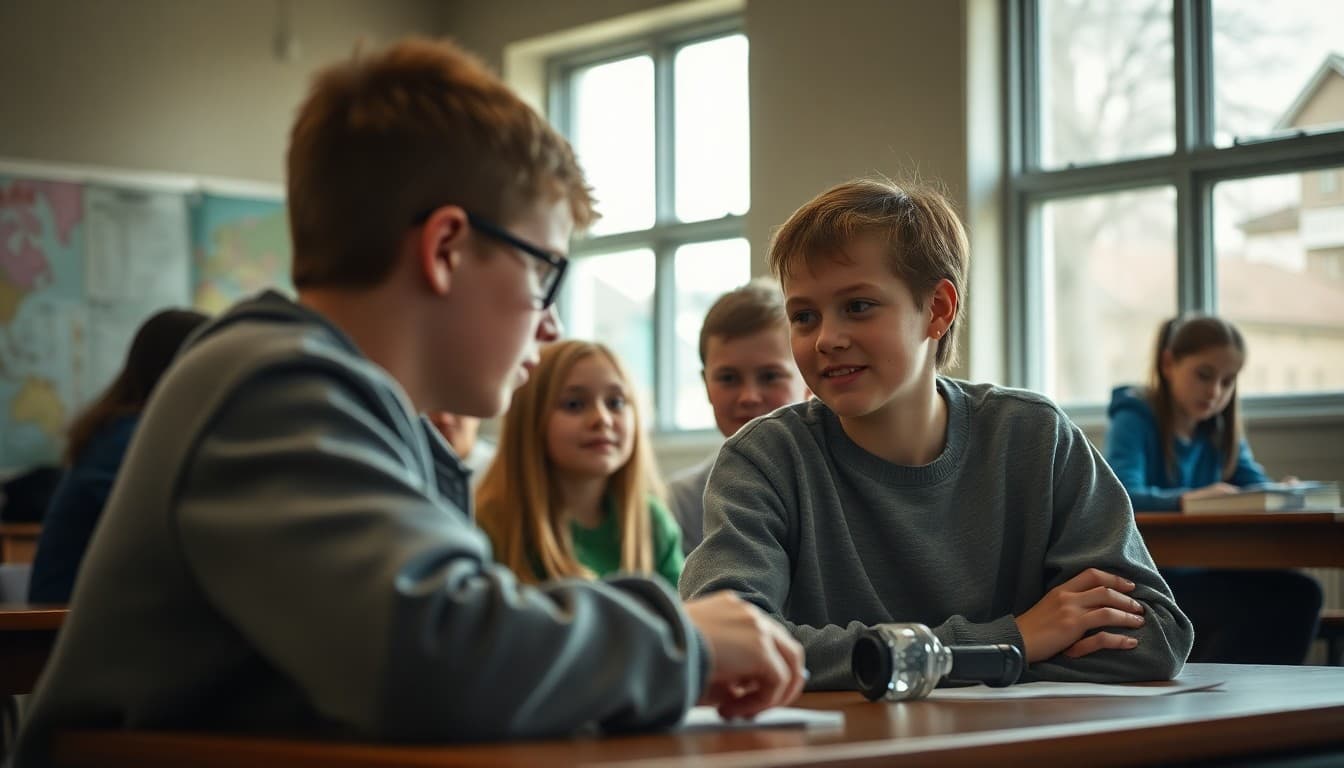
"This semester our physics class is studying particle physics and we have a direct local connection: the Sanford Underground Research Facility in Lead, South Dakota is one of the world's most advanced dark matter research labs. It is built one mile underground in the old Homestake Mine. Sanford Lab has an education program and we have scheduled a virtual visit with one of their scientists in February. This is world-class physics research happening right here in our state."
South Dakota STEM competitions
Science Olympiad SD runs state competitions. The SD Science and Engineering Fair connects to ISEF. SD Mines and SDSU host academic competitions for high school students. FFA science competitions are strong in agricultural communities. For rural South Dakota schools with distances between communities, having clear information about competition access and any distance participation options is particularly valuable for families.
Daystage makes it easy to communicate South Dakota STEM programs, Sanford Lab connections, and competition information to families throughout the school year.
Get one newsletter idea every week.
Free. For teachers. No spam.
Frequently asked questions
What STEM resources are available to South Dakota students?
South Dakota has the South Dakota STEM Network and support from the SD Department of Education. The Sanford Underground Research Facility in Lead conducts world-class particle physics research with school programs. South Dakota School of Mines and Technology has outreach programs. South Dakota State University has strong agricultural and engineering programs. The Crazy Horse Monument and tribal colleges provide cultural and science education connections.
What is Sanford Underground Research Facility?
The Sanford Underground Research Facility in Lead, South Dakota is built in the former Homestake Gold Mine, the deepest mine in the Western Hemisphere. Scientists use the mile-deep underground environment to detect dark matter and conduct other physics experiments requiring shielding from cosmic radiation. Sanford Lab is one of the world's premier underground physics laboratories and runs education programs for South Dakota schools.
How does agricultural science connect to STEM education in South Dakota?
South Dakota is a major producer of corn, soybeans, sunflowers, and cattle. SDSU is a top agricultural research university with direct ties to SD farming communities. Precision agriculture technology, crop genetics, and food science are major career fields. For rural SD students, connecting STEM to agricultural science makes it immediately relevant to the economy and traditions of their communities.
How can South Dakota STEM teachers integrate indigenous science knowledge?
South Dakota has nine federally recognized Sioux tribes with rich ecological and astronomical knowledge traditions. The Lakota and other Sioux peoples developed sophisticated knowledge of the Great Plains ecosystem and celestial navigation. Sinte Gleska University and Oglala Lakota College are tribal colleges that have worked on integrating traditional knowledge with Western science education. This integration builds cultural relevance for Native American students.
How can Daystage support South Dakota STEM programs?
Daystage helps South Dakota STEM teachers communicate with families in Sioux Falls, Rapid City, and small rural and reservation communities. For schools near Sanford Lab, newsletters connecting physics curriculum to the world-class research happening locally build immediate excitement. Newsletters that acknowledge both Western science and indigenous knowledge traditions signal respect for the communities being served.

Adi Ackerman
Author
Adi Ackerman is a former classroom teacher and curriculum writer with 8 years in K-8 schools. She writes about school communication, parent engagement, and what actually works in real classrooms.
More for STEM
Ready to send your first newsletter?
3 newsletters free. No credit card. First one ready in under 5 minutes.
Get started free