
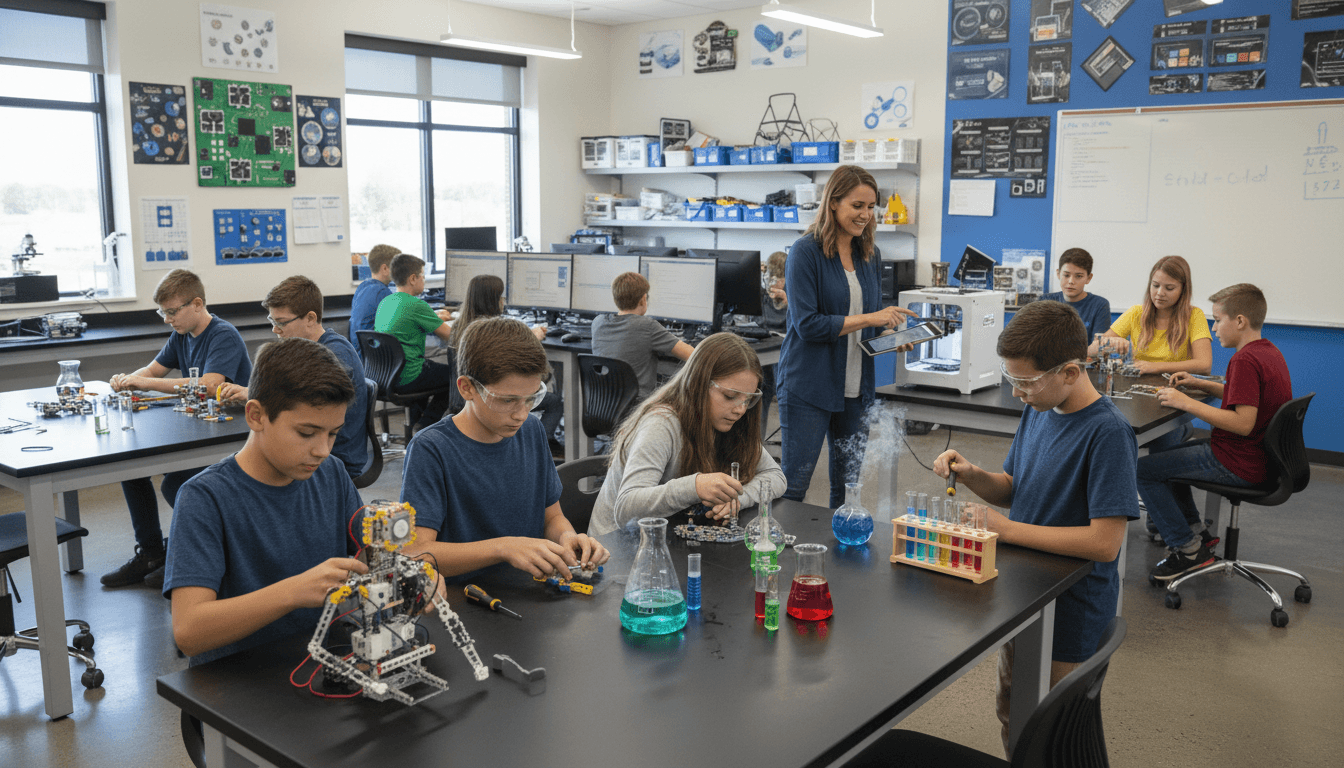
Pre-K STEM Activities Newsletter for Families
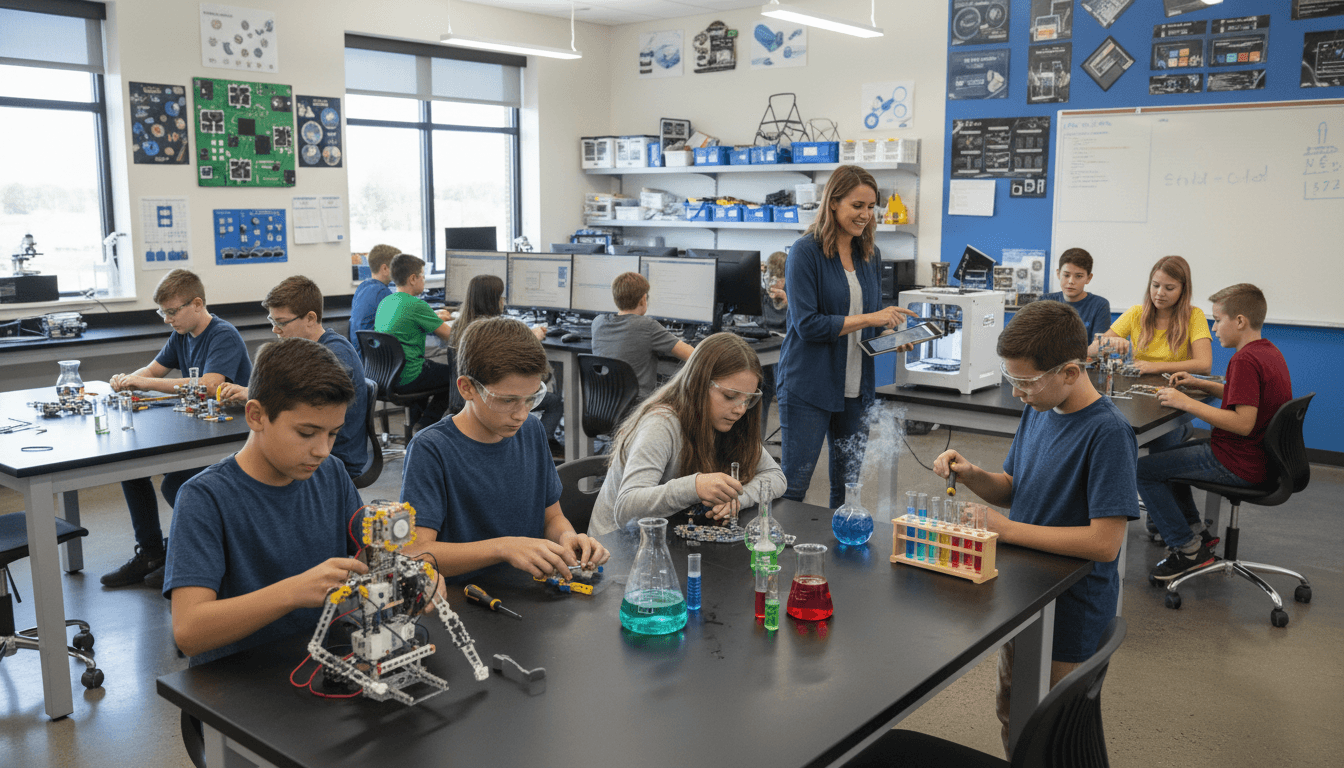
Pre-K STEM newsletters have a unique opportunity that later-grade newsletters do not: parents of four-year-olds are still actively curious about what their child is doing in school and are genuinely interested in supporting learning at home. A newsletter that gives them the right language and activities can turn the living room into an extension of your classroom.
Show families what STEM looks like at age 4
Many parents have a mental picture of STEM that involves beakers, circuits, and equations. That picture makes STEM feel age-inappropriate for pre-K. Your newsletter's first job is to replace that picture with an accurate one.
Describe what your students actually did this week using specific, physical detail. "We dropped different objects into a bin of water and predicted whether each one would sink or float before we tried it. Students disagreed about whether a large rock and a small piece of foam would sink, and we tested both." That description makes STEM visible and understandable for every parent regardless of their own academic background.
Connect classroom STEM to what children do naturally
Pre-K children are natural scientists. They ask why constantly. They touch and taste everything within reach. They build and knock down and rebuild. They notice small details that adults walk past. Your newsletter can help parents recognize this behavior as STEM learning in progress.
"When your child lines up their blocks from biggest to smallest, they are doing measurement and sequencing. When they ask why the sky is blue, they are asking a scientific question. When they mix their paints and notice what color they make, they are observing a chemical change. You do not need a science kit. You already live in a science classroom."
Give parents specific, zero-cost activities to try at home
Pre-K STEM home activities work best when they require nothing special. Parents who have to buy materials are significantly less likely to follow through than parents who can use what they already have. Make every activity suggestion require only household items.
"This week: fill three containers with different amounts of water and tap them with a spoon. Ask your child: do they sound the same? Which sounds highest? Which sounds lowest? What changes when you add more water?" That activity takes two minutes, requires no special equipment, and introduces concepts of sound, pitch, and scientific observation in a way a four-year-old can fully engage with.
Use the STEM vocabulary you teach in the newsletter itself
Pre-K teachers who use words like "predict," "observe," "sort," and "experiment" in the classroom can reinforce those words by using them in newsletters. When a parent reads those words in the newsletter and hears their child use them at home, the vocabulary becomes part of the family's language around learning.
Brief, natural definitions help parents who are not familiar with the terms. "We asked students to predict, which means to make a guess before you try something, what would happen if we added food coloring to warm water versus cold water." That parenthetical definition teaches the parent without being condescending and models the kind of talk moves parents can use at home.
Celebrate the process, not the right answer
One of the most important things a pre-K STEM newsletter can communicate to parents is that getting it wrong is part of the process. Many parents carry their own school memories of STEM as a subject with correct answers and failure as shameful. Pre-K is the moment to disrupt that pattern.
"This week a student predicted that a feather would sink and was completely wrong. We celebrated that together, because making a prediction and finding out you were wrong is how scientists learn. Your child does not need to be right to be doing good STEM thinking." That framing protects children from developing early math and science anxiety and gives parents permission to model curiosity over correctness.
Get one newsletter idea every week.
Free. For teachers. No spam.
Frequently asked questions
What does STEM learning look like in a pre-K classroom?
At the pre-K level, STEM happens through play and exploration rather than formal instruction. Students sort objects by size, color, and shape. They build structures with blocks and test what happens when they change the design. They observe plants growing, watch water move in different containers, and notice patterns in the world around them. Your newsletter can describe these activities in ways that help parents recognize STEM learning when it happens at home.
How do I explain the value of STEM at age 4 to parents who think it sounds too advanced?
STEM at age 4 is about curiosity and noticing, not equations and experiments. Tell parents that when their child asks 'why does ice melt?' they are doing science. When they line up their toys from smallest to biggest, they are doing math. The newsletter's job is to name what is already happening so families can encourage and extend it.
What STEM activities can pre-K families do at home without special materials?
Cooking and baking involve measuring and observing change. Water play in the bathtub or sink explores volume and flow. Gardening, even one plant in a cup on a windowsill, involves observation and prediction. Sorting the family laundry by color or type is classification. All of these activities support pre-K STEM development and require nothing beyond what most families already have.
How do I write about STEM in a way that is accessible for pre-K parents who are not science-oriented?
Use action words rather than science vocabulary. Instead of 'students explored buoyancy,' write 'students tested which objects sink and which float and made predictions before trying each one.' Every description should be clear enough that a parent who was not in the room can picture exactly what happened and why it matters.
How does Daystage help pre-K STEM teachers communicate with families?
Daystage lets early childhood teachers send weekly or biweekly newsletters to their family list with an easy-to-use format that supports including photos and activity descriptions alongside the regular class updates.

Adi Ackerman
Author
Adi Ackerman is a former classroom teacher and curriculum writer with 8 years in K-8 schools. She writes about school communication, parent engagement, and what actually works in real classrooms.
More for STEM
Ready to send your first newsletter?
3 newsletters free. No credit card. First one ready in under 5 minutes.
Get started free