
Oregon STEM Program Newsletter: Local Resources and Guide

Oregon's STEM education has two distinct strengths: one of the most remarkable natural environments in North America for environmental science, and a significant tech industry in the Portland metro with direct career connections for students interested in engineering and computer science. A STEM newsletter that draws on either context, or both, gives Oregon families a compelling and locally grounded picture of what STEM education leads to.
Intel and the Silicon Forest
Intel's Hillsboro semiconductor manufacturing campus employs thousands of engineers, scientists, and manufacturing specialists. It is one of the largest private employers in Oregon and the anchor of what locals call the Silicon Forest. Nike's Beaverton headquarters employs materials scientists who develop shoe and apparel technologies. Precision Castparts builds aerospace components with high-precision manufacturing.
For Portland metro students, tech and engineering careers are local. The pathway from school STEM to a Hillsboro engineering job or a Beaverton materials science role is direct and visible.
The Cascade volcanoes and earth science
Oregon sits on the Pacific Ring of Fire and has active volcanic geology. The eruption of Mount St. Helens in 1980 (in neighboring Washington) is documented in remarkable detail and provides an extraordinary earth science case study. Crater Lake, the deepest lake in the US, was formed by the collapse of a volcanic caldera approximately 7,700 years ago and is still studied actively by limnologists and volcanologists.
Salmon and Pacific Northwest ecology
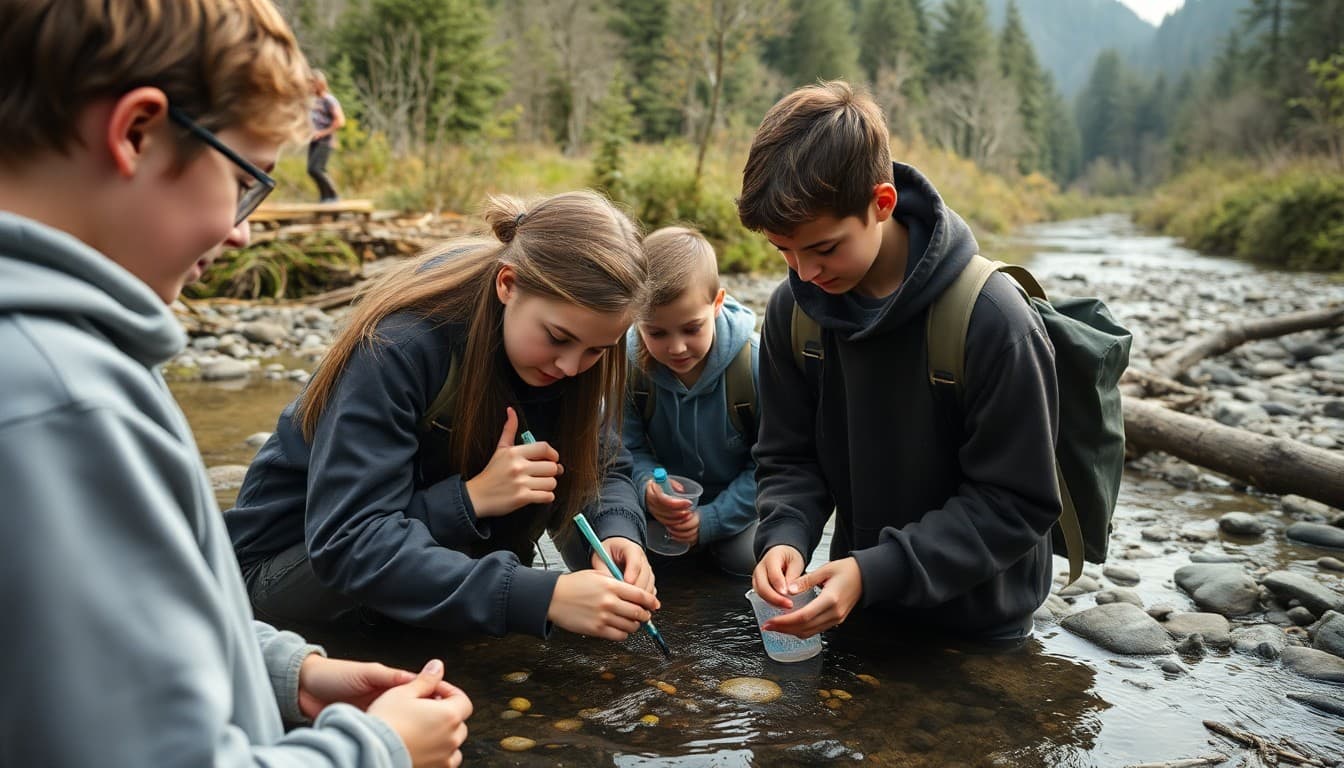
The Columbia River salmon runs are one of the most studied and most contested ecological systems in the Pacific Northwest. Dam operations, hatchery management, habitat restoration, and climate-driven ocean changes all affect salmon populations. Students who study salmon ecology in Oregon are engaging with a real conservation debate that involves science, engineering, economics, and politics. NOAA Fisheries, Oregon Department of Fish and Wildlife, and tribal fish management programs all conduct active research.
Oregon State and environmental science research
Oregon State University in Corvallis has strong programs in forestry, oceanography, environmental engineering, and computer science. Its College of Earth, Ocean, and Atmospheric Sciences conducts research directly relevant to Oregon's environmental challenges. OSU's outreach programs include high school summer science institutes and teacher professional development. For students interested in environmental science careers in Oregon, OSU is a direct pipeline.
Template: Oregon STEM newsletter excerpt
"This semester our environmental science class is studying salmon ecology using data from the Columbia River monitoring programs. Students are analyzing fish passage counts, water temperature data, and ocean condition indices to understand what drives salmon returns. We also have an Intel engineer from the Hillsboro campus visiting in November to talk about careers in semiconductor engineering. The Oregon Science Fair registration is also open this month."
Oregon STEM competitions
FIRST Robotics Oregon holds state championship events. Science Olympiad Oregon runs competitive state programs. The Oregon Science and Engineering Fair connects to ISEF. OMSI runs hands-on competitions. Oregon State and UO host high school academic events. Naming specific competitions with clear timelines in newsletters gives families advance notice to plan support for participating students.
Daystage makes it easy to build a year-round newsletter series that keeps Oregon families connected to the tech industry, environmental science research, and competition opportunities available to their students.
Get one newsletter idea every week.
Free. For teachers. No spam.
Frequently asked questions
What STEM resources support Oregon students?
Oregon has the Oregon STEM Network and support from the Oregon Department of Education. Intel, Nike, and Precision Castparts have education programs. Oregon State University, the University of Oregon, and Portland State University run K-12 STEM outreach. The Oregon Museum of Science and Industry (OMSI) in Portland is a major science education resource. The Columbia River watershed and the Cascade Range provide outstanding environmental science contexts.
What is the Silicon Forest and how does it connect to Oregon STEM education?
The Silicon Forest is the nickname for the tech industry cluster in the Portland metro area. Intel has major semiconductor manufacturing facilities in Hillsboro. Nike's world headquarters in Beaverton employs materials scientists and data analysts. Precision Castparts builds aerospace components. Daimler Trucks North America, eBay, and numerous tech companies have significant Oregon operations. This creates direct STEM career connections for Portland area students.
How does Oregon's environment connect to science education?
Oregon has extraordinary environmental science contexts: Pacific coast marine ecology, the Cascade volcanoes and Crater Lake, the Columbia River salmon runs, old-growth forest ecology, and high desert ecosystems. These diverse environments provide authentic and compelling contexts for environmental science, ecology, geology, and marine biology instruction that connect classroom learning to real conservation and research challenges.
What STEM competitions are active in Oregon?
Oregon has active FIRST Robotics teams with regional competition events. Science Olympiad Oregon holds state competitions. The Oregon Science and Engineering Fair connects to ISEF. The Pacific Northwest regional ISEF is one of the stronger regional fairs. OMSI runs hands-on competitions and programs throughout the year. Oregon State and UO host high school academic competitions in math and science.
How can Daystage support Oregon STEM programs?
Daystage helps Oregon STEM teachers communicate with Portland metro families and rural Oregon communities from the coast to the high desert. For Silicon Forest school communities, newsletters connecting tech industry careers to curriculum are highly relevant. For coastal and rural schools, connecting environmental science to conservation careers and the Oregon research community builds authentic local meaning for STEM education.

Adi Ackerman
Author
Adi Ackerman is a former classroom teacher and curriculum writer with 8 years in K-8 schools. She writes about school communication, parent engagement, and what actually works in real classrooms.
More for STEM
Ready to send your first newsletter?
3 newsletters free. No credit card. First one ready in under 5 minutes.
Get started free