
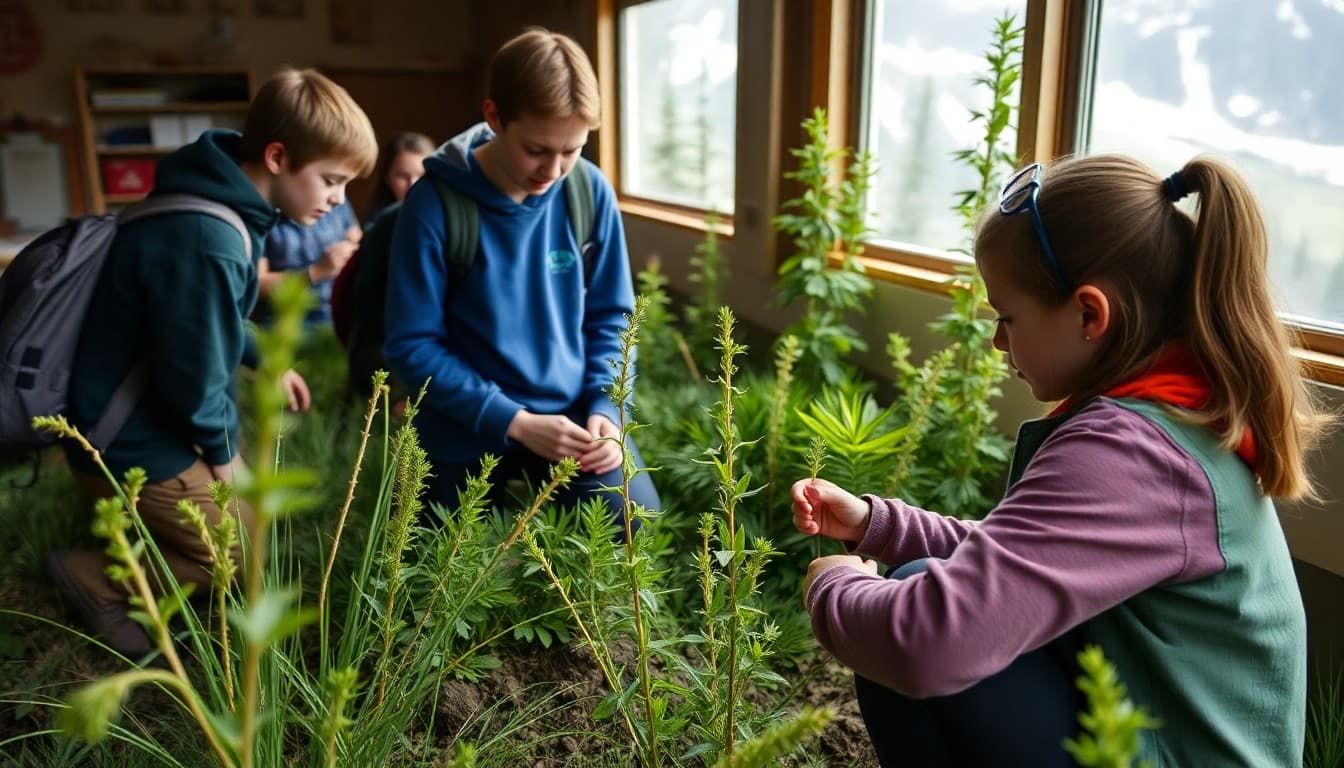
Montana STEM Program Newsletter: Local Resources and Guide

Montana's science classroom is the Rocky Mountain ecosystem, and it is world-class. Glacier National Park is one of the most monitored climate change sites on earth. The Yellowstone ecosystem supports unique microbiology that has contributed to fundamental medical discoveries. The Missouri River headwaters and the Columbia River watershed are active hydrology research sites. A STEM newsletter that connects what students learn in class to the scientific work happening in Montana's landscapes gives families a compelling and locally grounded picture of science.
Glacier National Park and climate science
Glacier National Park's glaciers are retreating at a rate that has been documented over more than a century, making it one of the most visible and well-documented sites of climate change in North America. USGS researchers have been monitoring the park's glaciers for decades, and the data is publicly available. Students studying climate science can work with real Glacier National Park data. The park's education programs serve Montana schools through classroom resources and site visits.
Yellowstone's unique biology
The hot springs and geysers of Yellowstone harbor heat-resistant bacteria called thermophiles. A thermophile discovered in Yellowstone's hot springs was the source of the enzyme that made PCR technology possible, which in turn made DNA fingerprinting, genetic testing, and COVID-19 tests possible. This connection between a Montana organism and modern biotechnology is one of the most dramatic examples of why basic science matters and is worth sharing in any STEM newsletter.
Wildlife biology and natural resource careers
Montana Fish, Wildlife and Parks employs wildlife biologists, fisheries managers, and environmental scientists. The US Forest Service, Bureau of Land Management, and National Park Service all have significant Montana presences. For students who want to combine a love of Montana's outdoors with science education, wildlife and natural resource management careers are real and accessible local pathways.
Montana State University and tech growth in Bozeman
Montana State University in Bozeman has grown significantly as a research university, particularly in engineering, agriculture, and life sciences. Bozeman itself has attracted a growing tech sector as people relocate for quality of life. For Montana students interested in engineering and technology careers who want to stay in Montana, Bozeman is an increasingly viable option.
Template: Montana STEM newsletter excerpt
"This semester our earth science class is studying climate change using real glacier retreat data from Glacier National Park. Scientists have been photographing the same glacier locations every year since the early 1900s, and the change is measurable and significant. Students are analyzing the data and connecting it to what they know about global climate systems. We also have a wildlife biologist from Montana Fish, Wildlife and Parks visiting in February to talk about careers in wildlife science and what field research looks like in a state like ours."
Montana STEM competitions and access
Science Olympiad Montana runs state competitions. The Montana Science Fair has both middle and high school divisions. For rural Montana schools with long distances between communities, distance participation options are important. Montana State University hosts competitions accessible to students from around the state. Naming these options specifically in your newsletter with transportation or distance participation details is particularly valuable for rural Montana families.
Daystage makes it easy to send consistent, professional newsletters that connect Montana families to the extraordinary natural science resources and STEM career opportunities available in their state.
Get one newsletter idea every week.
Free. For teachers. No spam.
Frequently asked questions
What STEM resources are available to Montana schools?
Montana has the Montana STEM Resources Network and support from the Montana Office of Public Instruction. Montana State University and the University of Montana run K-12 STEM outreach programs. The USGS Northern Rocky Mountain Science Center provides research resources. Glacier and Yellowstone National Parks are located in or near Montana and offer school science programs. The Montana Bureau of Mines and Geology supports earth science education.
What industries drive STEM careers in Montana?
Montana's STEM careers are primarily in natural resource management, environmental science, and research. Wildlife biology, fisheries management, forestry, geology, and hydrology are major career fields. The oil and gas industry in eastern Montana creates petroleum engineering and geology careers. Montana State University's research activities in engineering, agriculture, and life sciences create research-based careers in Bozeman.
How do Montana's national parks connect to science education?
Glacier National Park and Yellowstone (on the Montana-Wyoming-Idaho border) are among the world's most studied natural environments. Glacier is a major climate change monitoring site, with decades of glacier retreat data that make global news. Yellowstone's geothermal systems support unique research in microbiology, geology, and geochemistry. Students who study these environments are engaging with world-class scientific questions.
What STEM competitions are active in Montana?
Montana has Science Olympiad chapters at both middle and high school levels. The Montana Science Fair connects to ISEF. FIRST LEGO League teams operate in several Montana districts. Montana State University hosts math and science competitions for high school students. Given Montana's small and dispersed population, distance participation options are important for rural school STEM competition access.
How can Daystage support Montana STEM programs?
Daystage helps Montana STEM teachers communicate with families in small rural schools and larger urban communities like Billings, Missoula, and Bozeman. For rural Montana schools, consistent newsletters through Daystage help families understand STEM programs and competitions that might otherwise be invisible. Connecting newsletters to the natural science of Montana's landscape creates locally resonant content for families who value the outdoors.

Adi Ackerman
Author
Adi Ackerman is a former classroom teacher and curriculum writer with 8 years in K-8 schools. She writes about school communication, parent engagement, and what actually works in real classrooms.
More for STEM
Ready to send your first newsletter?
3 newsletters free. No credit card. First one ready in under 5 minutes.
Get started free