

Girls in STEM Newsletter: Encouraging Female Scientists
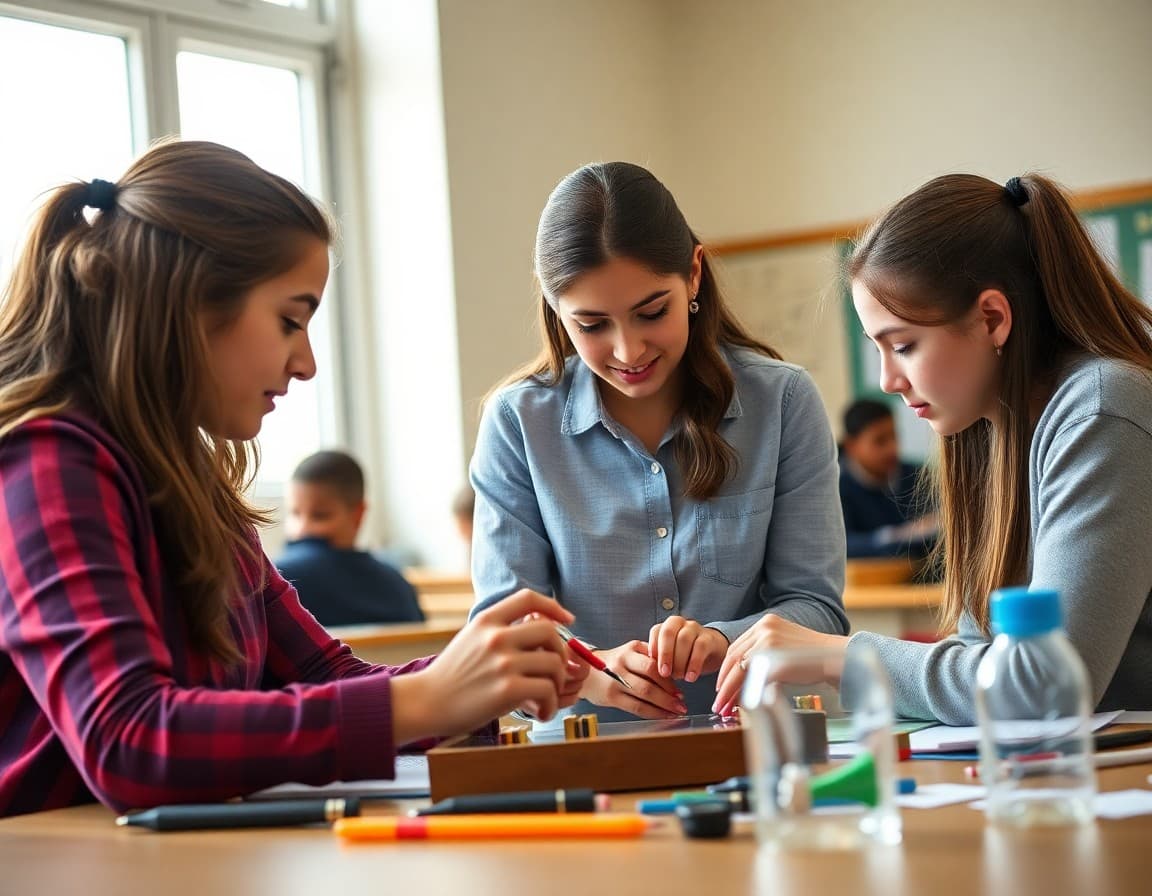
A Girls in STEM newsletter is making an argument with every issue: that the girls in this program belong here, that their work is serious and significant, and that the path from where they are now to a career in a STEM field is real and navigable. Every word should reinforce that argument.
Feature specific student work, not just general encouragement
Newsletters that say "our amazing girls are doing great things!" without specifics do not build the confidence they intend to. What builds confidence is evidence: specific descriptions of what a student built, coded, discovered, or solved. Replace vague praise with concrete documentation.
"Aria spent three weeks building a Python script that analyzes text files and identifies the most common words and phrases. She then used it to analyze the lyrics of her 200 most-played songs and discovered that 'time' is the most frequently used word. She then built a visualization of the results using matplotlib. That is a complete data science pipeline built by a seventh grader."
Introduce female role models from specific careers
Abstract encouragement to "be a scientist" does not move the needle as much as introducing a specific person with a specific career path. In each newsletter, feature one woman in a STEM field with enough biographical specificity to make the connection real.
Feature women who do not fit the narrow stereotype of what a scientist looks like. A Black woman leading a climate research lab. A Latina software engineer who started a business from a college project. A teacher who became an aerospace engineer after a career change. Breadth of representation matters more than number of role models.
Describe mentor visits and what students took from them
When you bring a professional woman in STEM to speak with students, the newsletter update should include what she said that resonated, what questions students asked, and what action any students took after the visit. A newsletter that says "Dr. Chen visited and it was great" leaves out the entire point.
"Dr. Chen is a biomedical engineer who designs prosthetic limb components. The question she gets most often from students is how she handles being the only woman in the room. Her answer: 'I stopped noticing that I was the only one when I started being the most prepared person in the room. Preparation is the confidence that no one can take away.'"
Address stereotype threat directly, once a year
Stereotype threat, the phenomenon where awareness of a negative stereotype about one's group reduces performance, is real and documented in STEM contexts. A newsletter written for families can name this phenomenon once and explain what the program does to counter it.
"Research shows that girls who are reminded of gender stereotypes before a math test score lower than girls who are not. Our program deliberately focuses on individual achievement rather than group comparisons, emphasizes growth over fixed ability, and gives students consistent evidence of their own competence through project documentation. These are not feel-good gestures. They are evidence-based practices."
Sample newsletter template excerpt
Girls in STEM spring update:
This semester, fourteen students completed the six-week app development unit. Each student chose a real problem in their school or community and built a working mobile app prototype as a solution. Here are three projects:
Sofia built a period tracker that also logs stress and sleep data and generates a pattern analysis report. Yuki built a school lost-and-found app where students can post photos of found items and claim them with a description. Priya built a tool that converts word problems from the school's math textbook into step-by-step guided walkthroughs.
All three apps are functional. All three solve real problems. All three were built by girls who had never written a line of code in September.
Share program outcomes and data
If your program tracks outcomes, share them in the newsletter. Percentage of participants who go on to take AP Computer Science or AP Science. Number of students who joined the robotics team. Number of scholarship applications submitted. Data makes the program's value concrete rather than aspirational.
Invite family engagement with specific asks
Families are powerful allies in sustaining girls' STEM interest, but they need specific guidance. A newsletter that asks families to share the name of one woman in their field of work, contribute to a mentor list, or ask their daughter to teach them one coding concept this week gives families actionable ways to participate.
Get one newsletter idea every week.
Free. For teachers. No spam.
Frequently asked questions
Why do schools create dedicated Girls in STEM programs?
Research consistently shows that girls show equal interest in science and math through elementary school but experience a significant drop in STEM confidence and participation during middle school. Contributing factors include stereotype threat, lack of visible female role models in STEM fields, and social pressures that frame STEM competence as incompatible with femininity. Dedicated programs create a space where girls can build STEM identity without those pressures, and data shows that all-female STEM environments produce higher confidence and persistence than mixed-gender programs for students at this developmental stage.
What makes a Girls in STEM program effective versus just offering a girls-only club?
Effective programs do three things that general clubs often miss: they explicitly introduce female role models from a wide range of STEM careers, they create mentorship connections between current students and older students or professional women in STEM, and they make career pathway discussions a regular part of program content rather than a one-time event. Programs that also give students agency in choosing their own projects, rather than following a prescribed curriculum, show higher persistence rates among participants.
How can families support a daughter who is interested in STEM?
The most important thing families can do is respond to STEM interest the same way they respond to any other passion: with specific encouragement, resources, and conversation. Avoid the common pitfall of saying 'girls can do STEM too,' which frames STEM as something girls need permission to enter. Instead, treat it as a natural fit. Buy books about female scientists, follow women in STEM on social media together, ask about the technical details of what she is working on, and connect her interest to the careers that field opens.
What organizations support Girls in STEM programs at the school level?
Major organizations include Girls Who Code (free curriculum and club materials), Black Girls Code, AAUW (American Association of University Women) Tech Trek camps, Society of Women Engineers SWENext clubs, Girls Inc. STEM programs, and FIRST Robotics Girls programs. Many of these organizations provide free program materials, competition access, scholarship connections, and mentor matching specifically for school-based programs. A newsletter should direct families to any external programs students can connect with outside of school hours.
How does Daystage help coordinators share Girls in STEM program updates with families?
Daystage lets Girls in STEM coordinators publish newsletters that highlight specific student achievements, mentor visits, and project results in a format that reaches both students and their families. When a newsletter celebrates a girl's engineering project with the same prominence as a sports achievement, it sends a clear message about what the school values. Daystage makes it easy to send those consistent, specific celebrations throughout the year.

Adi Ackerman
Author
Adi Ackerman is a former classroom teacher and curriculum writer with 8 years in K-8 schools. She writes about school communication, parent engagement, and what actually works in real classrooms.
Ready to send your first newsletter?
3 newsletters free. No credit card. First one ready in under 5 minutes.
Get started free