

Oklahoma Funding Update Newsletter: How Oklahoma Districts Communicate Funding Updates to Families
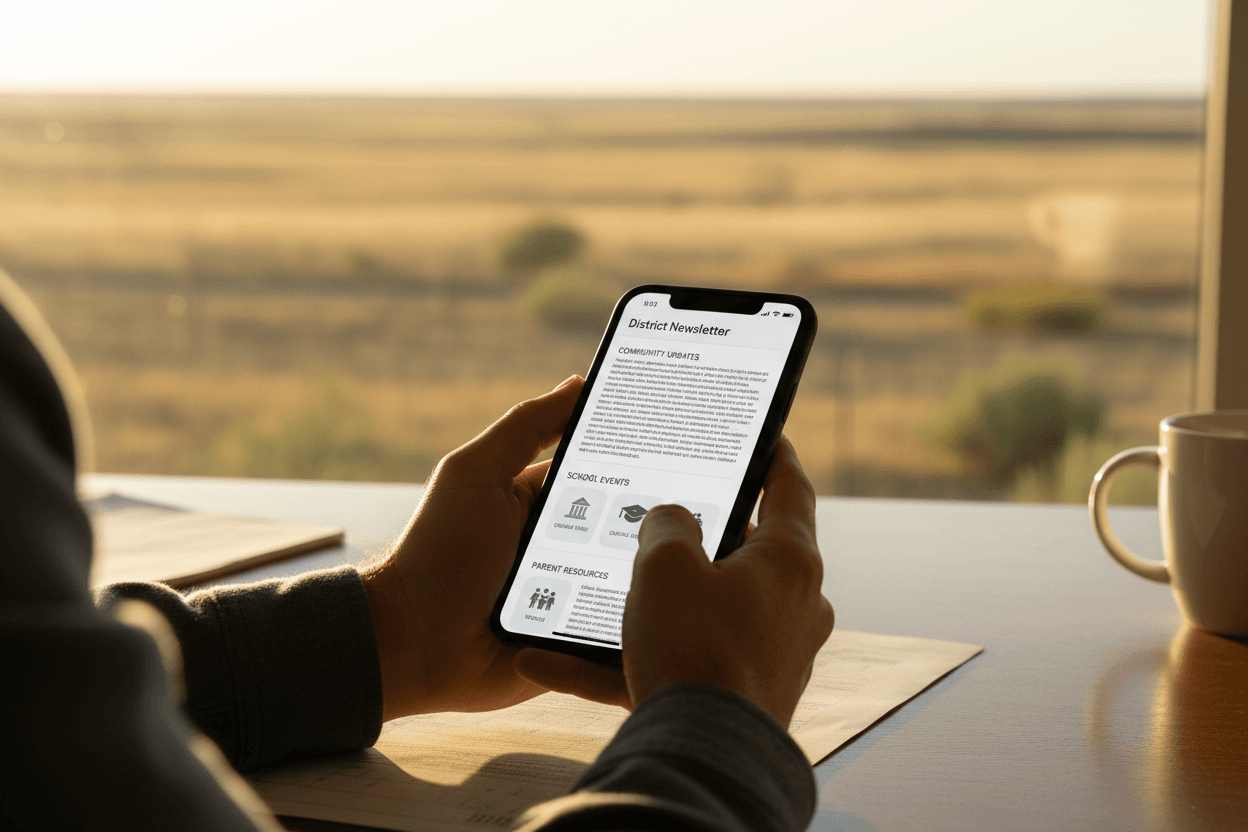
Funding decisions made by the Oklahoma legislature shape every classroom in your district, and most families do not follow the budget cycle. When the Oklahoma State Department of Education (OSDE) publishes the new per-district allocation, the district that explains it in clear language wins family trust for the next year of harder conversations.
Send within a week of receiving the final allocation
The legislature passes the budget. The Oklahoma State Department of Education (OSDE) publishes allocations. Your district has the number. That is when families want to hear from you, not in August when the school year is about to start and decisions are already made.
A two week gap between allocation and family communication is the upper bound. A week is better.
Lead with the headline number
Open with: "Our district's state aid for next year is [X dollars], a [Y percent] change from this year." That is the lead. Everything else explains it.
Avoid budget jargon in the opening. "Foundation aid" and "categorical funding" go in the body, defined the first time they appear.
Explain what drove the change
State aid moves for predictable reasons: enrollment changes, formula updates, expiring federal funds, new categorical programs. Name the cause. Families want to know whether this is a one time shift or a multi year trend.
"Our state aid declined by 2 percent. The main driver is a 4 percent enrollment decline in our K to 5 grades, which directly reduces our foundation aid under the Oklahoma funding formula."
Describe the programmatic impact
Budget numbers are abstract until you connect them to classrooms. If state aid is flat but expenses are up, name two or three specific decisions: maintaining class sizes, holding the line on a music program, deferring a technology refresh.
Families do not need every line item. They need to know what gets protected and what may change.
Be honest about cuts
If positions are being cut, programs reduced, or fees added, name them. Families find out anyway, usually from a friend who works in the district or from a local news story. The version they hear first sets the frame for the rest.
"We are not replacing two retiring elementary art positions this year. Each elementary campus will keep weekly art instruction, with grade 5 moving from twice weekly to once weekly."
Connect the funding to the strategic plan
Families want to know that budget decisions tie to district priorities. If literacy is the top strategic plan goal, show how the budget protects literacy spending even in a tight year.
Tie the dollars to the goals. That is what turns a financial update into a leadership communication.
Reference the upcoming board action
State the date the Board of Education will vote on the final budget. Invite families to the public hearing. Provide the link to the proposed budget document and the public comment sign up.
Inviting public input on the front end means fewer angry surprises on the back end. Families who feel heard during the budget process are far less likely to organize against district decisions after the fact.
Add a short FAQ at the bottom of the newsletter answering the three questions you know families will email about. Pull those from last year's inbox if you have not tracked them this year.
Example opening for a flat year
"The Oklahoma legislature finalized the education budget last week. Our district's state aid for 26-27 is essentially flat at [X dollars], a 0.4 percent increase. Health insurance, fuel, and special education costs are rising faster than that. The Board of Education will vote on the final district budget on [date]. Our priorities this year are class size, literacy support, and special education staffing."
That opening names the source, the number, the pressure on the number, and the response in five sentences. Families who read no further than the first paragraph still understand the district's position and what comes next.
What to do next
Build the funding update template before the legislative session ends. Have communications, finance, and bilingual review ready to go. When the allocation lands, you send within a week. Daystage keeps the family version, the staff version, and the board version aligned across one campaign so every audience hears a coherent district message.
Get one newsletter idea every week.
Free. For teachers. No spam.
Frequently asked questions
When does Oklahoma finalize state funding for districts?
The Oklahoma legislature finalizes the state education budget on its own cycle, usually in late spring or early summer. The Oklahoma State Department of Education (OSDE) then publishes per-district allocations within weeks. Your district communication should go out within a week of receiving your final allocation, not after the school year starts.
How much detail should a funding newsletter include?
Enough to answer four questions: did our total state aid go up or down, why, what does that mean for programs, and what is the district's response. Two pages maximum in the family version. The line-item detail belongs in the board presentation and the public budget document.
What if the district is facing a budget cut?
Name the cut. Name the dollar amount. Explain the cause (state formula change, enrollment decline, expiring federal funds). Describe what the district will protect and what may change. Families forgive a hard year. They do not forgive being kept in the dark while the local paper breaks the story first.
Should we use the funding update to make the case for a local levy or bond?
If a levy or bond is on the ballot, the funding newsletter is one of several pieces in that campaign. Keep it factual. State law in most jurisdictions restricts using district resources to advocate for a yes vote. Inform families of the facts and let the political action committee or community group make the advocacy case.
What tool sends a funding update across an entire Oklahoma district?
Daystage handles segmented sends from one newsletter draft, so the family version, the staff version, and the board version can go out from the same campaign with the right level of detail for each. Bilingual versions for Oklahoma families go in the same send, not as a separate communication.

Adi Ackerman
Author
Adi Ackerman is a former classroom teacher and curriculum writer with 8 years in K-8 schools. She writes about school communication, parent engagement, and what actually works in real classrooms.
More for State Guides
Superintendent Budget Update Newsletter: Communicating Finances Without Losing Trust
Superintendent · 8 min read
How School Districts Can Use Newsletters to Explain the Annual Budget
District · 8 min read
Kansas Funding Update Newsletter: How Kansas Districts Communicate Funding Updates to Families
State Guides · 6 min read
Ready to send your first newsletter?
3 newsletters free. No credit card. First one ready in under 5 minutes.
Get started free