
How School Districts Can Use Newsletters to Explain the Annual Budget

School district budgets are public documents. Most families never read them. Not because they do not care about how public education money is spent, but because a 200-page budget document formatted for accounting purposes is not how most people absorb information.
The district newsletter is the most practical way to translate budget information into something families can actually understand and engage with. Districts that communicate about their budgets proactively tend to face less backlash when money is tight and more community support when they need it.
Why budget communication matters
When districts do not communicate about their budgets, families fill the gap with assumptions. Sometimes those assumptions are accurate. More often they are not. Common misconceptions in communities where budget communication is poor: that district administrators are paid extravagantly, that money meant for classrooms is being spent elsewhere, that there is more money than the district lets on, or that cuts are ideological rather than financial.
Proactive budget communication replaces assumption with information. Families who understand where the money comes from and where it goes are better equipped to participate in community conversations about school funding, support funding measures when they arise, and interpret budget cuts accurately.
When to send budget newsletters
The school district budget cycle typically runs from January through June, with adoption happening before the fiscal year begins. Map your budget newsletters to the key moments in that cycle:
- January to February: Budget season preview. Let families know the budget process is beginning. Explain how the district builds its budget, what drives the major expenses, and how families can participate in the process (public meetings, community input sessions).
- March to April: Proposed budget overview. When the superintendent or finance team presents a proposed budget, summarize it in the newsletter. What are the biggest spending categories? Are there proposed increases or cuts? Why?
- May to June: Budget adoption communication. When the board adopts the budget, communicate what was adopted, what changed from the proposal, and what it means for schools in the coming year.
- October to November: Mid-year financial update. Share how the district is tracking against the budget mid-year. Are revenues meeting projections? Are any budget adjustments needed?
How to explain the budget in plain language
Budget newsletters fail when they use financial and accounting language without translation. Most families do not know what a categorical fund is, what ADA funding means, or how general fund versus restricted fund accounting works.
Start every budget newsletter with the basics:
- How big is the district's total budget? Give the dollar amount and put it in context. "Our district operates on a $47 million annual budget to serve 8,400 students."
- Where does the money come from? Local property taxes, state funding, federal grants. What percentage comes from each source?
- Where does most of the money go? In most districts, 75 to 85 percent goes to salaries and benefits. State that clearly. Families who do not know this will misinterpret where cuts can realistically happen.
- What is the district required to spend money on versus what is discretionary? Families often do not understand that much of the budget is legally required or contractually obligated, which limits flexibility during difficult financial years.
Using visuals effectively in budget newsletters
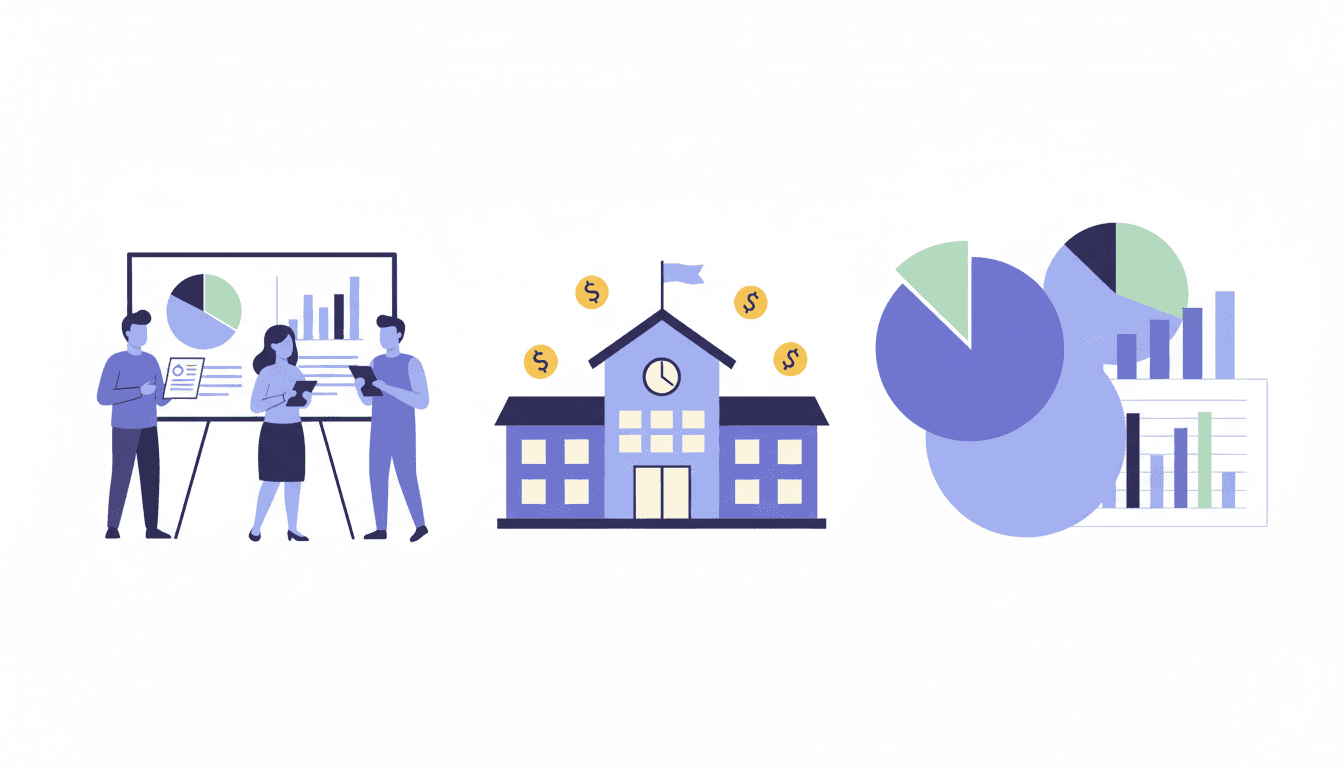
Budget information is highly visual. A pie chart showing where the budget goes is worth three paragraphs of explanation. A bar chart showing how per-pupil spending has changed over five years tells a story about trends that text alone cannot convey.
Include at least one simple visual in every budget newsletter. Keep it clean. One or two data points per chart is usually better than trying to show everything at once. A visual that takes 30 seconds to interpret is more useful than a detailed visual that takes five minutes.
If your newsletter tool supports image embedding, use it. If not, link to a visual on the district website and describe what it shows in the newsletter text.
Communicating budget cuts honestly
Budget cuts are where district budget communication most often fails. Districts either say nothing until the cuts are announced, creating a sense of surprise and alarm, or they use language so hedged and passive that families cannot understand what is actually being reduced.
When budget cuts are coming, communicate early and directly. Name what is being reduced, why, and what the impact on students will be. Families can handle honest information. They struggle with vague reassurances that are followed by cuts they did not see coming.
"We are reducing the district's counseling staff from 12 positions to nine as part of a $2.1 million reduction in the general fund. This means counselor caseloads will increase from approximately 400 students per counselor to 530. We are committed to maintaining counseling services but need families to know this change is happening and why" is harder to write than a generic statement. It is also infinitely more useful to the families reading it.
Inviting community input during the budget process
Budget newsletters are also the right place to invite community input during the budget development process. Most districts hold public budget hearings that are poorly attended. The newsletter can change that by explaining why the hearing matters and what kind of input is genuinely useful.
"The school board will hold a public hearing on the proposed budget on March 15 at 6:00 PM at the district office. This is an opportunity to ask questions about where the money goes and to share your priorities with the board before the budget is adopted" is more compelling than a generic meeting announcement.
Building trust through financial transparency
The districts with the most community trust on financial matters are not necessarily the ones with the most money or the most impressive programs. They are the ones that communicate honestly and consistently about their finances.
When families receive regular, clear budget newsletters over several years, they develop a baseline understanding of district finances that makes them more informed participants in conversations about school funding. They are more likely to support funding measures because they understand why the money is needed. They are more likely to accept difficult cuts because they understand why the cuts are necessary.
Daystage provides the consistent, professional newsletter format that district budget communications require. A branded, well-formatted newsletter with clear visuals and plain language positions budget information in a way that signals organizational transparency rather than bureaucratic obligation.
Financial transparency is not just a legal requirement. It is a community trust-building strategy that pays dividends across every area of district leadership.
Get one newsletter idea every week.
Free. For teachers. No spam.
Frequently asked questions
When should school districts send budget communication newsletters?
Map communications to four key moments in the budget cycle: a preview in January to February when the process begins, a proposed budget overview in March to April, a budget adoption summary in May to June, and a mid-year financial update in October to November. Missing any of these windows leaves families without context when decisions are announced.
What should a district budget newsletter include?
Start with the basics every time: the total budget amount with per-pupil context, where the money comes from across local, state, and federal sources, where 75 to 85 percent goes (salaries and benefits), and what is legally required versus discretionary. Without that foundation, families misinterpret what cuts are actually possible.
How should districts communicate budget cuts honestly across the community?
Communicate early and name what is being reduced, why, and the specific impact on students. When districts say nothing until cuts are announced, families feel blindsided. When they use language so hedged that nothing is clear, families assume the worst and fill in the gaps themselves. Specific numbers with direct impact statements build more trust than any amount of reassuring vagueness.
What are common challenges in district-level budget communication?
The most common failure is using financial and accounting language without translation. Terms like categorical fund, ADA funding, and general versus restricted fund accounting mean nothing to most families. Districts also tend to communicate poorly about cuts specifically, either staying silent until the announcement or softening the news so completely that families cannot understand what is actually being reduced.
How does Daystage support district budget newsletters?
Daystage provides the consistent, professional newsletter format that district budget communications require. A branded, well-formatted newsletter with clear visuals and plain language positions budget information as organizational transparency rather than bureaucratic obligation, which is exactly the tone that builds lasting community confidence in district finances.

Adi Ackerman
Author
Adi Ackerman is a former classroom teacher and curriculum writer with 8 years in K-8 schools. She writes about school communication, parent engagement, and what actually works in real classrooms.
More for District
Ready to send your first newsletter?
3 newsletters free. No credit card. First one ready in under 5 minutes.
Get started free