
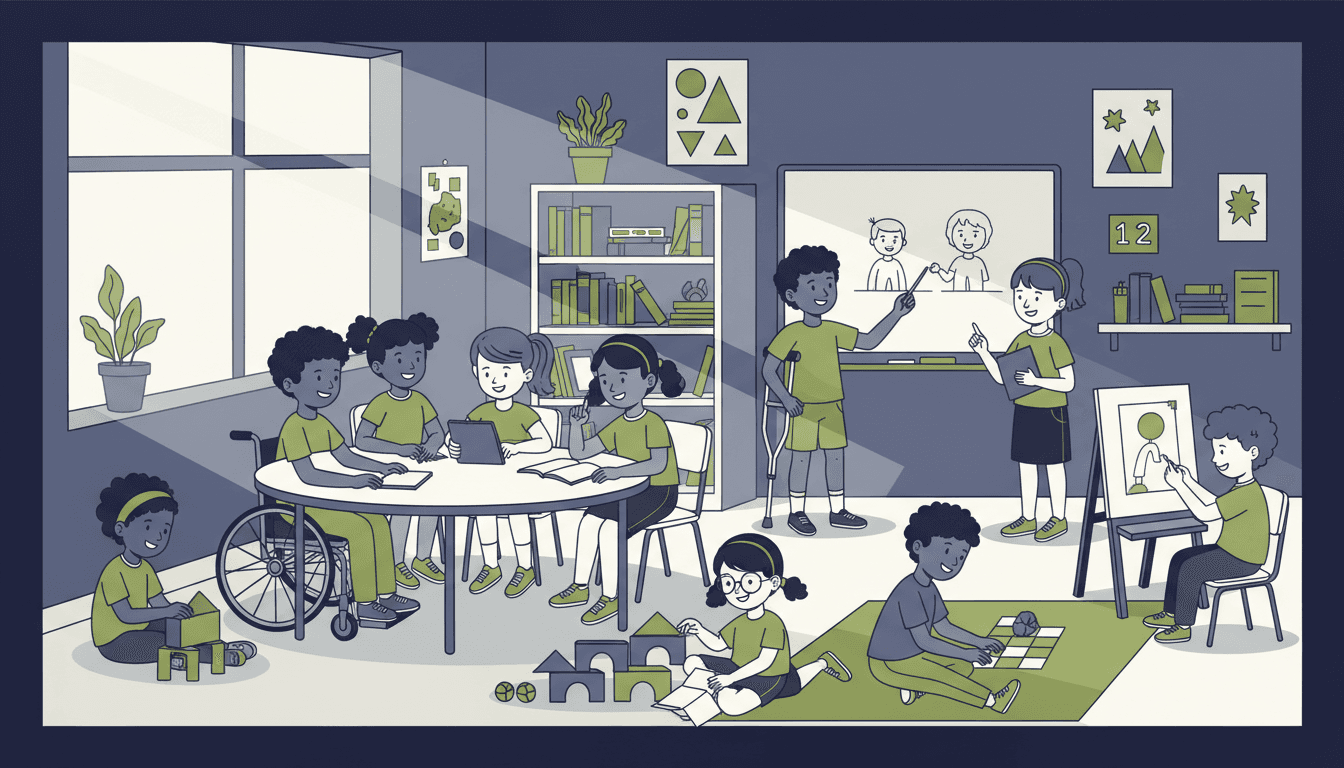
Inclusive Classroom Newsletter Guide: Communicating a Welcoming Environment to All Families
An inclusive classroom, one where students with and without disabilities learn alongside each other with appropriate supports, requires a different kind of family communication than a traditional classroom. You have multiple audiences with different relationships to inclusion. You have families of students with IEPs and 504 plans who want to know how their child is supported. You have families of general education students who may have questions or concerns about how inclusion works. And you have both groups forming impressions of your classroom culture based on what you communicate.
A well-written inclusive classroom newsletter speaks to all of these families while reinforcing the values and practices that make your classroom work.
What families actually want to know about inclusion
Families of students in an inclusive classroom, regardless of whether their child has a disability, often have questions they are not always comfortable asking directly.
Families of students without disabilities may wonder whether their child's learning is affected by having students with varying needs in the same room. They may have misconceptions about what inclusion looks like in practice. They may wonder whether the teacher's attention is divided and whether their child is getting what they need.
Families of students with disabilities may wonder whether their child is truly integrated into the class community or just physically present in the room. They may wonder whether general education peers accept their child, whether the teacher has the training to support their child, and whether the inclusive setting is actually better for their child than a more restrictive environment.
Your newsletter can address both sets of questions, not by having a conversation about each one explicitly, but by describing your classroom in a way that makes the answers clear.
How to describe your inclusive classroom approach
The most effective inclusive classroom newsletters do not begin with a statement about inclusion as a policy or a value. They begin with a description of what the classroom actually looks like and what is happening inside it.
"Our classroom uses a variety of approaches to help every learner access the material. Some students work with visual supports alongside written directions. Some use graphic organizers for writing tasks. Some receive one-on-one support from a co-teacher or paraprofessional during specific parts of the day. All of these approaches help specific students access the same curriculum and participate in the same classroom community."
This kind of description communicates inclusion without using the word. Families who are curious about how it works get a concrete picture. Families of students with disabilities see that their child's supports are embedded naturally into the classroom rather than being treated as exceptional.
Language choices that matter
How you write about students with disabilities in your newsletter signals your values and shapes how families think about inclusion.
Person-first language puts the person before the disability: "a student with autism" rather than "an autistic student." This is the preferred convention in many educational and medical contexts, and it is the standard in IDEA. Use it in your newsletter.
Some disability communities, notably the autistic community, prefer identity-first language ("autistic person" rather than "person with autism"). This is a real and legitimate preference, and if you have families in your classroom who have expressed this preference, honor it. For general newsletter communication where you are not describing specific individuals, person-first language is the safest default.
Avoid deficit-focused language throughout your newsletter. "A student who struggles with reading" is less specific and less empowering than "a student who is building reading fluency." "A student with behavior problems" is less informative and less respectful than "a student who is working on self-regulation skills." The language you use shapes how families, including families of students with disabilities, think about the children in your classroom.
Building a sense of classroom community in your newsletter
One of the most powerful things an inclusive classroom newsletter can do is make the classroom community visible. When families see that their child is part of a class that works together, celebrates each other, and values different kinds of contributions, they develop a positive picture of the inclusive environment.
Share stories of collaboration in your newsletter. Not stories that identify individual students' disabilities, but stories of how the class solved a problem together, how students supported each other during a challenging project, or how the class welcomed a new student. These stories build a picture of a classroom where every student belongs.
Include student work and achievements in your newsletter in a way that highlights different kinds of success. Academic test scores are one measure of success. So are creative projects, acts of kindness, persistence through difficulty, and social milestones. A newsletter that celebrates a range of achievements communicates that this classroom values a range of ways of being a good student.
Addressing common misconceptions
Some families come to an inclusive classroom with misconceptions that your newsletter can gently correct over time, not through lectures but through consistent accurate communication.
The misconception that supporting students with disabilities takes attention away from other students is addressed by describing co-teaching and paraprofessional support structures that add capacity to the classroom. "We are fortunate to have a co-teacher with us three mornings per week. This additional support benefits all students, giving more adults available to help during small group work."
The misconception that students with disabilities are not fully part of the classroom community is addressed by describing joint activities, collaborative projects, and social moments that include all students. If a student with a disability led the morning meeting, or if the class celebrated a collective milestone together, those stories belong in the newsletter.
What to avoid
Do not discuss individual students' disabilities, IEP content, or specific accommodations in a group newsletter. This is a confidentiality requirement, not just a best practice.
Do not treat inclusion as a cause to be defended in your newsletter. Write from confidence about your classroom practices, not from a defensive posture. Families who receive a newsletter from a teacher who is comfortable and skilled in their inclusive classroom do not need to be convinced that inclusion is a good idea. They can see it in the quality of the communication.
Using Daystage for inclusive classroom newsletters
Daystage's block editor supports the kind of rich, section-based newsletter that works well for inclusive classroom communication. You can include a classroom community update, a skill spotlight section that describes what all learners are working on, an upcoming events section, and a home connection section with one practice activity for families.
The consistent format signals a classroom that is organized and intentional. That matters to all families, and especially to families of students with disabilities who are looking for evidence that the teacher has a clear structure and approach.
Your newsletter is a window into your classroom
Families who cannot observe your classroom directly form their picture of it from what you send them. An inclusive classroom newsletter that describes a structured, caring, community-oriented learning environment tells all families that their child is in a good place.
Write it like you believe in what you are doing. The families reading it will feel that.
Get one newsletter idea every week.
Free. For teachers. No spam.
Frequently asked questions
When should teachers communicate about their inclusive classroom approach to families?
Communicate your inclusive classroom philosophy at the start of the school year before families form assumptions, then reinforce it through consistent language in every newsletter throughout the year. Families who understand your approach early are far less likely to raise concerns mid-year when they see students with disabilities in the class.
What should an inclusive classroom newsletter include to reassure all families?
Include concrete descriptions of collaborative activities, how peer learning is structured, and what differentiated instruction looks like in practice. Explain that accommodation plans raise the floor for specific students without lowering academic expectations for anyone, since this is the most common misconception families bring to inclusion settings.
How should teachers write about inclusion without identifying students with disabilities?
Use language that describes instructional strategies rather than individual students. 'We use flexible grouping, visual supports, and varied assignment formats so every student can engage with the material' communicates an inclusive approach without disclosing any student's disability status, which is protected under FERPA and IDEA.
What are common challenges with inclusive classroom communication to parents?
The most persistent challenge is managing the concern from parents of non-disabled students that inclusion slows down instruction or takes teacher attention away from their child. These concerns are rarely stated directly but often drive requests for placement changes or private meetings, so proactive newsletter communication that addresses them early reduces friction significantly.
How can teachers build a consistent communication routine for inclusive classroom updates?
Using a structured newsletter template in a tool like Daystage means you are not starting from scratch each week. A consistent format signals to families that communication is organized and intentional, which builds the kind of trust that makes difficult conversations easier when they arise.

Adi Ackerman
Author
Adi Ackerman is a former classroom teacher and curriculum writer with 8 years in K-8 schools. She writes about school communication, parent engagement, and what actually works in real classrooms.
More for Special Education
Ready to send your first newsletter?
3 newsletters free. No credit card. First one ready in under 5 minutes.
Get started free