
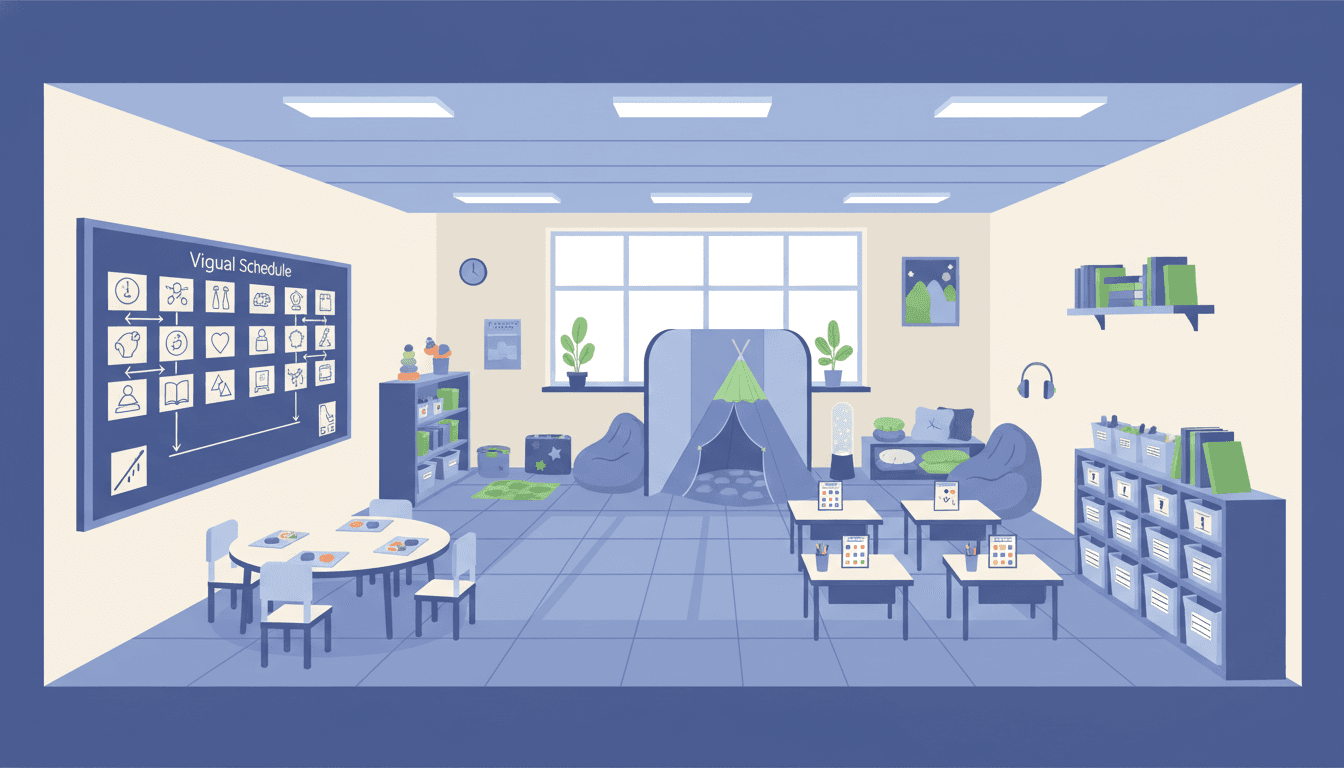
Autism Classroom Newsletter to Parents: Building Consistent Communication for ASD Families
Families of children with autism spectrum disorder (ASD) often describe communication with the school as one of their most significant sources of stress or support, depending on how the school handles it. When communication is clear, consistent, and specific to their child, these families feel like partners. When it is generic, infrequent, or unclear, they feel like outsiders trying to piece together what is happening with their child from limited information.
Your classroom newsletter is one of the most direct tools you have to build the kind of communication that ASD families actually need. Here is how to do it well.
What ASD families need from classroom communication
Families of children with autism often have a different relationship to school than families of neurotypical children. Many ASD children have difficulty describing their school day. They may not answer "What did you do today?" or they may answer in ways that do not give parents a clear picture. Some children with autism have communication challenges that make home-school information flow almost entirely dependent on what the teacher communicates directly.
This means your newsletter is not supplemental information for ASD families. It may be the primary window into their child's school day. They are relying on it in a way that families of other students may not be.
What this community specifically needs from your newsletter:
- Predictability. Many students with autism rely on consistent routines. When the routine is going to change, parents need advance notice so they can prepare their child. A newsletter that mentions an upcoming fire drill, a substitute teacher for the week, or a change in the classroom schedule is not a minor administrative update. For ASD families, it is critical information they need to help their child manage what could otherwise be an overwhelming disruption.
- Specific behavioral and social information. "Your child had a good week" is not useful. "This week your child successfully asked a peer for help during a group activity, which we have been working on" is useful. ASD parents want specifics about what their child is practicing, how it is going, and what they can reinforce at home.
- Upcoming events and field trips with logistics details. Changes in environment and routine are significant for many children with autism. Families want to know what is coming so they can prepare their child: what the new environment will be like, what sounds or crowds to expect, whether there will be sensory challenges. The more lead time you give, the better prepared the family can make their child.
- What to expect for the next week. A brief preview of the coming week lets families prepare their child for what is coming. "Next week we are starting a new social skills unit focused on turn-taking in conversation. You can practice this at home during dinner or game time."
Balancing individual and group communication
A classroom newsletter goes to all families, not just ASD families. The content needs to work for everyone.
The solution is to structure your newsletter to address both audiences. Write sections that serve all families, then add a brief "special education families" or "IEP update" section that addresses the needs of families whose children have IEPs or 504 plans. This section can mention general information about the skills being practiced in your classroom's behavioral and social support programming without identifying individual students.
For individual student-specific information, the newsletter is not the right vehicle. That belongs in a daily or weekly home-school communication log, a behavior tracking app, or a personal note. Many special education classrooms use a daily communication log or an app like ClassDojo for the individual piece. The newsletter serves the group.
Language and format choices that help ASD families
Many parents of children with autism are themselves processing information about their child's education, medical needs, therapy schedules, and IEP requirements simultaneously. Your newsletter needs to be easy to read quickly.
Use clear, concrete language throughout. Avoid educational jargon without explanation. If you write "discrete trial training," follow it with a brief parenthetical. "Discrete trial training (a structured practice approach where we break skills into small steps and practice them with immediate feedback)."
Use a consistent structure every week or month. ASD families will learn to navigate your newsletter if it is always in the same format: schedule updates first, skill updates second, upcoming changes third, home practice ideas fourth. A predictable newsletter structure mirrors the predictability that benefits their children.
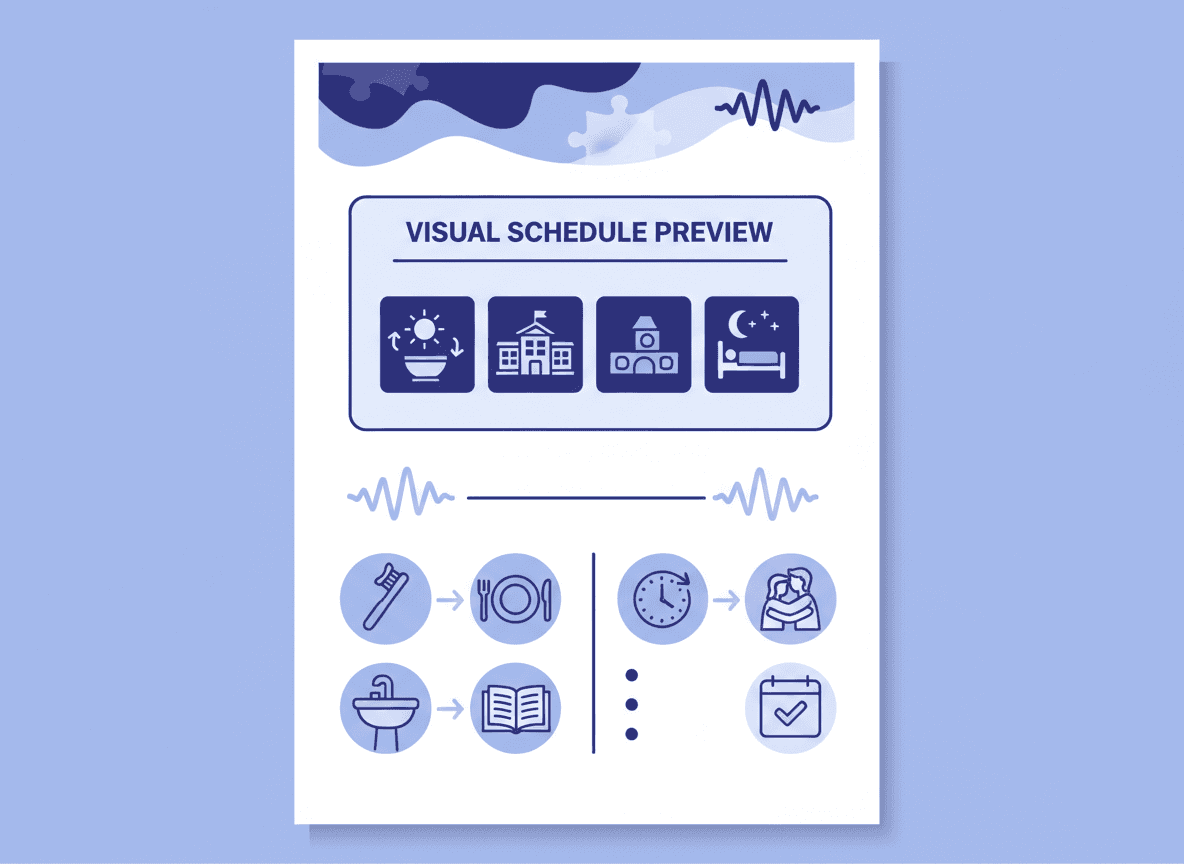
Keep it visual when possible. A simple table showing the week's schedule changes, or a checklist of skills practiced this month, is easier to process quickly than paragraphs of dense text.
What not to include in a group newsletter
IDEA (the Individuals with Disabilities Education Act) requires that student information, including disability status, IEP content, and behavioral data, be kept confidential. A group newsletter cannot identify individual students or share details about a specific child's disability, behavior, or progress.
You can write about the skills your class is working on, the strategies you use, and general information about your classroom's approach. You cannot write "Johnny has been struggling with transitions this week" in a group communication. That belongs in a private communication with Johnny's family only.
If you are unsure whether something crosses the confidentiality line, default to privacy. ASD families will understand that individual information belongs in a private channel. They will not appreciate finding out that their child's challenges were shared with all newsletter recipients.
Building trust through consistency
ASD families who receive a consistent, specific, and reliable newsletter from your classroom develop trust in you as their partner. They feel seen. They feel informed. And they are more likely to come to you proactively when they have concerns, rather than waiting until something becomes a crisis.
This is one of the clearest benefits of a regular classroom newsletter: it establishes a communication baseline that makes every other conversation easier. When a parent emails to ask about their child's behavior at lunch, you are having that conversation in the context of a relationship, not a cold inquiry.
Using Daystage for autism classroom newsletters
Daystage's block-based editor makes it easy to create a structured, repeatable newsletter format. You build it once, with sections for schedule updates, skill spotlights, upcoming changes, and home practice ideas, and update the content each week or month. The formatting is consistent because the structure is reusable.
The newsletter lands in families' inboxes as a clean, readable email that works on phones. No app to download, no portal to log into. For busy families managing their child's therapy, medical, and school schedules, a newsletter that arrives in their email and is easy to read in two minutes is the right tool.
Start with what families need most
If you are not currently sending a regular newsletter to ASD families and are not sure where to start, begin with one thing: schedule and routine changes. Every time anything in the classroom routine changes, communicate it in advance. That single practice will do more to reduce family stress and build trust than any other newsletter content you could add.
Once that habit is in place, add the other elements: skill updates, upcoming events, home practice ideas. Build it piece by piece. Your families will meet you where you are.
Get one newsletter idea every week.
Free. For teachers. No spam.
Frequently asked questions
When should teachers send newsletters to ASD families and how often?
ASD families benefit from predictable weekly communication because consistency reduces the uncertainty that can be especially difficult for families managing autism-related routines at home. Sending on the same day each week, at the same time, establishes a reliable pattern families can count on.
What should an autism classroom newsletter to parents include?
Include a description of what the class did that week using concrete language, any schedule changes or upcoming disruptions that could affect behavior at home, a specific positive observation about the group, and sensory or environmental details parents should know about. Vague encouragement is less useful to ASD families than specific, observable information.
How should teachers write newsletters to avoid overwhelming ASD families?
Use plain language, short paragraphs, and a consistent structure so the newsletter feels predictable rather than surprising each week. Avoid figurative language, excessive exclamation points, and dense blocks of text, as these can increase reading difficulty for parents who are themselves neurodivergent.
What are common challenges in communicating with families of autistic students?
The biggest challenge is balancing the group newsletter format with the highly individualized nature of autism. What one ASD student experiences in a given week may be irrelevant or even misleading for another ASD family, so general class-level updates work better than attempts to speak to individual experiences in a shared document.
How can teachers manage both group and individual communication for ASD families efficiently?
A tool like Daystage lets you send the general classroom newsletter to everyone and route individual follow-up notes directly to specific families without switching platforms. That separation keeps the group newsletter appropriately general while still allowing the targeted communication ASD families often need.

Adi Ackerman
Author
Adi Ackerman is a former classroom teacher and curriculum writer with 8 years in K-8 schools. She writes about school communication, parent engagement, and what actually works in real classrooms.
More for Special Education
Sensory Room Newsletter: Explaining Sensory Supports to Families of Students with Disabilities
Special Education · 5 min read
Assistive Technology Newsletter: Helping Families Understand and Use AT at Home
Special Education · 6 min read
IEP Goal Progress Newsletter: Communicating Data to Families in Plain Language
Special Education · 6 min read
Ready to send your first newsletter?
3 newsletters free. No credit card. First one ready in under 5 minutes.
Get started free