
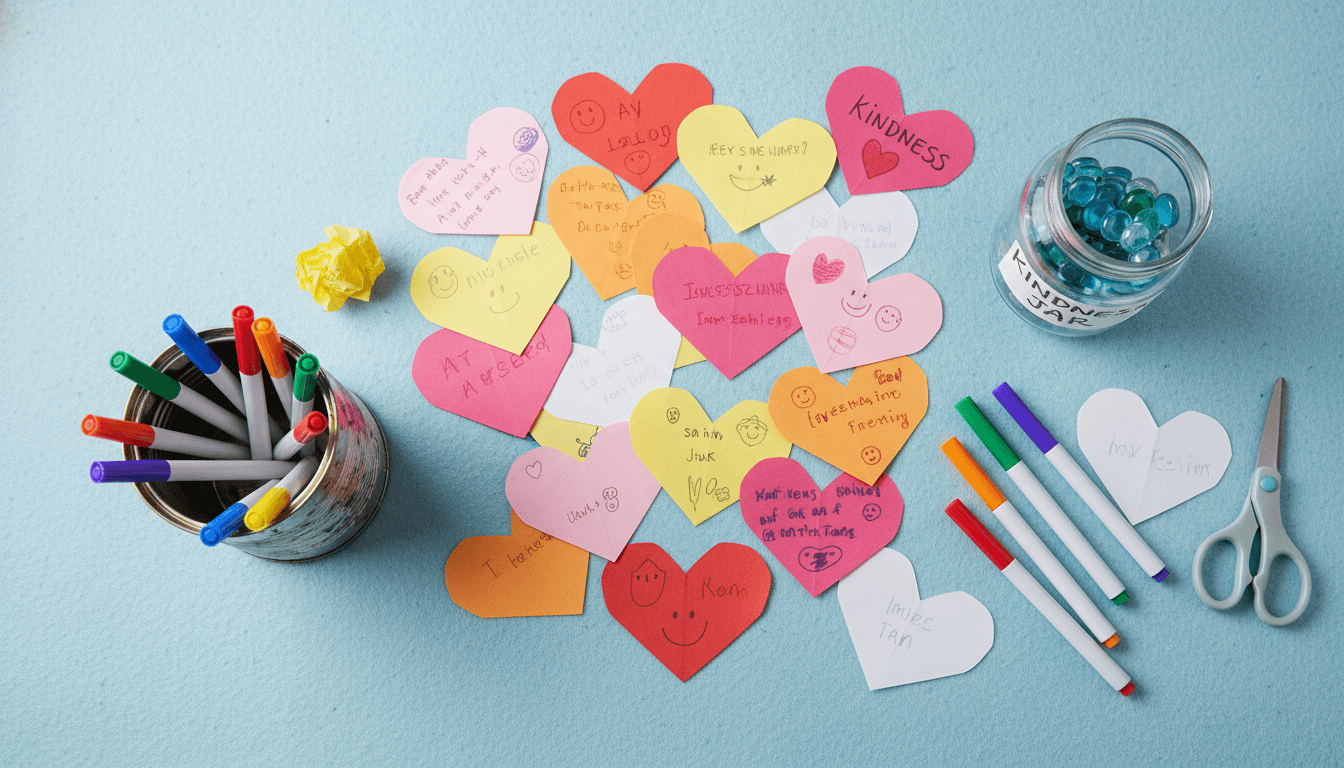
SEL Newsletter Written for Students: A Working Template
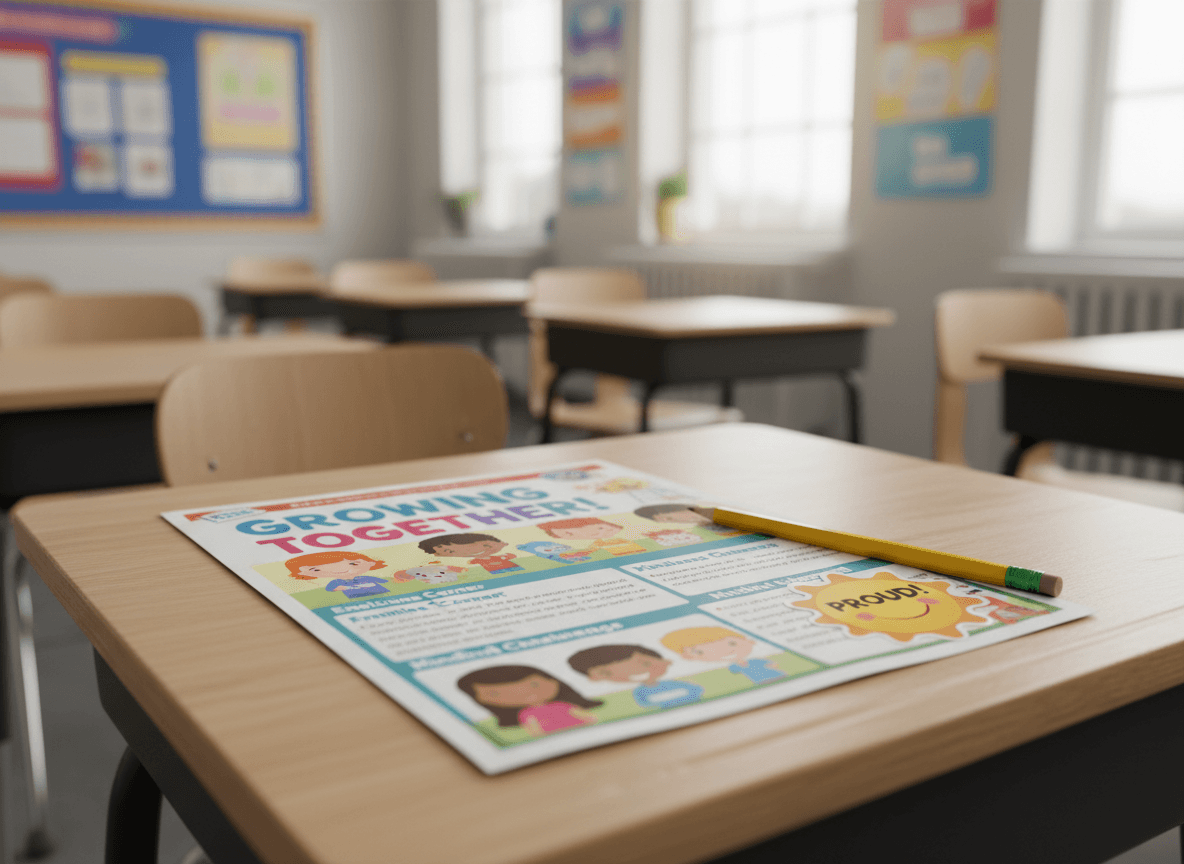
Most SEL newsletters are written at adults and copied home to kids as an afterthought. A newsletter written for students from the start is a different thing. Short paragraphs. One challenge for the week. One thing to watch for in the classroom. It belongs to the kids, lives on their desks or in their journals, and reinforces the language you have been using out loud. This is the template.
Start with one sentence the kid can read out loud
The opening sentence sets whether a second grader keeps reading or flips the paper over. Make it a single statement of what the newsletter is about, in fewer than fifteen words. "This week we are learning what to do when you feel left out." That is the whole opener. No subtitle. No date in the header. Just the sentence.
Three short paragraphs, not one long one
Each paragraph is two to three sentences. The first describes what the class has been practicing. The second tells a story from earlier in the week. The third names the skill. White space matters. A wall of text loses an eight-year-old before the third line.
The weekly challenge
One challenge per newsletter. Specific. Doable. Something a student could pull off in a school day. "This week's challenge: when you notice another student sitting alone at lunch, ask if you can sit with them. You do not have to be best friends. Just sit." That is a real action a kid can take by Friday. It does not need a worksheet to track. Many students will report back without being asked.
The did-you-notice line
Every newsletter ends with one observation prompt that points students toward a behavior they will likely see in class. "Did you notice when Marco asked for a break this morning instead of getting upset? That is what we have been practicing." This teaches kids to spot the skill in other students, which is often the moment the skill becomes real for them.
Vocabulary that travels
Pick one or two SEL words per newsletter and use them repeatedly. Reset. Self-advocacy. Belonging. Same word in the student newsletter, in the parent newsletter, in your morning meeting message on the board. By Friday the word lives in the room. By the end of the month, families are using it at home.
A worked example for second grade
This week we are learning about belonging. Belonging means feeling like you fit in a group and people are glad you are there.
On Tuesday at recess I watched a student walk up to a group building with blocks and ask, "Can I help?" The group said yes. The student smiled. That is what belonging looks like. Asking takes courage. Saying yes takes kindness. Both matter.
This week's challenge: notice someone in our class who is alone at recess at least once. Ask if they want to play. Even if they say no, you tried. That counts.
Did you notice when Ava asked Theo to join the reading corner this morning? That is belonging. We are going to keep practicing it all month.
How to use the newsletter in the room
Hand it out on Monday. Read it together. Ask one student to re-read the challenge line. Refer back to it during the week. On Friday, ask who tried the challenge and what happened. The newsletter becomes a living document, not a sheet that goes home in a backpack and gets crumpled by Wednesday.
What about K-1 readers?
For kindergarten and first grade, the newsletter works best as a read-aloud. Keep the same structure but cut the word count in half. One opener sentence. One short paragraph. One challenge picture if you can. Read it together on Monday morning. Send the same paper home for parents to read with their child during the week. The vocabulary still travels. The format just adapts to who can decode it independently.
How the newsletter pairs with the parent version
When the student newsletter and the parent newsletter share vocabulary, the language reinforces from both sides. A kid comes home using the word "reset." A parent reads the same word in their version that night. The conversation at dinner uses the same term you used in class that morning. That triple repetition is what builds an SEL word into a family's everyday vocabulary by the end of a month.
Tracking the challenge without making it a worksheet
Skip the tracking sheet. Skip the sticker chart. The weekly challenge works because students choose whether to try it, not because they get a star. On Friday, set aside three minutes in morning meeting. Ask who tried the challenge. Listen to two or three stories. Move on. That short ritual keeps the challenge alive without turning it into compliance work.
How Daystage helps with student-only SEL newsletters
Daystage has a student-audience template that rewrites SEL content into short paragraphs, a weekly challenge, and a did-you-notice line. You write once. Daystage produces a student version and a parent version that share vocabulary so the language travels home. The whole weekly SEL writeup, for both audiences, takes about fifteen minutes.
Get one newsletter idea every week.
Free. For teachers. No spam.
Frequently asked questions
What grade level can read an SEL newsletter independently?
Second grade and up, if the paragraphs are short and the vocabulary stays simple. Kindergarten and first grade benefit from a teacher-led read-aloud version of the same content. The format works across K-5, but who reads it changes.
How long should a student newsletter be?
150 to 250 words. Three short paragraphs. One challenge. One did-you-notice line. Anything longer and most second graders will skip to the picture. Anything shorter and there is not enough content to anchor the week's skill.
Should the newsletter use the same SEL vocabulary as the parent version?
Yes, intentionally. When kids see the same word in their newsletter and parents see the same word in theirs, the language reinforces from both sides. By the end of the year, the family is using the term at home without anyone having to explain it.
Where does the student newsletter live in the classroom?
Three good options. Print one copy per student on Monday morning and have them paste it into a journal. Post one larger copy on the SEL bulletin board. Send a digital version home so parents see what their child saw. Any one of these works. Pick what fits your room.
Can Daystage produce a kid-friendly version of an SEL newsletter?
Daystage has a student-audience toggle that rewrites the same SEL content in second-grade-readable language with the structure students respond to: short paragraphs, one challenge, one did-you-notice prompt. The student version and the parent version share the same vocabulary so the language reinforces at home.

Adi Ackerman
Author
Adi Ackerman is a former classroom teacher and curriculum writer with 8 years in K-8 schools. She writes about school communication, parent engagement, and what actually works in real classrooms.
More for Social-Emotional Learning
Ready to send your first newsletter?
3 newsletters free. No credit card. First one ready in under 5 minutes.
Get started free