

SEL Newsletter After a Lockdown Drill: A Template
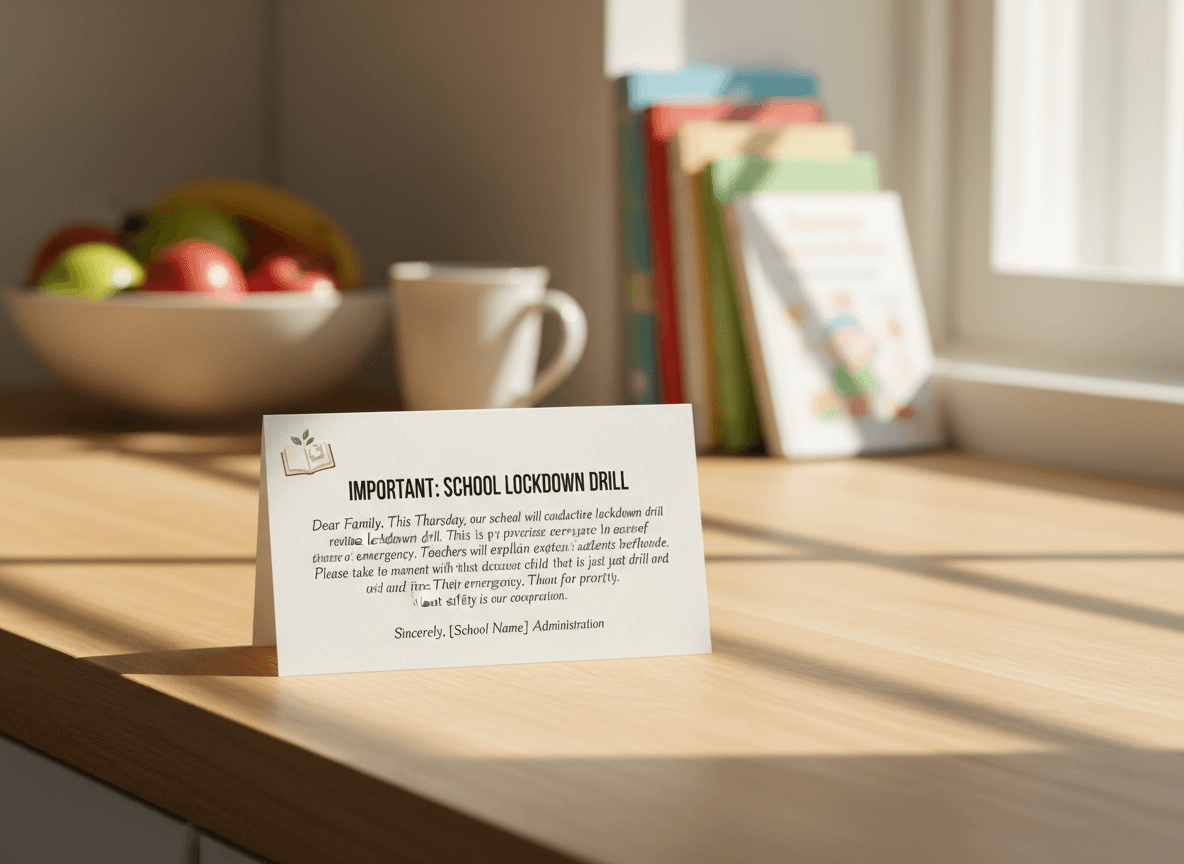
Lockdown drills are required in most states and they are part of every school year. They are also one of the harder things to send home a note about, because too little information worries parents and too much information sounds dramatic. The afternoon of a drill, families need a short, calm note from the teacher that tells them what happened, validates that any feelings their child is bringing home are normal, and gives them the words to use at the dinner table.
Send it the same day
The window for this newsletter is small. Send it by the end of the school day, ideally before dismissal. Parents who hear about the drill from their kid first, with no school context, fill in the blanks with the news cycle. A short note from the teacher gets ahead of that.
Open with what happened
"Today we practiced a lockdown drill in our classroom. It lasted about fifteen minutes. Your child was with me the whole time. We are all back to our normal day." Four sentences. Direct. Calm. No alarm signals in the language itself.
Validate the feelings
Tell parents that some kids will be fine, some will be quiet for an hour, and some will bring it up at bedtime. All of those are normal. A drill is the kind of thing kids sit with for a while. Their bodies were on alert for fifteen minutes, even though nothing was wrong. The body does not know it was practice.
Tell parents that if their child seems jumpy or asks repeated questions or has trouble falling asleep that night, those are normal reactions and usually settle within a day or two. If they last longer, that is a reason to reach out to the school counselor.
What we did and why
Describe the drill in plain language. "When the announcement came over the speaker, we turned off the lights, locked the door, moved to a corner of the room that cannot be seen from the window, and stayed quiet until the all-clear was given." Tell parents what the kids were told. "I told the class this was a practice, that their job was to stay with me and stay quiet, and that everyone in the building was practicing at the same time."
How to talk at home
Give parents two prompts. "Ask your child what they remember about the drill, then listen." That is it for the first question. Resist the urge to ask if they were scared. Let them decide what to share. The second prompt: "If your child has questions, answer plainly. We practice drills so we know what to do. The school has a plan. The teachers know the plan." Do not overpromise that nothing will happen. Do tell them the adults around them are prepared.
The safety plan, briefly
Give parents a short version of the school's safety plan so they can repeat it if their child asks. "Doors are locked during the day. Visitors check in at the office. Every classroom has a drill we practice a few times a year." Three lines. Concrete. Do not get into specifics about cameras or police partnerships in the newsletter. Those belong in a separate family handbook.
A short example
Here is what the in-class part can look like:
After we got back to our seats today, a student asked if we could read 'The Rabbit Listened' again. We did. By the end of the book, the room had settled. I told them I was proud of how they took care of each other during the practice and how they took care of themselves afterward. Then we went to math. Drills are part of school. Going back to math is also part of school.
If your child seems shaken tonight
Tell parents the simple grounding routine. Have the child name three things they can see in the room. Two things they can hear. One thing they can feel under their hand. Then a slow breath in for four counts and out for six. The pattern works for most kids. If it does not work, sitting next to them without saying anything for a few minutes often does.
The school counselor is available
Close with one line about the counselor by name and email. "Our counselor is available this week for any student who would like to talk. Please email me or the counselor and we will set it up." The line tells parents the support is there without suggesting their child needs it.
How Daystage helps with after-drill newsletters
Daystage has an after-drill template with the same-day timing, the validating language, the safety-plan summary, and the counselor reference already structured. You add the date of the drill and the book your class read afterward. Daystage drafts the rest in your voice. Parents read it before the bus pulls up.
Get one newsletter idea every week.
Free. For teachers. No spam.
Frequently asked questions
When should the newsletter go home?
The same afternoon. Send it before kids get on the bus. Parents who hear about a drill from their child first, with no context from the school, get scared. A short note from the teacher dated the day of the drill reverses that. The school told us first. We are okay.
Should the newsletter mention what the drill was for?
Yes, in plain language. 'Today we practiced a lockdown drill, which is the response we would use if someone unsafe was inside or near the building.' Skip the specifics of any real event in the news. Naming what the drill is for tells parents the school is being honest and lets them answer their child's questions at home.
How do you talk to elementary kids during the drill?
Plainly. 'This is a practice. It is something we do so we know what to do if something unsafe ever happened. Your job is to stay quiet and stay with me.' Read a calm book once everyone is in position. Avoid metaphors about hiding from a wolf or playing a quiet game. Kids see through the cover stories and the cover stories scare them more.
What if a child is upset after the drill?
Validate first. 'It is okay to feel scared. A lot of kids did. Your body did the right thing.' Then ground them. Name three things they can see in the room. Name one thing they can hear. Hand them water. Tell them the drill is over and the day continues. Most kids settle within a few minutes. The ones who do not should see the counselor before pickup.
Can Daystage help draft an after-drill newsletter?
Daystage has an after-drill template with the validating language, the plain explanation, the how-to-talk-at-home block, and the safety-plan summary already in place. You add the date of the drill and any classroom-specific notes. It drafts the rest in your voice in under ten minutes.

Adi Ackerman
Author
Adi Ackerman is a former classroom teacher and curriculum writer with 8 years in K-8 schools. She writes about school communication, parent engagement, and what actually works in real classrooms.
More for Social-Emotional Learning
School Mental Health Awareness Newsletter: A Calm, Direct Template
Social-Emotional Learning · 6 min read
SEL Newsletter for Teachers: Communicating Without the Buzzwords
Social-Emotional Learning · 6 min read
Classroom Community Building Newsletter: What to Send the First 30 Days
Social-Emotional Learning · 6 min read
Ready to send your first newsletter?
3 newsletters free. No credit card. First one ready in under 5 minutes.
Get started free