
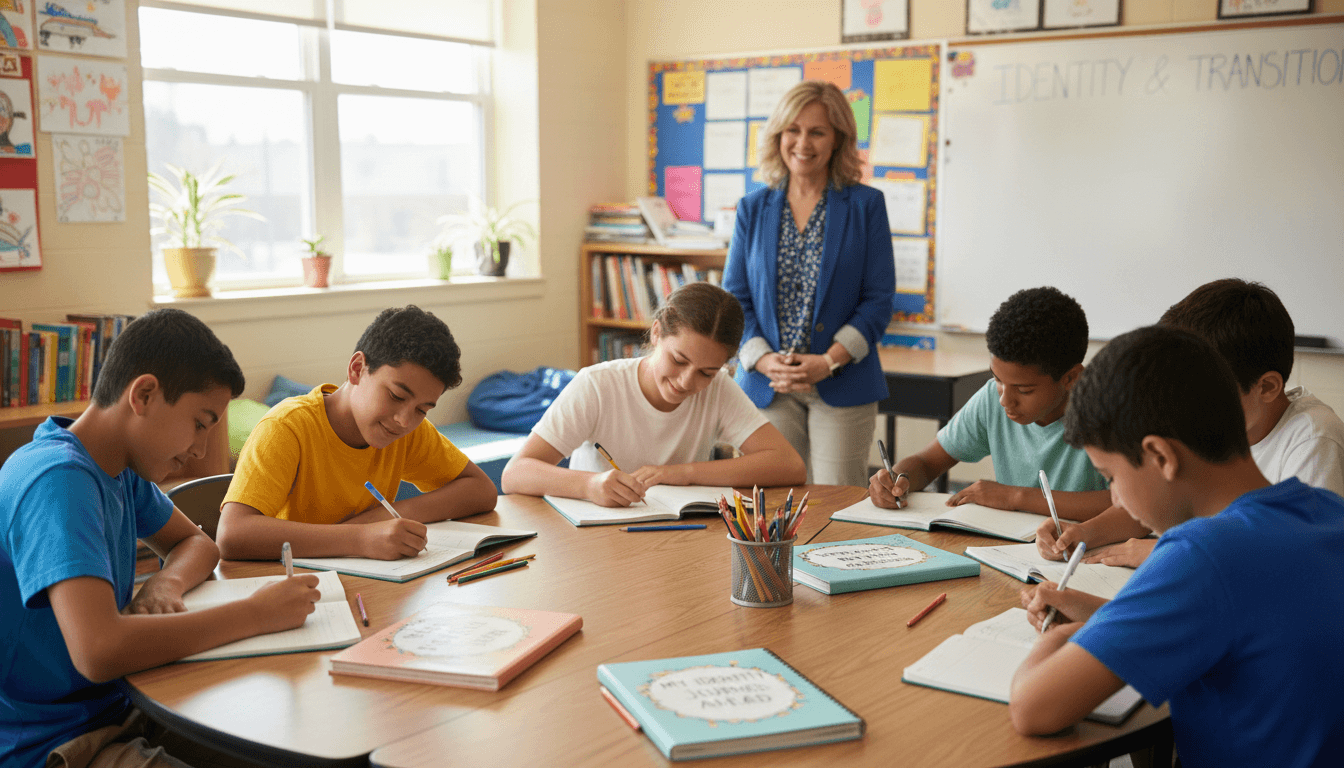
Eighth Grade SEL Newsletter: A Template for High School Readiness
Eighth grade is the year the kids stop being inside middle school and start looking past it. High school is on the horizon. Course selection conversations are starting. The student who has been one version of themselves since fifth grade suddenly realizes they do not have to stay that version. An eighth grade SEL newsletter that holds both the forward gaze and the present-moment work is the one parents actually use to start the conversations at home that they have been putting off.
Open with where the class is headed
First newsletter of the year names the forward gaze. "Your child is now nine months from high school. We are still going to work on the daily stuff. We are also going to talk about the habits and self-knowledge that ninth grade will ask of them." Parents lean in. They have been waiting for this conversation since seventh grade.
Name identity exploration in plain language
Eighth graders try on identities. They change interests. They sometimes change who they hang out with by the month. One short section names it. "We are talking in advisory about the difference between who we are and who other people think we are. Your child may come home with new opinions and new questions. That is the year working." No more than three sentences.
The high school anxiety section
Some eighth graders start losing sleep over high school in October. Most parents do not see it because their kid has stopped narrating their inner life. Name the pattern in writing. "If your child is asking a lot of questions about high school, that is healthy. If they cannot sleep, or are crying about it, talk to me. We can plan a conversation together." Permission and a door at the same time.
The future-self conversation
Eighth graders can imagine themselves a year ahead. Use it. One section in each newsletter on what we are doing now that future-self will thank us for. "This month, future-self will be grateful that you practiced asking a teacher a question without rehearsing it for three days first. We worked on this in advisory all week." Practical, specific, transferable.
One example of a 200-word section
In advisory this month, we did a future-self exercise. Each student wrote a short letter to themselves a year from now. Three pieces stood out across the class. The first was that most of them want to be braver about asking for help. The second was that most of them want to stop comparing themselves to one or two specific classmates. The third was that nearly all of them are curious about high school but nervous in ways they have not said out loud.
At home, you can build this by asking your child, "If your high school self could give you one piece of advice right now, what would it be?" Then listen. Do not give advice back. The exercise is the asking, not the answering.
One prompt parents can actually use
"Tonight, ask your child to name one thing they want to be true about themselves by the end of ninth grade. Just listen. Do not coach." Eighth graders will answer that question. Most of them have been thinking about it. They just have not been asked.
How Daystage helps with eighth grade SEL newsletters
Daystage has an eighth grade advisory template with the identity, high school readiness, future-self, and home prompt as preset sections. You type a few short notes from the month. Daystage drafts the newsletter in plain language. Sending takes one click. Most advisory teachers spend 15 minutes per issue on a monthly cadence.
Get one newsletter idea every week.
Free. For teachers. No spam.
Frequently asked questions
How is eighth grade SEL different from seventh?
Eighth graders are looking forward. Seventh graders are still inside the dynamics of middle school. Eighth grade has high school visible on the horizon, course selection conversations starting, and the realization that their middle school self is not their forever self. The newsletter has to track this forward gaze, not just the daily social weather.
How do you write about identity exploration without overstepping?
Stay general. Describe what the class is doing, not what individual students are exploring. 'We are talking in advisory about the difference between who we are and who other people think we are.' That sentence does the work without naming anyone. Parents read it and recognize their own child without you pointing them out.
Should the newsletter address high school anxiety directly?
Yes, and early. Some eighth graders start losing sleep over high school in October. Naming the pattern in writing gives parents permission to talk about it at home. 'If your child is asking a lot of questions about high school, that is healthy. If they cannot sleep, talk to me.' Two sentences. Done.
What about the future-self conversation?
Eighth graders can imagine themselves a year ahead in a way younger students cannot. A short section on what we are doing now that future-self will thank us for works well. Studying habits. Time management. Asking for help directly. Each one practical, each one transferable to ninth grade.
Can Daystage handle an eighth grade advisory newsletter?
Daystage has an eighth grade advisory template with identity, high school readiness, future-self, and home prompt as preset sections. You type a few notes. Daystage drafts the newsletter. Sending to the advisory or grade roster takes one click. Most advisory teachers spend 15 minutes per issue.

Adi Ackerman
Author
Adi Ackerman is a former classroom teacher and curriculum writer with 8 years in K-8 schools. She writes about school communication, parent engagement, and what actually works in real classrooms.
More for Social-Emotional Learning
SEL Newsletter for Teachers: Communicating Without the Buzzwords
Social-Emotional Learning · 6 min read
School Mental Health Awareness Newsletter: A Calm, Direct Template
Social-Emotional Learning · 6 min read
Character Education Newsletter Template Without the Cliches
Social-Emotional Learning · 6 min read
Ready to send your first newsletter?
3 newsletters free. No credit card. First one ready in under 5 minutes.
Get started free