

Science Newsletter for a Weather Unit: A Teacher Template
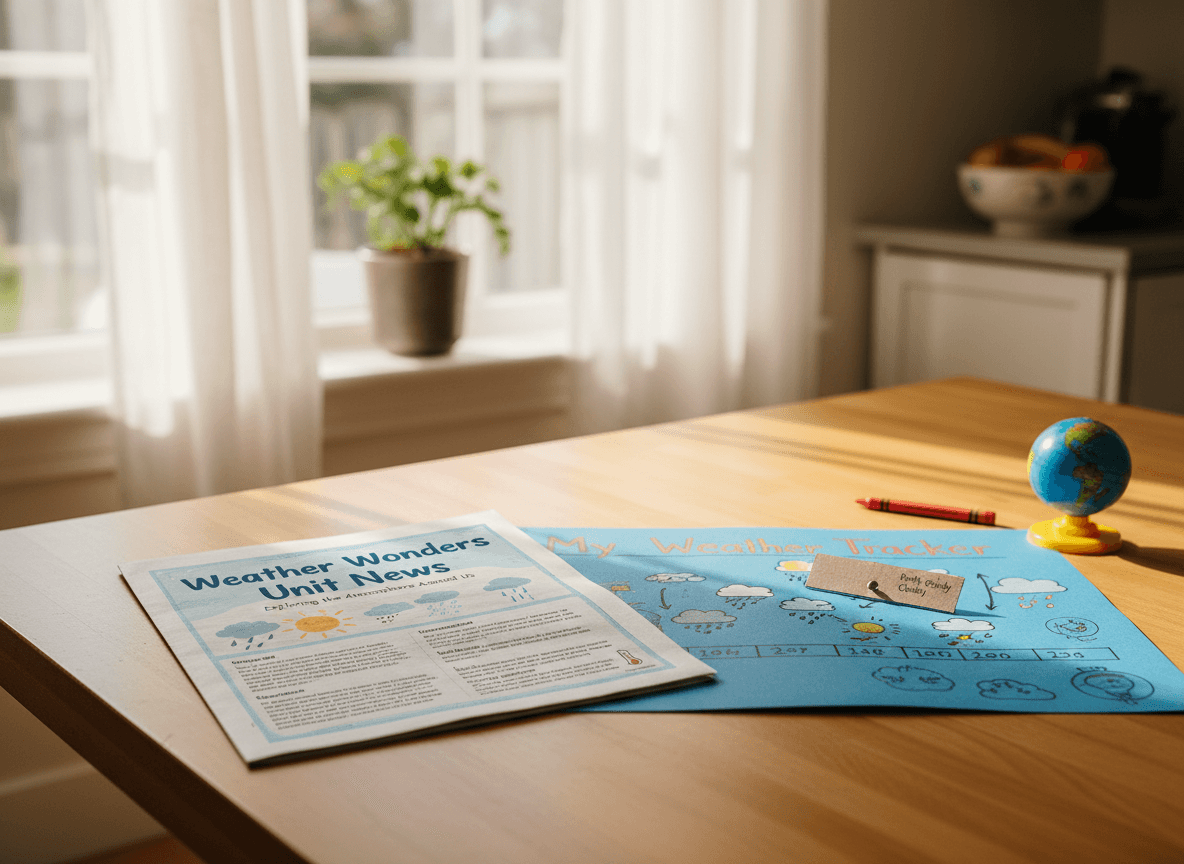
Weather is one of the easiest science units to make parents care about. Everyone checks the forecast. Everyone has an opinion on the rain. The newsletter just has to point at what students are noticing in class and give parents one thing to do at home. Five short sections, under 300 words, and you have a template you can run for the full unit without rewriting it each Sunday.
Lead with the classroom weather chart
Open with what your students recorded this week. "Our third graders tracked the weather every morning at 9am for five days. Three of the five were sunny, one was cloudy, and Thursday's storm dropped half an inch of rain in our gauge." That is the entire opening. Parents picture the chart, the kid with the clipboard, and the rain gauge.
Name the three tools students are using
Thermometer, rain gauge, wind sock. One sentence each. "A thermometer measures temperature. A rain gauge measures how much rain fell. A wind sock shows wind direction." Once parents have these three terms, every weather conversation gets sharper at home.
Translate forecast into plain words
Most third graders confuse a forecast with a fact. Address it in the newsletter. "A forecast is a guess about future weather based on patterns. Sometimes the guess is right. Sometimes it is not. That is how science works." One paragraph, and you have set up every later discussion on patterns and predictions.
Give a five-day home watch
Every evening for one school week, the child writes down three things: what the sky looked like, the temperature if they can find it, and one word for the weather. By Friday they have a small dataset. The point is the noticing, not the worksheet. Tell parents a sticky note on the fridge is enough.
Template excerpt: a sunny-week recap
Here is what a clean filled-in issue looks like:
This week's weather chart: 4 sunny days, 1 cloudy. Average morning temperature: 62 degrees. Rain gauge total: 0.0 inches.
Vocabulary: Thermometer (measures temperature), Rain gauge (measures rainfall), Forecast (a guess about future weather).
At home: Each evening this week, write down one word for the weather (sunny, cloudy, rainy, windy). Bring the list Monday.
Coming up: We start the cloud types lesson Tuesday. Watch the sky on the way to school and see how many different cloud shapes you spot.
Mention the field study before parents have to ask
If your weather unit ends with a walk outside or a visit to a local weather station, name it two weeks ahead. "On May 28 we walk to the community garden to set up our own weather station. Closed-toe shoes and a water bottle." Parents who see this once will plan for it. Parents who see it twice will remember.
How Daystage helps with a weather unit newsletter
Daystage gives you the five-section template ready to fill in. Drop in the week's chart numbers, the three vocabulary words, the home watch, and what is next. It sends as a real email to your full class list. You write the next issue on a Sunday in fifteen minutes, every week, all year.
Get one newsletter idea every week.
Free. For teachers. No spam.
Frequently asked questions
What weather tools should I mention in the newsletter?
Three are enough. Thermometer for temperature, rain gauge for precipitation, wind sock or anemometer for wind. Most homes have a thermometer somewhere already. Rain gauges can be a clear cup with marks. Parents who hear the names start pointing them out, which is half the lesson.
Should the newsletter include the daily classroom weather chart?
Once a month is enough. A photo of the chart with a sentence about what students noticed (most days were sunny, three rainy, one windy) is more useful than a daily recap. The point is to show the pattern, not to mirror the wall.
What at-home weather activity works without buying anything?
Five-day weather watch. Each evening, the child writes down what the sky looked like, the temperature outside if there is a thermometer, and one word for the weather. By Friday they have a tiny dataset. That mirrors what the class is doing and takes 60 seconds a day.
How do we explain forecasts to parents in one sentence?
A forecast is a guess about future weather, made by looking at patterns from yesterday and the day before. It is not a promise. Adding that one sentence to the newsletter saves you ten conversations with parents whose kid said it was supposed to rain and did not.
Does Daystage have a weather unit newsletter template?
Yes. Daystage gives you a short, repeatable template you fill in each week with the classroom weather chart highlight, the vocabulary, and the home watch activity. It sends to every family on your class list as a real email so parents read it on the phone in two minutes.

Adi Ackerman
Author
Adi Ackerman is a former classroom teacher and curriculum writer with 8 years in K-8 schools. She writes about school communication, parent engagement, and what actually works in real classrooms.
More for Science Newsletter
Ready to send your first newsletter?
3 newsletters free. No credit card. First one ready in under 5 minutes.
Get started free