

Science Newsletter on Lab Safety: How to Talk About It
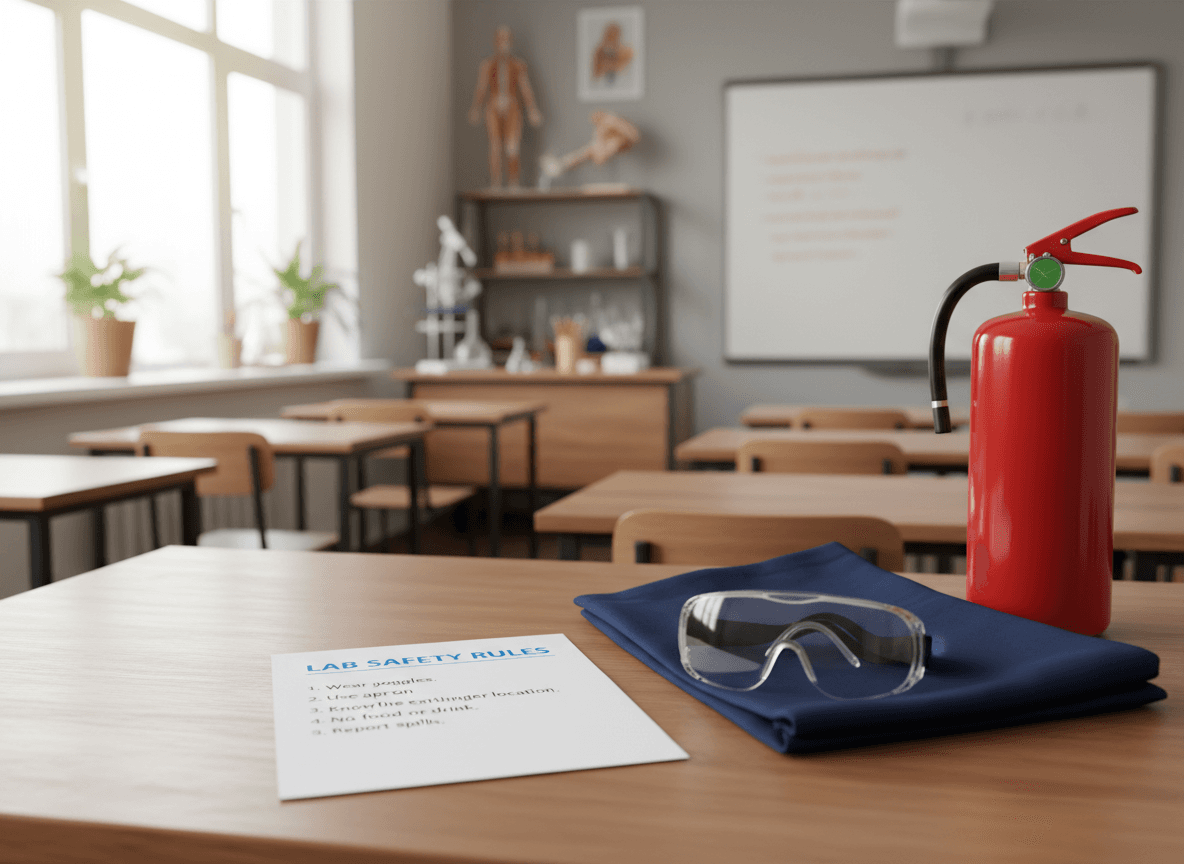
Lab safety is the conversation you only have to win once. If parents and students understand the rules before the first lab, the rest of the year is calm. If they do not, you spend every lab day arguing about goggles and shoes. The newsletter on lab safety rules is the cheapest insurance you can send. One email, ten minutes to write, peace for the rest of the year.
Lead with the stakes, in one sentence
Not a paragraph. One sentence that tells parents why these rules exist. "We use real chemicals and real equipment in this class, which is why these rules are not optional." That is the whole opener. Parents who skim past everything else still get the message that you take it seriously.
List the four rules that always apply
Goggles on for the entire lab. Closed-toe shoes on lab days. Hair below the shoulders tied back when open flames are out. Follow directions, ask before doing anything new. Four bullets. Bold the words "always" and "every" so parents see them on the second skim. Long rule lists get ignored. Four memorable rules get followed.
Add the "we don't" list
Five items. We don't taste anything in the lab. We don't run, push, or wrestle. We don't pour chemicals back into the original bottle. We don't work without a partner. We don't ignore an injury, no matter how small. Phrase them as "we" not "you" because the community-shaped version is what kids actually adopt.
Match the stakes to the age
Three lines that say what the consequences look like at this level. "For middle school: a first violation is a warning and a re-read of the rules. A second violation means the student observes the lab instead of doing it, and a phone call home. A safety violation that could have hurt someone is an automatic call home and a meeting." Parents who know the ladder before it is climbed are not surprised when the phone rings.
Sample paragraph: the parent-facing summary
Here is what a tight parent-facing summary looks like:
Your student starts labs on Tuesday. We follow four rules every lab, every time: goggles on, closed shoes, hair tied back near flames, ask before doing anything new. We have a short list of things we do not do, including tasting materials and working alone. If your student forgets closed shoes on a lab day, they will observe instead of doing the lab and we will email you that afternoon. That is the whole policy. It works because it is short and the same every time.
Close with the conversation prompt
Give parents a sentence to use at home. "Ask your student tonight: what are the four rules that always apply in lab?" If they can name all four, the rules landed. If they cannot, the parent re-reads the list with them. You just got 200 extra minutes of safety instruction without doing any of the talking yourself.
How Daystage helps with lab safety rules newsletters
Daystage sends the rules newsletter to every parent on your roster, tracks who opened it, and lets you send a quick reminder to the families who did not. Build it once, reuse it every year. Pair it with the safety contract PDF and the first lab runs on schedule instead of getting hijacked by a kid in flip-flops.
Get one newsletter idea every week.
Free. For teachers. No spam.
Frequently asked questions
How is this different from the full lab safety contract newsletter?
The contract newsletter is the legal-shape document parents sign before the first lab. The rules newsletter is the plain-English explanation of what those rules look like in practice. Send both. The contract gets signed and filed. The rules newsletter is what parents actually read and talk about with their kid at dinner.
Should the rules be written in kid language or parent language?
Both, in two columns or two sections. 'For students: goggles stay on the whole time, no exceptions. For parents: we enforce goggles-on the same way you enforce a seatbelt. No goggles, no lab.' Same rule, two audiences. Parents reinforce what you say when they hear it in their own language.
What goes on the 'we don't' list?
Four to six items, no more. We don't taste anything. We don't run in the lab. We don't pour chemicals back into the bottle. We don't work alone. We don't ignore an injury, no matter how small. Short list, clear consequences. A list of 20 rules gets ignored.
Are the rules different for elementary versus high school?
The stakes scale. Kindergarten: don't taste the materials, wash your hands after, tell the teacher if something spills. High school chemistry: same three plus goggles always, closed shoes always, no horseplay near open flames. The principle is the same. The specifics get heavier as the materials do.
Can Daystage send a lab safety rules newsletter?
Yes. Daystage lets you build the rules newsletter once, send to every parent on your roster, and reuse it every year with one or two edits. Pair it with the safety contract PDF and you have the full safety conversation handled in two emails before the first lab.

Adi Ackerman
Author
Adi Ackerman is a former classroom teacher and curriculum writer with 8 years in K-8 schools. She writes about school communication, parent engagement, and what actually works in real classrooms.
More for Science Newsletter
Ready to send your first newsletter?
3 newsletters free. No credit card. First one ready in under 5 minutes.
Get started free