

Science Newsletter on Dissection: How to Send the Permission Note
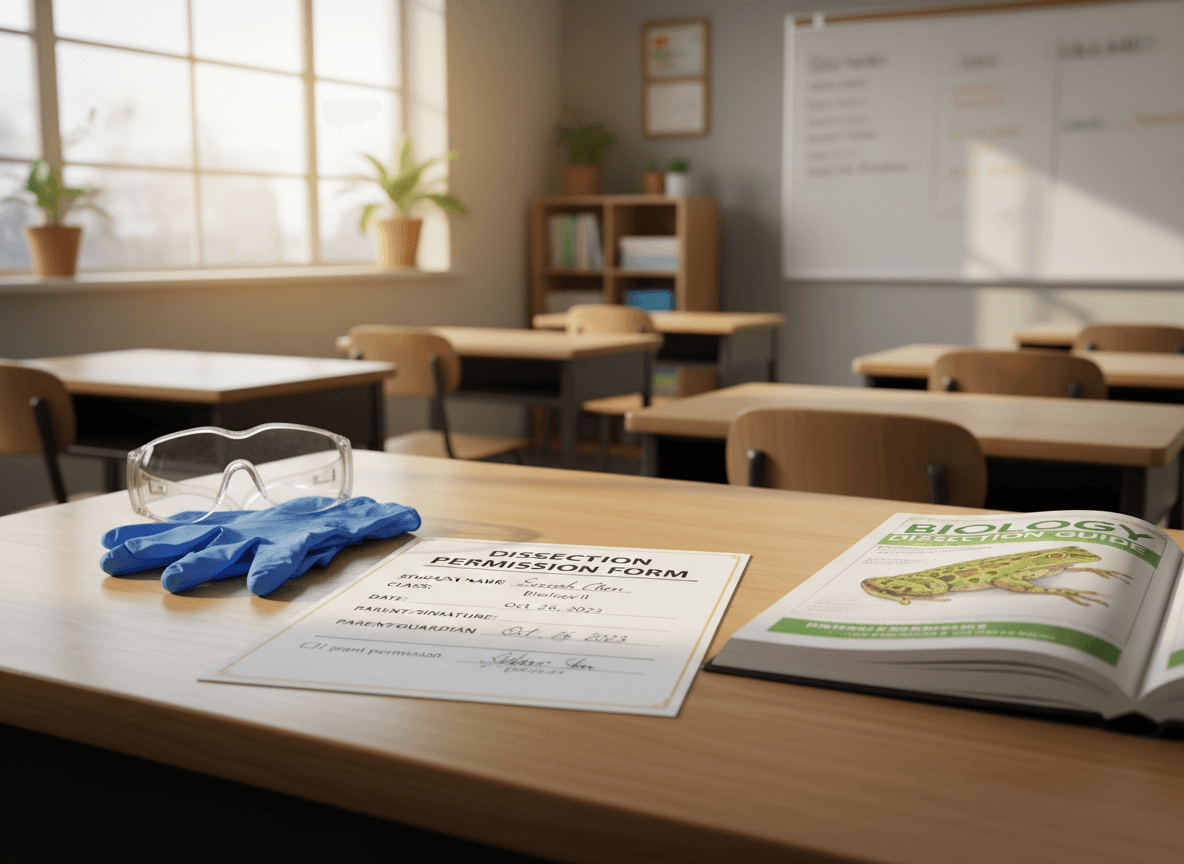
Dissection is the science lab parents have feelings about. Some are eager for their kid to do it, some are firmly opposed, and a lot are somewhere in between waiting for the right amount of information. A clear newsletter sent two weeks out gives every family what they need to decide, names the opt-out without burying it, and answers the sourcing question before it shows up in your inbox. Done well, you get every form back and the lab runs without drama.
Lead with the educational purpose
Two sentences. "In our anatomy unit, students will dissect a preserved frog to identify the major organ systems they have studied. The lab connects the textbook diagrams to a real specimen and is one of the most-cited memories from biology classes in student surveys." That framing tells parents this is not a stunt. It is a planned moment in the curriculum.
Name the specimen and where it came from
Three lines. The species. The supplier. The sourcing claim. "Our frogs are bullfrogs sourced from Carolina Biological Supply. Specimens come from frogs harvested as part of state-permitted population management programs. Carolina publishes their sourcing statement on their website if you want to read it." Specific information is what calms parents. Vague answers escalate.
Spell out the opt-out path
Bold paragraph. "If your student does not participate in the dissection, they will complete a digital dissection on a school laptop and turn in the same lab report. No grade penalty. No questions asked. Check the opt-out box on the permission form." Putting this in bold and at eye level is the difference between getting clean opt-outs and getting an angry email from a parent who missed it.
Cover the mid-lab change of mind
One sentence. "If your student starts the lab and decides they do not want to continue, they can switch to the digital alternative without penalty." Some kids will think they can handle it and change their mind when the tray is in front of them. Parents who know that is allowed do not have to call you.
Sample paragraph: the parent-facing summary
Here is what a clean parent-facing summary looks like:
Our anatomy unit ends with a frog dissection lab on Tuesday May 13. Students will identify the heart, lungs, liver, stomach, and intestines on a preserved bullfrog from Carolina Biological Supply. The lab takes one class period. Students who opt out complete a digital dissection on a school laptop and turn in the same lab report for the same grade. Please return the permission form by Friday May 9, marked either participate or opt-out.
Address the dignity question
One paragraph. "We treat the specimen with respect. Students who treat it otherwise lose lab privileges. We dispose of materials according to school protocol." Parents who worry about how their kid will treat the moment, or how peers will, want to hear that you have already thought about it.
How Daystage helps with dissection permission newsletters
Daystage sends the dissection newsletter two weeks out, attaches the permission and opt-out form as a single PDF, and tracks who opened the email. A one-click reminder goes to the families who have not responded by a week before the lab. You walk into Tuesday with every form in hand, the opt-outs already paired with a digital lab, and zero scrambling.
Get one newsletter idea every week.
Free. For teachers. No spam.
Frequently asked questions
When should the dissection permission newsletter go out?
Two weeks before the lab. Some families want to talk it through. A few will opt out and need to know the alternative. Two weeks lets parents read, ask, and respond without the rush that makes some of them just say no to avoid the conversation.
Should there be an opt-out option?
Yes, always, and state it clearly. 'If your student does not participate in dissection, they will complete a digital dissection on a school laptop and turn in the same lab report. No grade penalty.' Hiding the opt-out is what turns this into a parent meeting. Naming it ends the issue.
Where do the specimens come from?
Answer the question in the newsletter, do not wait for the email. 'Our frog specimens are sourced from Carolina Biological Supply, which uses frogs harvested as part of population management programs. No specimens are bred for dissection.' Or whatever the truth is for your supplier. Parents who ask want a specific answer, not a brush-off.
What if a student opts in but then panics at the lab?
Address it in the newsletter. 'Any student who decides during the lab that they do not want to continue can switch to the digital alternative without penalty.' That sentence prevents the call from a parent whose kid changed their mind at the wrong moment.
Can Daystage send a dissection permission newsletter?
Yes. Daystage lets you send the announcement two weeks out, attach the permission and opt-out form as a PDF, and track who opened the email. The families who do not respond get a one-click reminder a week before the lab. The opt-outs come back early instead of the morning of.

Adi Ackerman
Author
Adi Ackerman is a former classroom teacher and curriculum writer with 8 years in K-8 schools. She writes about school communication, parent engagement, and what actually works in real classrooms.
More for Science Newsletter
Ready to send your first newsletter?
3 newsletters free. No credit card. First one ready in under 5 minutes.
Get started free