

Kindergarten Science Newsletter: A Template You Can Send Home
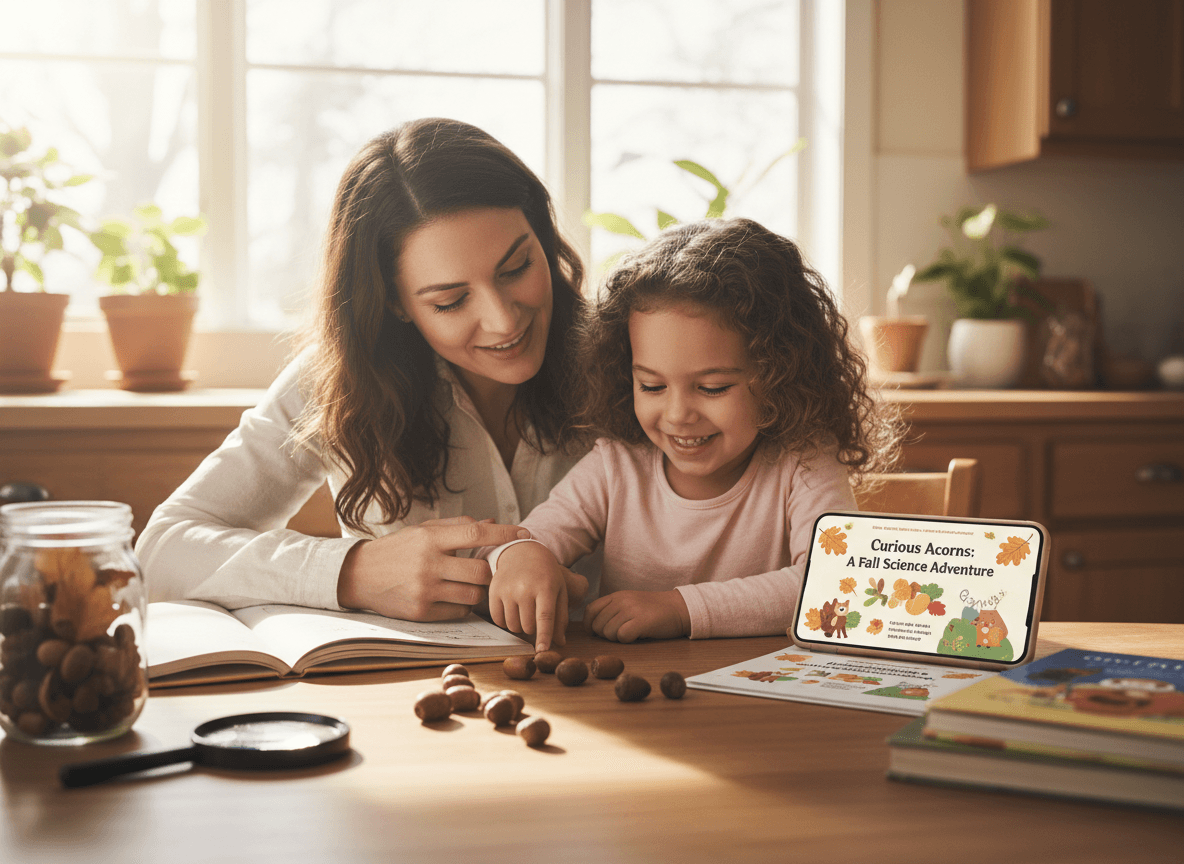
Kindergarten science is mostly noticing, sorting, and asking questions. The newsletter that supports it should be the same thing. Short, curious, easy to read. A kindergarten parent does not need a curriculum recap. They need one question to ask in the car, one word to listen for, and one thing to do outside. Four sections. Under 200 words. That is the whole template.
Open with the wonder question of the week
One open question. "Why do some leaves change color in the fall?" or "Where does the puddle go after the rain dries up?" Print it in bold at the top. Parents see it once and use it for the whole week. The student gets to be the expert at home, which is exactly what we want in kindergarten.
What we did this week
Two sentences. Name the activity and what students did with it. "Students explored a fall sensory bin filled with acorns, pine cones, leaves, and seeds. We sorted by color, by size, and then by 'crunchy' and 'soft.'" That is it. A parent reads it and can ask their child to do the same sort at home.
One new word
Just one. Plain definition. "Observe: to look closely and notice." Or "Sort: to put things into groups that go together." Kindergarten students use the word in class all week. When parents hear it at home, they reinforce it without trying.
The 10-minute extension
Outside if possible. No supplies. "Walk around your yard or down the sidewalk with your child. Find three things that are alive and three things that are not. Talk about how you can tell the difference." Ten minutes. The conversation is the task. A parent who does this once stays engaged for the rest of the unit.
Template excerpt: a kindergarten fall observation issue
Wonder question: Why do leaves change color in the fall?
What we did: Students explored a fall sensory bin with acorns, pine cones, and leaves. We sorted by color, then by 'crunchy' and 'soft.'
New word: Observe (to look closely and notice).
Ask at home: Walk outside and find three things that are alive and three things that are not. How can you tell?
Why kindergarten newsletters fail when they get longer
Parents at this grade are juggling a lot. A five-year-old, often a younger sibling, a morning routine that is half pajamas and half forgotten shoes. A newsletter that runs three screens looks like a homework assignment for the parent. It gets archived. Four short sections under 200 words feels like respect, and it gets read.
Photos do more than paragraphs at this grade
One picture of a student pointing at a worm under a magnifier does more than any description. Get media releases at the start of the year. Snap one photo a week. Drop it into the newsletter. Parents respond to seeing their kid being curious.
How Daystage helps with kindergarten science newsletters
Daystage gives you a short four-section template built for the kindergarten reading time. You build it once, reuse it weekly, and edit only the wonder question, the activity, and the outside task. It sends to your class roster as a real email, parents read it on their phone in 30 seconds, and you can write the next issue while waiting for car line on a Tuesday.
Get one newsletter idea every week.
Free. For teachers. No spam.
Frequently asked questions
How long should a kindergarten science newsletter be?
Under 200 words. Kindergarten parents are reading on a phone at 7am while making lunch. Anything that does not fit on one screen gets closed. If you have more to say, save it for the next issue.
What is the wonder question of the week?
One open question students explored. 'Why do leaves change color in fall?' or 'Where does rain come from?' It does not need a single right answer. The point is to give parents the exact phrasing of the question so they can ask it again at dinner.
Should the kindergarten newsletter use scientific vocabulary?
Yes, but only one or two words per issue, and only words students are saying out loud in class. 'Observe: to look closely and notice things.' One word. One sentence. Parents who hear their child say 'I am observing the worm' get excited about it.
What is a good at-home extension for kindergarten science?
A five-minute outdoor task with a noticing prompt. 'Walk outside with your child and find three things that are alive and three things that are not. Talk about how you can tell.' Doable. Free. Five minutes. The whole task is conversation.
Does Daystage have a kindergarten science newsletter template?
Yes. Daystage gives you a short four-section template (wonder question, what we did, one new word, ask at home) built for the kindergarten reading time. It sends as a real email to your class roster and works on a phone with no app to download.

Adi Ackerman
Author
Adi Ackerman is a former classroom teacher and curriculum writer with 8 years in K-8 schools. She writes about school communication, parent engagement, and what actually works in real classrooms.
More for Science Newsletter
Ready to send your first newsletter?
3 newsletters free. No credit card. First one ready in under 5 minutes.
Get started free