

Kentucky School Safety Newsletter: Tornadoes, Flooding, and Family Communication
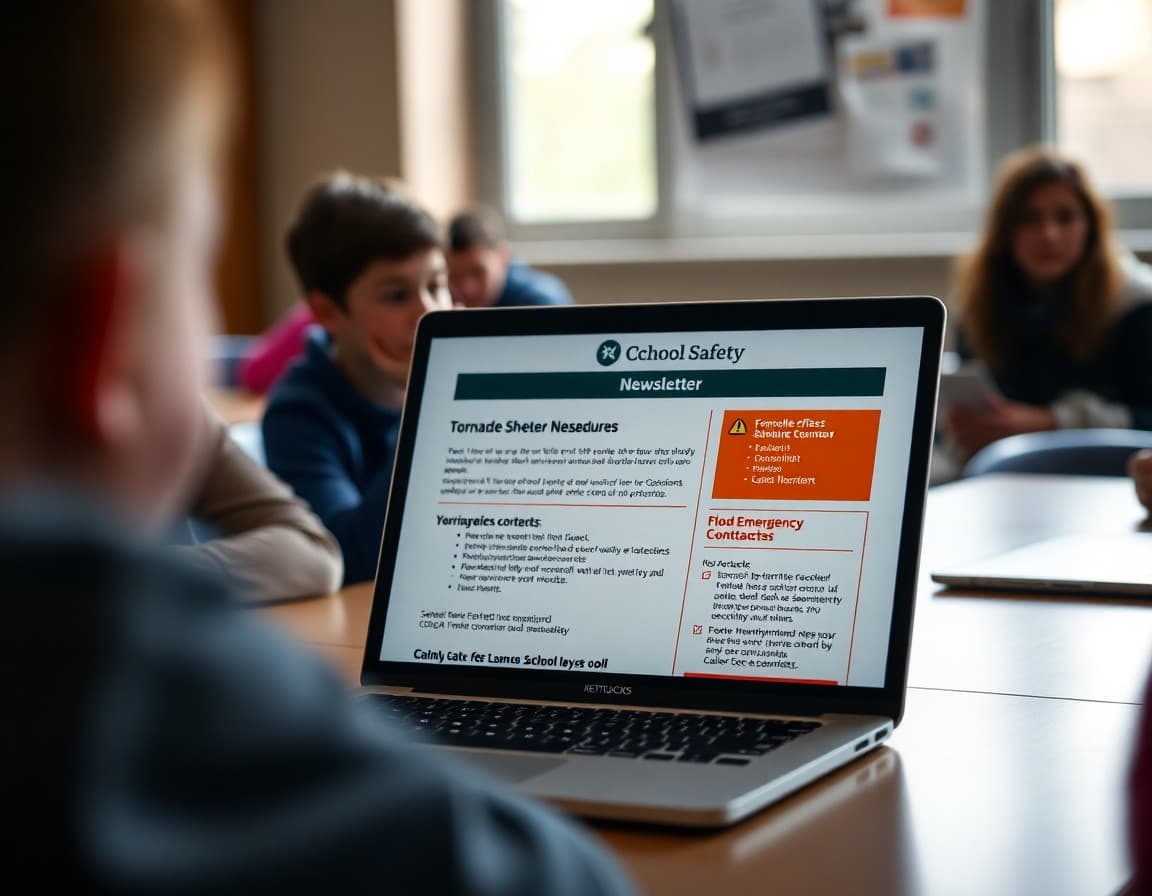
Kentucky school safety communication changed after the December 2021 tornadoes that devastated communities across western Kentucky. Families who had read their school's safety newsletter, who knew where students sheltered and how the school communicated, were better equipped to act during one of the worst tornado outbreaks in state history. Families who had not were left with uncertainty during an already devastating event.
Here is how Kentucky schools can build safety communication that serves their communities across the full range of hazards the state faces.
Tornado Protocol Communication Before Spring Season
Send a tornado protocol communication in early spring. Name the specific shelter locations in your building. Explain the warning system, what triggers a shelter-in-place, and what happens to students in portable classrooms. Tell families exactly how they will receive updates if a tornado warning occurs during school hours.
Western Kentucky families who lived through 2021 bring a higher level of urgency to tornado communication. Specific, detailed information meets that urgency. Vague assurances do not.
Flash Flooding Communication for Eastern Kentucky Schools
Eastern Kentucky's terrain creates flash flooding risk that can develop rapidly and cut off bus routes within minutes. Schools in flooding-prone areas should send a protocol communication at the start of the school year that covers: the conditions that trigger early dismissal, how families will be notified, alternate dismissal routes and reunification sites when primary roads are flooded, and what families should do if they cannot reach the school due to flooding.
Name the specific roads and sites. Families who know to go to the high school gym instead of the elementary school during a flood event arrive at the right place.
Winter Ice Storm Communication
Kentucky ice storms close schools unpredictably and create hazardous bus and road conditions. Send a winter weather protocol communication in your September safety newsletter covering the decision timeline, notification channels, and what families should do if an ice storm develops rapidly during school hours.
Lockdown Drill Communication
Send advance notice before every lockdown or active threat drill. Include the date, drill type, what students will practice, and that teachers prepare students beforehand. Kentucky's school safety environment includes both rural communities and urban districts, and both benefit from the same advance communication approach.
Reunification Procedures
Cover your reunification protocol in at least one annual newsletter. Name the primary and alternate sites. In flooding-prone areas, specify which site is used when the primary is inaccessible due to weather. Tell families what identification to bring and how the check-in process works.
Visitor Policy Updates
When your visitor policy changes, communicate the specific change and a brief rationale. Kentucky school communities, including small rural districts where informal practices have been common, benefit from written visitor policies that formalize what staff have previously managed informally.
Mental Health and Post-Incident Communication
Kentucky communities affected by natural disasters and community violence have seen firsthand how mental health needs and safety needs intersect. When the school responds to a student mental health crisis or safety incident, send a brief factual communication confirming the response and available supports. Offer families specific guidance for conversations with their children.
Daystage for Consistent Safety Communication
Kentucky principals who use Daystage for safety newsletters keep communication organized and consistent across the full hazard calendar. From tornado season to flooding protocols to security drills, a reliable platform means nothing falls through the cracks and every family stays informed.
Get one newsletter idea every week.
Free. For teachers. No spam.
Frequently asked questions
What safety topics should Kentucky school newsletters address?
Kentucky schools face significant tornado risk, flash flooding particularly in eastern Kentucky, winter ice storms, and the full range of security protocols. Safety newsletters should address the hazards specific to your school's location. Eastern Kentucky schools have particular flooding concerns. Western Kentucky is in the Mississippi embayment seismic zone and has some earthquake risk as well.
How should Kentucky schools communicate tornado protocols to families?
Send a tornado protocol communication each spring. Name the specific shelter locations, the warning system, and the procedures for outdoor students during a warning. Kentucky has seen devastating tornado events in recent years and families across the state are acutely aware of the risk. Specific, operational communication builds more confidence than general assurances.
How do Kentucky schools address flash flooding in safety communication?
Eastern Kentucky schools in particular should cover flash flooding in their safety communication. Explain the conditions that trigger early dismissal due to flooding, the alternate routes and reunification sites used when primary roads are flooded, and how families will be notified of dismissal changes due to flooding. Kentucky's 2021 flooding events demonstrated how rapidly and severely these events can develop.
What does Kentucky law require for school safety communication?
Kentucky schools are required to maintain comprehensive school safety plans and conduct required drills under Kentucky Revised Statutes. Safety newsletters should reflect current drill schedules and the school's emergency notification system. The Kentucky Center for School Safety provides resources that safety communication should align with.
What tool do Kentucky schools use to send safety newsletters?
Kentucky principals and safety coordinators use Daystage to build and send safety newsletters with consistent structure year-round. Consistent formatting across sends helps families navigate safety communications quickly during time-sensitive situations.

Adi Ackerman
Author
Adi Ackerman is a former classroom teacher and curriculum writer with 8 years in K-8 schools. She writes about school communication, parent engagement, and what actually works in real classrooms.
More for School Safety
School Safety Newsletter Guide: What Principals and Safety Coordinators Should Be Communicating All Year
School Safety · 7 min read
School Tornado Safety Newsletter: Severe Weather Procedures
School Safety · 6 min read
School Weather Emergency Communication: What Families Need to Know Before a Storm Closes School
School Safety · 5 min read
Ready to send your first newsletter?
3 newsletters free. No credit card. First one ready in under 5 minutes.
Get started free