

Weekly Library Newsletter: A Five-Minute Template
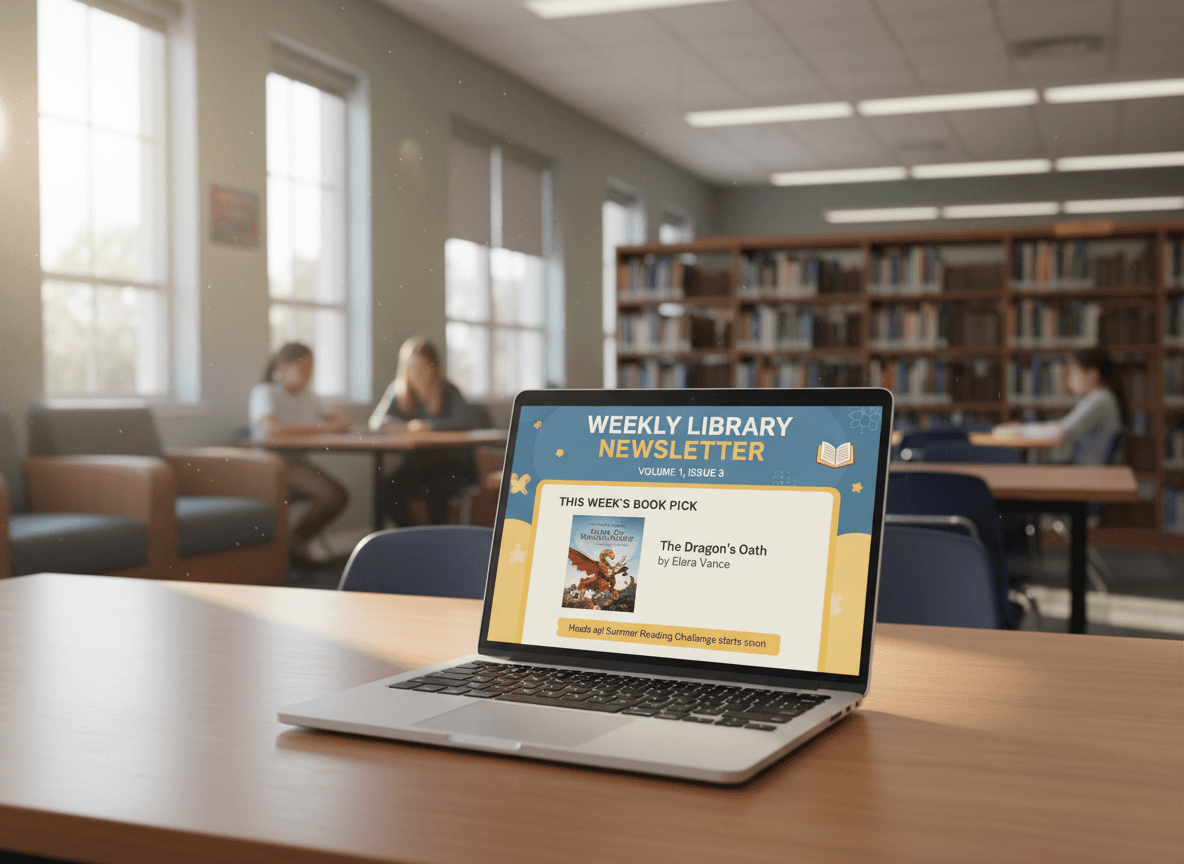
A weekly library newsletter only works if it actually takes five minutes to write and stays under 30 seconds to read. Most weekly newsletters fail one of those tests. The librarian spends an hour writing it, or the parent spends three minutes scrolling and decides to stop opening it. The template below holds the line on both ends.
Decide what the weekly is for
The weekly is for time-sensitive things. A book that arrived today, a class visit on Wednesday, a research deadline next Tuesday. Everything else, including book picks of the month, new arrivals lists, and program previews, belongs in the monthly newsletter. Mixing the two is what makes weekly newsletters bloat and die.
The three-section template
One heads-up. One book. One closing line. That is the whole thing. Under 200 words total. The constraint is the feature, not a problem to work around.
Section one: the heads-up
Three sentences max. "Reminder: book fair starts Monday." Or, "Third grade is finishing research projects Thursday and could use one extra pair of hands during library time, reply if you can." Heads-ups are the whole reason families open a weekly newsletter. Lead with the one thing they need to know this week.
Section two: the book
One book, two sentences. "This week's pick: The Eyes and the Impossible by Dave Eggers, grades 4 to 6. The library copy went out three minutes after it hit the shelf. Two more on order." That is it. No grade-range tables, no compare-to-similar-books, no synopsis. The weekly book pick is a nudge, not a review.
Section three: the closing line
One sentence in your own voice. Not a sign-off. "Have a good weekend, see you Monday in the library." Or, "Reading aloud works just as well on the couch as it does in bed, take it from a teacher who has tried both." Personality, not a slogan. Families read the closing line every week and start to feel like they know you.
What to leave out
No images larger than a thumbnail. No more than one link. No formal headers like "What is happening this week." No introductions. No restating the date in the body, it is already in the timestamp. Anything that would slow a parent down on a phone screen comes out. The weekly newsletter lives or dies on speed.
Cadence and timing
Send Friday at 2 PM. Every week. Same time. Set a recurring calendar block for 15 minutes Friday morning to write it, send at 2. The consistency is half the reason families open it. Inconsistent timing trains families to treat each newsletter as optional, which kills the open rate inside a month.
What to do during slow weeks
Some weeks have no real heads-up. Use the slot for a one-sentence preview of the following week. "Nothing urgent this week. Next week, third grade starts their research unit and we will need volunteers Thursday." A slow week is not a missed week. Skipping the email is what breaks the rhythm. A short send beats a skipped send every time.
A working example for a Friday in October
"Hi families, two things. One: book fair runs Monday through Friday, online link in the monthly newsletter, volunteers needed Wednesday afternoon. Two: this week's pick is The Eyes and the Impossible by Dave Eggers, grades 4 to 6, the first copy was gone in three minutes, two more arriving Tuesday. Reading aloud works just as well on the couch as in bed. See you Monday."
How Daystage helps with weekly library newsletters
Daystage holds the three-section weekly template at the size weekly needs: small, fast, and consistent. Each Friday you drop in the heads-up, the book, and the closing line and send. The layout never changes, the send time never moves, and families start opening it without thinking, which is the whole point.
Get one newsletter idea every week.
Free. For teachers. No spam.
Frequently asked questions
Is weekly too often for a school library newsletter?
For most schools, monthly works better. Weekly only works when it is genuinely short, lands on the same day every week, and stays under 200 words. If you cannot keep it short, drop back to monthly. A long weekly newsletter trains families to ignore the library email completely.
What goes in a weekly newsletter that does not fit in a monthly one?
Heads-up items that move week to week. A book that just landed, a class visit coming up, a one-week event, a research deadline. The monthly newsletter handles structure. The weekly handles rhythm. The weekly should never carry the heavy content of a monthly issue.
How long should each weekly newsletter actually be?
150 to 200 words total. Three sections: one heads-up, one book, one closing line. If a section needs three paragraphs, save it for the monthly newsletter. The whole point of the weekly is that it reads in under 30 seconds on a phone.
What is the right day to send a weekly newsletter?
Friday around 2 PM works for most schools. It hits parents before pickup, sets up weekend reading, and avoids the Monday morning inbox crush. Tuesday morning is a second-best option if Friday afternoon is busy. Avoid Wednesday, which is the lowest-open day of the week for school emails.
Is there a tool that makes a five-minute newsletter actually take five minutes?
Daystage was built for short, repeatable sends. The weekly template holds the heads-up slot, the book slot, and the closing line in a saved layout. You drop in the three pieces of content and send. Total time from blank to inbox: five to seven minutes once you know what you are writing about.

Adi Ackerman
Author
Adi Ackerman is a former classroom teacher and curriculum writer with 8 years in K-8 schools. She writes about school communication, parent engagement, and what actually works in real classrooms.
More for School Librarian
Ready to send your first newsletter?
3 newsletters free. No credit card. First one ready in under 5 minutes.
Get started free