
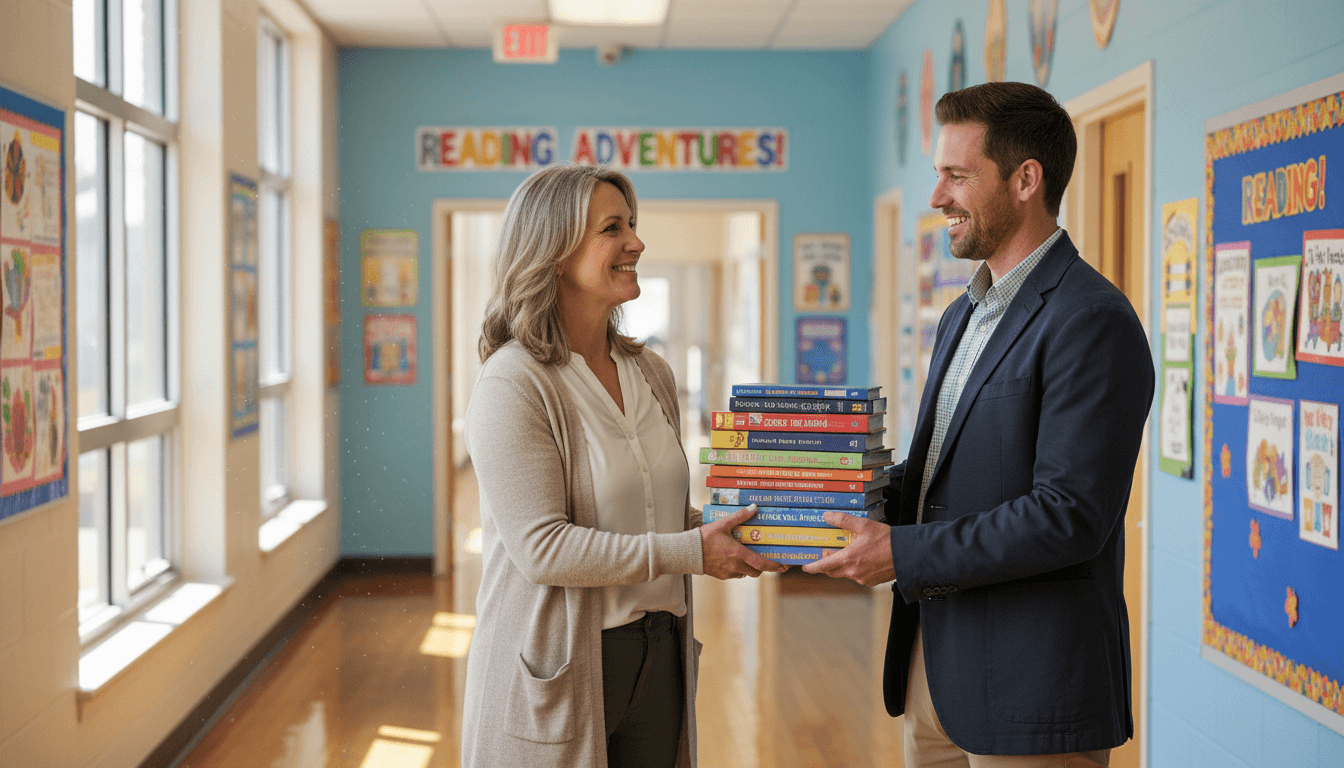
School Librarian Newsletter to Classroom Teachers: A Template
A newsletter to classroom teachers is the most underused tool in the school library. Most librarians send a family newsletter and assume teachers will read it too. They do not. Teachers need a different email, written for their job, that makes the library easier to use this week.
Why teachers need their own newsletter
A family newsletter answers "what should my kid read". A teacher newsletter answers "how do I use the library to make my unit better". Different audience, different ask, different content. Trying to serve both in one send gives teachers content they have to filter and parents content they do not care about. Two short emails work better than one long one.
Section 1: the 'this week in the library' note
Two or three sentences. What is the librarian focused on this week and what does it mean for teachers? Example: "We are pushing the new graphic novel collection hard with grades 3-5 this week. If your reluctant readers need something, send them over. Also: the printer is finally fixed, and the makerspace is open during fourth period."
Section 2: book bin recommendations
This is the section teachers actually read. Pick one unit or grade focus per send and list five to seven titles. Example: "Grade 4 biography unit: A Boy Called Bat by Elana K. Arnold, I Am Malala (young readers edition), Hidden Figures (young readers), Brave Girl by Michelle Markel, The Right Word by Jen Bryant." End the section with the one-line offer: "Reply and I will pull this bin and send it to your room by Wednesday."
Section 3: lesson collaboration offer
One specific, ready-to-go lesson per send. Not a list of services. Example: "Ready-to-teach lesson this week: a 20-minute session on evaluating a source for grades 3-5. I have the slides and the student handout. Reply with a date that works for your class." Specific beats general. The teacher who has been meaning to teach source evaluation all year will finally say yes.
Section 4: database or digital resource tip
Most teachers have no idea what databases the library pays for. One short tip per send fixes that over a year. Example: "PebbleGo has leveled biographies for grades K-3 with built-in audio. Log in through the library page on the school site. Works on any device. If you want a 10-minute walkthrough for your class, reply and I will set it up."
Section 5: the 'I can come in' message
One paragraph at the bottom of every send. Same wording every time. Example: "Reminder: I can come into your room. Book talks, research kickoffs, source evaluation, digital citizenship, makerspace tie-ins. Reply with what you are working on and I will bring a lesson." Repetition matters. Teachers do not act the first time they see an offer. They act the fourth or fifth.
Cadence and timing
Every other Monday, 7 to 8 AM. Subject line should name the value upfront, not the newsletter. "Bin ready: grade 4 biography unit" beats "Library Bi-Weekly Vol 3". Teachers scan subject lines for what directly helps them this week. Lead with that.
How Daystage helps with librarian newsletters to teachers
Daystage lets you build a teacher-specific template with the bin recommendations, collaboration offer, and database tip sections in place. You refill the sections every two weeks and send to the staff list. The layout holds together on phones, which is where most teachers actually read it between classes.
Get one newsletter idea every week.
Free. For teachers. No spam.
Frequently asked questions
Should the teacher newsletter be separate from the parent newsletter?
Yes. Teachers and parents need different things and respond to different framing. Teachers want lesson-ready resources and a clear path to collaboration. Parents want book picks and program updates. Trying to serve both in one email gives both audiences a watered-down version of what they actually need.
How often should the teacher newsletter go out?
Every two weeks during the school year. Weekly is too much for staff inboxes that already get plenty. Monthly is too slow to be useful for lesson planning. Two weeks is the cadence that gets opened and acted on. Send it Monday morning between 7 and 8 AM, before the day starts.
What do the weekly book bin recommendations look like?
Five to seven titles tied to a topic or grade band, with a one-line note on each. Example: 'Grade 2 weather unit: The Cloud Book by Tomie dePaola, Cloudy with a Chance of Meatballs, Hurricane! by Jonathan London, Snowflake Bentley by Jacqueline Martin.' Teachers can request the whole bin or pick from it. The librarian pulls the bin and sends it to the room.
How do you make the 'invite me into your classroom' offer feel real and not pushy?
Make it specific and small. Not 'I would love to collaborate'. Try 'I can teach a 20-minute lesson on how to evaluate a source. I have it ready for grades 3-5 and grades 6-8. Reply with a date that works for your class.' A specific, ready-to-go offer gets taken up. A vague offer never does.
What is the simplest way to send the teacher newsletter without it feeling like more work?
Daystage lets you build a teacher-specific template once with the bin recommendations block, collaboration offer, and database tip section. You refill the recommendations every two weeks, swap the lesson offer when needed, and send to your staff list. No design tinkering, no chasing image sizes, just refill and send.

Adi Ackerman
Author
Adi Ackerman is a former classroom teacher and curriculum writer with 8 years in K-8 schools. She writes about school communication, parent engagement, and what actually works in real classrooms.
More for School Librarian
Ready to send your first newsletter?
3 newsletters free. No credit card. First one ready in under 5 minutes.
Get started free