

Library Newsletter on Research Skills: How to Send It
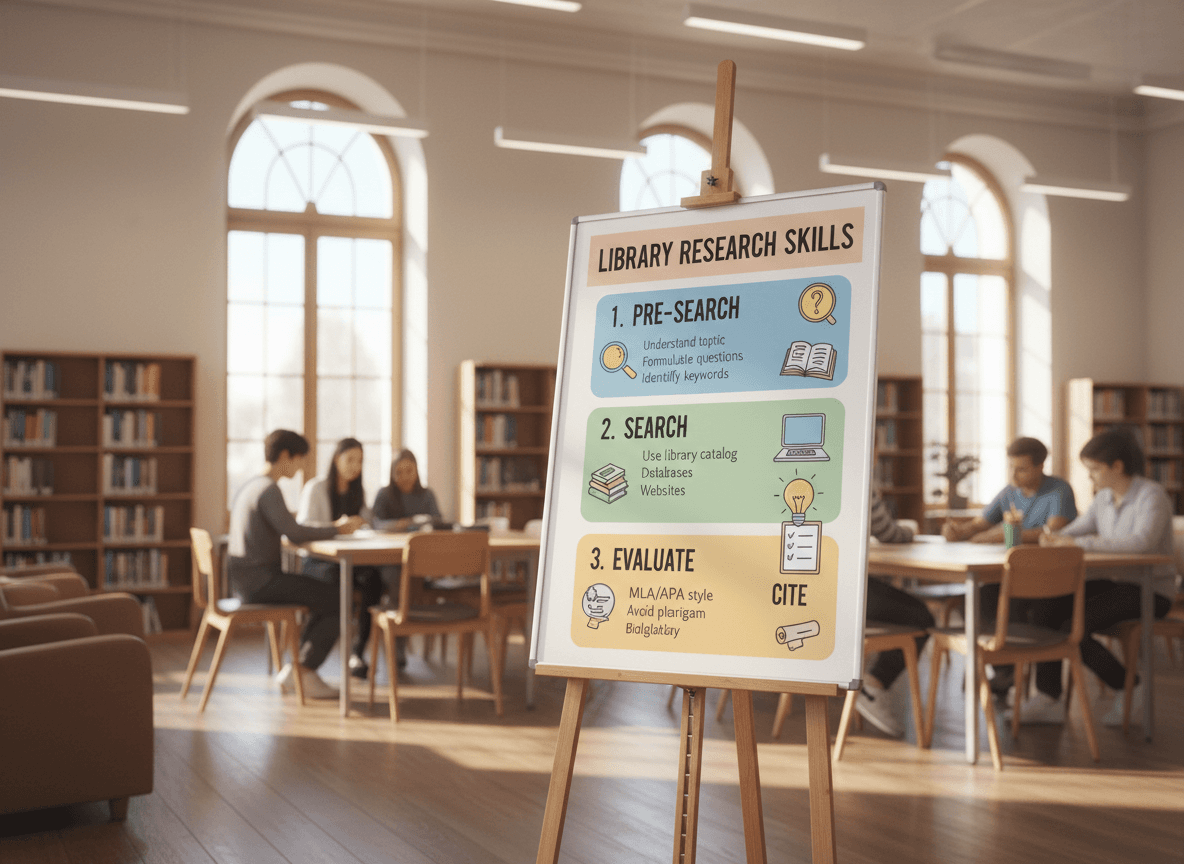
Research is the work the library was built for. It is also the skill most kids do worst, because no one ever showed them a research process. They open Google, type a question, copy the first paragraph they find, and call it done. The research skills newsletter is the librarian's chance to give families a real picture of what research looks like at school and how to support it at home.
The four-stage process every kid should know
Pre-search, search, evaluate, cite. Four words, four stages, the whole shape of a research project. Pre-search is figuring out the question. Search is finding sources. Evaluate is checking those sources. Cite is giving credit. Drop these four words in a box at the top of the newsletter and refer back to them all year.
Pre-search: the stage everyone skips
Pre-search is the difference between a fast research project and a slow one. A pre-searched kid writes one sentence on a sticky note before opening a browser: "I want to know how the heart pumps blood." A non-pre-searched kid types "heart" into Google and wonders why the next forty minutes feel awful. Tell families this in plain language: "Before your kid searches, ask them to write the question on a sticky note. Then search. Watch how much faster the rest of the homework goes."
Search: shorter is usually better
Three or four keywords beat a full sentence almost every time. This is the same point as the digital literacy newsletter, but it belongs here too because research is where it pays off. Drop a two-sentence reminder in the newsletter: "Pull the two or three most important words from the sticky note. Search those. Add one word if the answer does not appear."
Evaluate: the five-check question
Reference the CRAAP test from the information literacy newsletter without re-teaching it. "We use the CRAAP test in the library to check every source. If you saw last month's newsletter, you know the five questions. Ask your kid to run the test on two of their sources tonight."
Cite: just enough for families
Name the format the school uses. MLA, APA, or a simplified version in elementary. One sentence: "Our school uses MLA citations starting in fifth grade. The library has a one-page guide on the front desk and on the library website." Do not write a citation tutorial in the newsletter. Save the depth for a separate handout.
The five/three/two rule by grade
Drop this rule in a small box: "Second and third grade: two sources, used well. Fourth and fifth grade: three sources. Middle school: five sources." Parents ask this question every project cycle. Answer it once in the newsletter and the question stops.
One concrete classroom example
"This week, a fourth grader was researching the gray wolf. Her pre-search sentence was 'I want to know what gray wolves eat and how they hunt.' Her three sources were a National Geographic article, a chapter from a library nonfiction book, and a wolf sanctuary website. She ran the CRAAP test on all three. She finished the research stage in one class period, with notes ready for writing the next day. Six weeks ago she would have spent three class periods on the same project."
How Daystage helps with research skills newsletters
Daystage gives media specialists a template that handles framework boxes, source rule blocks, and a classroom example in one clean email. Build the four-stage block once, refill the example each month, and the newsletter goes out branded and easy for families to skim. Research stays on the parent radar instead of becoming a vague worry every project cycle.
Get one newsletter idea every week.
Free. For teachers. No spam.
Frequently asked questions
What are the four stages of a research process kids should learn?
Pre-search, search, evaluate, cite. Pre-search is figuring out what you actually want to know. Search is finding sources. Evaluate is checking which sources are good. Cite is giving credit. Most kids skip pre-search and go straight to searching, which is why their research takes three times as long as it should. Naming the four stages in the newsletter changes how families talk about homework.
How many sources should a kid use at each grade level?
Our rule of thumb: two sources for second and third grade, three sources for fourth and fifth grade, five sources for middle school. Adjust up or down based on the project, but the principle holds. Fewer sources, used well, beats more sources used poorly. Families often ask 'how many sources should my kid have' and the answer needs to be in the newsletter.
What is the most common mistake kids make in research?
Skipping pre-search. They start typing into Google before they have figured out what question they are actually trying to answer. The librarian fix is one sentence: 'Before you search, write your question on a sticky note. Then search.' That single habit cuts research time in half and produces a much better result. Families who reinforce this at home see homework finish faster.
Should the newsletter include the citation format kids are using?
Briefly. Name the format, link a one-page guide, and stop. The newsletter is not the place for a citation tutorial. That belongs in the classroom and on a handout. The newsletter just tells families which format the kid is using so the parent can help without learning a new style guide.
What is the easiest way to send a newsletter that includes a research checklist?
Daystage was built for school staff who need to send branded newsletters with checklists, framework boxes, and downloadable handouts. Build the four-stage block and the source rule once as a template, refill the example each month, and the email goes out clean and easy to skim. Media specialists who use it tend to keep research skills on the parent radar all year.

Adi Ackerman
Author
Adi Ackerman is a former classroom teacher and curriculum writer with 8 years in K-8 schools. She writes about school communication, parent engagement, and what actually works in real classrooms.
More for School Librarian
Ready to send your first newsletter?
3 newsletters free. No credit card. First one ready in under 5 minutes.
Get started free