
Library Newsletter for New Books Arrival: A Template
A new books arrival newsletter is the easiest win in a school librarian's year. Kids care, families care, and the section almost writes itself once the boxes are open. The trick is treating it like a feature, not a list. Five new titles, named clearly, with enough signal that a parent or a kid can decide to grab one.
Lead with the news, not the logistics
First line says new books are in. Not "I am writing to inform you." More like, "Twenty-two new books hit the shelves this week. Here are five worth knowing about." Families read the first sentence and decide whether the rest is worth their time. The arrival itself is the headline.
Pick five new books to feature
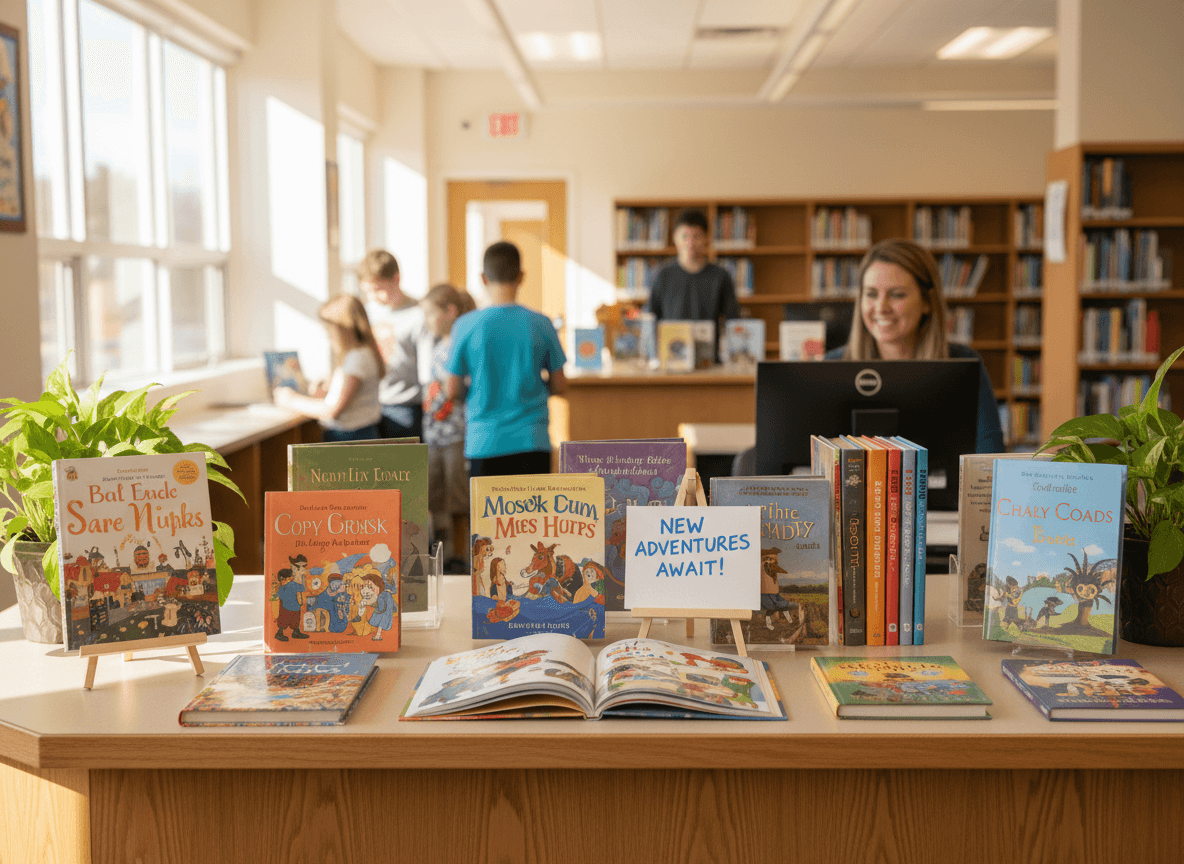
Five titles is the sweet spot. Two picture books, two middle grade, one upper middle or graphic novel. Each one gets a cover image, a grade range, and one sentence about who it is for. Anything more and the section bloats. Anything less and it feels like there is nothing to come in for.
The format for each book
Title. Author. Grade range. One sentence. Example: "The Yellow Bus by Loren Long. Picture book, grades K to 2. The story of a school bus across decades, perfect for a quiet bedtime read." That is the whole entry. No 200-word synopsis. The cover does half the work, the sentence does the rest.
Say how the titles got picked
One paragraph explaining the selection. Mix student requests, collection plan picks, and any donations or grant-funded titles. Example: "Two of these came from fourth grade requests. Two filled gaps in the graphic novel section. The fifth was funded by the PTA book grant in spring." Families love seeing the process, and it quietly answers the "where does my book fair money go" question without making a thing of it.
Show the broader haul, not just the five
After the five featured books, one short paragraph naming the categories of the rest. "Twenty-two new titles total: eight picture books, nine middle grade, three graphic novels, two nonfiction series additions." It signals that the library is moving without forcing parents to read 22 entries.
Tell families how to put a book on hold
New arrivals create demand. Tell families how to request a hold, especially for the popular titles. One sentence. "Want one of these first? Reply to this email by Friday and we will set it aside for your child to check out Monday." That single sentence drives more engagement than any other line in the newsletter.
Highlight one staff or student favorite
At the bottom, one sentence from a teacher or a student. "Mr. Diaz read The Skull aloud to his second graders last week and they asked for it three days in a row." Real names, real reactions. This is what turns a list into a story.
End with what is coming next
Close with a one-line preview of the next batch. "Next order lands late August with the new Raina Telgemeier and three more in the Cat Kid series." Families plan around it, kids ask about it, and the next newsletter has a built-in opening line.
A working example for September
"Hi families, 22 new books are on the shelves. Five worth knowing about: The Yellow Bus by Loren Long (K to 2), Mexikid by Pedro Martin (grades 5 to 8), Dog Man: The Scarlet Shedder (grades 2 to 5), The Probability of Everything by Sarah Everett (grades 4 to 7), and The Skull by Jon Klassen (grades K to 3). Two came from student requests. Two filled gaps in graphic novels. The fifth was a PTA pick. Want first dibs? Reply by Friday and we will hold one for your kid. More coming late August."
How Daystage helps with new books arrival newsletters
Daystage gives librarians a saved five-book grid with cover slots, grade-range fields, and a one-line description per book. Each month you swap in the new titles, drop in the covers, and send. The layout holds steady, the email reads clean on phones, and the new arrivals stop being the section you keep meaning to write.
Get one newsletter idea every week.
Free. For teachers. No spam.
Frequently asked questions
How many new titles should I feature in one newsletter?
Five is the right number. Two picture books, two middle grade, one upper middle or graphic novel. More than five turns into a list parents scroll past. Fewer than three feels thin. Five is enough to give every grade band something to want.
Should I always feature the most expensive new books?
No. Feature the books kids will actually check out first. Series additions, popular author follow-ups, and graphic novels move fast and create circulation momentum. A new reference set might be valuable but it does not earn the headline slot in a family newsletter.
How do I explain how titles get chosen without sounding bureaucratic?
One sentence is enough. 'These titles came from student requests, the collection plan for grades 3 to 5, and two PTA-funded selections.' Families like seeing kids' voices in the process. They do not need the full collection development policy in the newsletter.
What about books that get challenged or feel sensitive?
Lead with the audience and the strength of the book, not with a defensive note. 'For grades 5 and up, exploring identity and family.' If a family has questions, point them to your reconsideration process by name. Most parents are not looking for a fight. They are looking for context.
Is there a simple way to send the new arrivals list each month?
Daystage is built for this kind of refill-and-send newsletter. The five-book grid sits in a saved template with cover slots, grade ranges, and a one-line description per book. Each month you swap in the new titles and send. Total prep is 20 minutes once the books are in your hands.

Adi Ackerman
Author
Adi Ackerman is a former classroom teacher and curriculum writer with 8 years in K-8 schools. She writes about school communication, parent engagement, and what actually works in real classrooms.
More for School Librarian
Ready to send your first newsletter?
3 newsletters free. No credit card. First one ready in under 5 minutes.
Get started free