

Library Newsletter on the Lost Book Policy: A Template
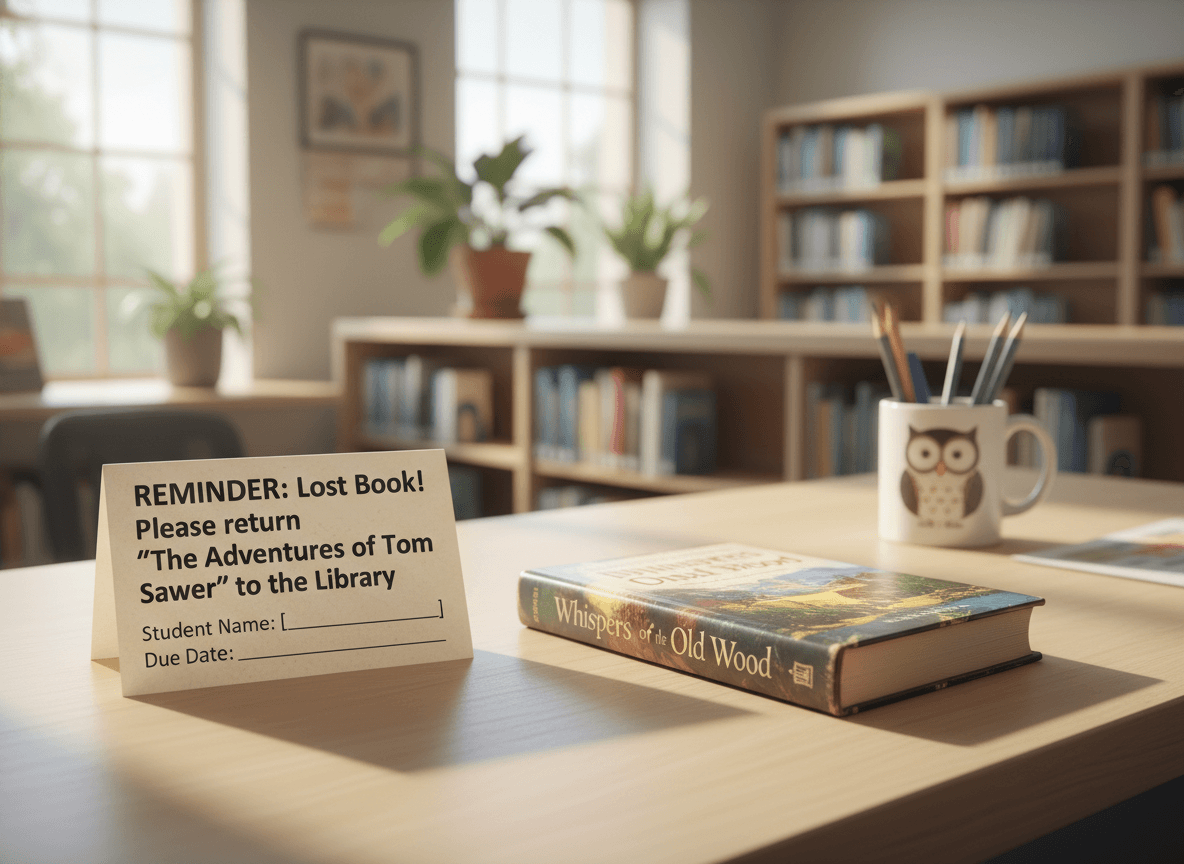
A lost book policy newsletter is one of the few library emails that actually has stakes. Done wrong, it lands like a collections notice and parents stop opening library emails for the rest of the year. Done right, it sounds like a librarian who would rather have the conversation than the money.
Open with what the policy is for, not what it costs
First paragraph is the reason for the policy, not the dollar amount. The library serves 400 kids on a fixed budget, books come back so other kids can read them, and replacement cost exists so the collection does not shrink year over year. Three sentences. Then the policy details. The order matters. Lead with cost and parents brace. Lead with purpose and they read on.
Spell out the timeline
Give families the cadence of reminders in plain words. "Books are due every two weeks. After 30 days overdue we send a friendly note. After 60 days we mark the book lost and email a replacement notice. At any point you can reply and we will figure it out." Predictable is calm. Vague is scary.
Explain how replacement cost gets calculated
Tell families the exact rule. Replacement cost equals the current edition price plus a small processing fee if your district uses one. Show one example. "A typical paperback runs about $9. A hardcover graphic novel runs about $15. A reference title can run $25." Real numbers, three lines. Parents would rather see the math than wonder.
Use the talk-to-us-first language
Somewhere in the middle, the line that matters most: "Before any replacement charge becomes final, we want to talk. Reply to this email and we will work it out together." That sentence is the whole policy in one move. It tells families the librarian is a person, not a billing system, and it cuts the number of upset emails by a wide margin.
Name the hardship path without making it awkward
One short line. "If a replacement charge is a hardship for your family, please tell us. We have a quiet way to handle it." No forms, no committees, no shame. Most schools have a small fund or a PTA bucket that covers these. Saying it in the newsletter is what opens the bucket.
Be specific about what counts as damaged
A short paragraph distinguishing normal wear from real damage. "Bent corners, soft covers, a small mark with a pencil, all fine. Pages torn out, water damage, or chewed corners, we will reach out about replacement." Families return books they think are too damaged when they were not. They also keep books because they are afraid to bring them back. Clarity solves both.
Show families how to actually look for a book at home
A practical block on where books usually turn up. Under the bed, in the car door pocket, in a sibling's backpack, on top of the fridge. Five locations, one line each. It sounds small. It recovers more books than the reminder system does.
A working example for the start-of-year note
"Hi families, a quick note on library books. We loan around 6,000 books a year, and they only keep moving if they come back. Books are due every two weeks. After 30 days overdue we send a friendly reminder. After 60 days a book is marked lost and replacement cost is shared (about $9 for a paperback, $15 for a graphic novel). Before anything becomes final, we want to talk. Reply to this email any time. If replacement is a hardship, please tell us. Most missing books are under a bed or in a sibling's backpack. Thanks for keeping the library full."
How Daystage helps with lost book policy newsletters
Daystage holds the policy note, the 30-day reminder, the 60-day note, and the hardship-quiet email as saved templates. The tone stays consistent across all four. You trigger the right one for the right family without rewriting it each time, and the policy starts feeling like a system instead of a string of awkward emails.
Get one newsletter idea every week.
Free. For teachers. No spam.
Frequently asked questions
Should I send a separate newsletter for lost book policy or fold it into the regular one?
Send a dedicated short note once at the start of the year, then fold reminders into the regular monthly newsletter. A standalone email at the beginning gives the policy weight. Repeating it monthly inside the regular update keeps it normal instead of scary.
What is the right replacement cost to charge?
Charge the actual replacement cost of the book in its current edition, not a flat fee or the original retail price. Families respect a real number. A vague $25 fee for a $9 paperback erodes trust. Most districts have a per-title cost lookup. Use it.
What if a family genuinely cannot afford the replacement?
Build a quiet path in the policy. 'If replacement is a hardship, please email the librarian and we will work it out.' Most schools waive the fee in those cases through PTA funds or a library hardship line item. Saying so in the newsletter removes the shame and gets the book situation resolved.
How long should I wait before marking a book lost?
Sixty school days past due is a reasonable default. Earlier than that and you are chasing lunchboxes and backpacks. Later than that and the book is gone for real. Tell families the timeline so a slow return does not turn into a surprise invoice.
Is there a tool that handles the gentle reminder cadence automatically?
Daystage handles the reminder side cleanly. A 30-day note, a 60-day note, and a 'time to talk' email all sit as saved templates you can trigger by family. The tone stays consistent and you stop having to write three different versions of the same uncomfortable email.

Adi Ackerman
Author
Adi Ackerman is a former classroom teacher and curriculum writer with 8 years in K-8 schools. She writes about school communication, parent engagement, and what actually works in real classrooms.
More for School Librarian
Ready to send your first newsletter?
3 newsletters free. No credit card. First one ready in under 5 minutes.
Get started free