
Library Newsletter for a Library Closure: A Working Template

A library closure is the kind of thing families forgive easily, as long as they hear about it early and clearly. The newsletter you send before and during a closure decides whether parents feel looped in or annoyed. Get the structure right once and you can reuse it every time a deep-clean, a leak, or a scheduled HVAC project pulls the room out of service.
Lead with the dates, then the reason
First sentence is the closure window. "The library is closed July 28 through August 12 for HVAC replacement." Reason in the same paragraph, one sentence, no jargon. Families do not need a vendor name or a work order number. They need the date the library opens again and what happens between now and then.
Say what kids do for books in the meantime
This is the section that does the heavy lifting. Three options work in most schools. A weekly mobile cart in the cafeteria or hallway, a hold-and-pickup system where families email a title and grab it from the front office, or a partnership with the local public library for the closure window. Pick one, name the day, name the location, name the time.
Set up a weekly pop-up checkout if the closure is long
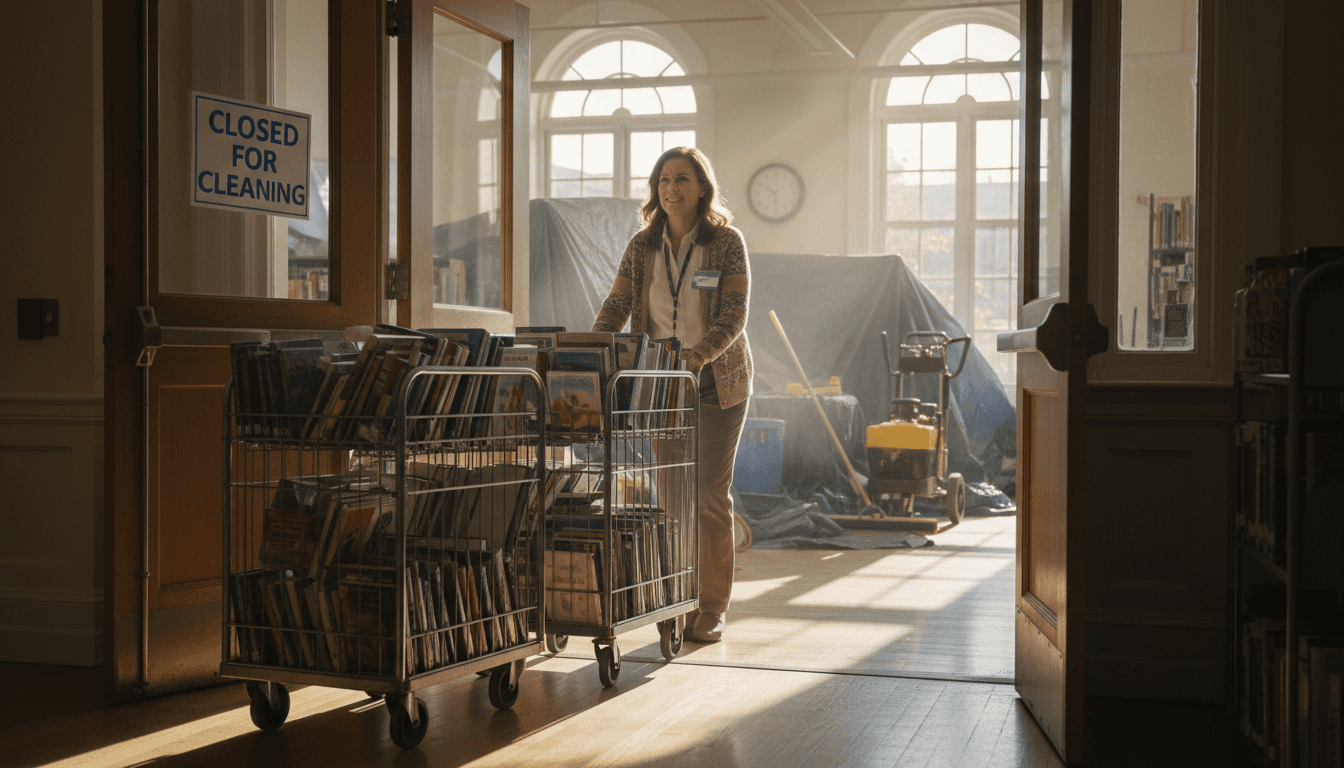
For any closure longer than a week, run a weekly pop-up. A rolling cart, 40 to 60 books picked across grade levels, a clipboard or a laptop for checkout, and one consistent slot. Wednesdays at lunch works for most elementary schools. Same day, same place, every week of the closure. Predictability is what gets kids to come.
Pause overdue notices and say so
Tell families that overdue reminders are paused for the length of the closure plus one week after reopening. A line in the newsletter is enough. "Overdue notices are paused through August 19. Bring books back when the library reopens, no fines, no follow-up emails." Removes a small worry that quietly stresses parents during a closure.
Tell teachers what to do for their lessons
Teachers reading the same newsletter need a different answer than parents. Add one short paragraph at the bottom for staff: where the databases are still accessible, how to request a book set for a unit, and which research lessons are paused or moved to a classroom. Do not write a separate email. One newsletter, two audiences, one less thing in their inbox.
Acknowledge that closures are hard on routines
One line, in your voice: "I know the library being closed throws off the week, and we miss the space as much as you do." Families read this section and feel like the closure is being handled by a person, not by a district memo. That sentence does more for trust than three paragraphs of logistics.
End with the reopening plan
Last paragraph is what happens when the library opens again. Soft reopening day, when regular class visits resume, and any special event tied to the return. "We reopen August 13 with classes back to normal August 14. First Friday back we will run a 'welcome back bookmark' giveaway for K to 5."
A working example for a two-week summer closure
"Hi families, the library is closed July 28 through August 12 for HVAC work. Pop-up checkout runs Wednesdays at lunch on the cart outside the cafeteria, grades K to 5 welcome. Want a specific title? Reply by Tuesday and we will hold it. Overdue notices are paused through August 19. Library reopens August 13 with class visits resuming August 14. We miss the space too. See you back in the room soon."
How Daystage helps with library closure newsletters
Daystage holds a closure template with slots for reopening date, pop-up schedule, overdue pause line, and the teacher block at the bottom. Build it once, save it, and the next time a closure hits you send a clean branded email in 15 minutes instead of writing it from scratch under pressure.
Get one newsletter idea every week.
Free. For teachers. No spam.
Frequently asked questions
What is the right amount of notice before a planned closure?
Two weeks if you can. One full newsletter goes out two weeks before, a reminder goes out three days before, and a 'we are closed, here is what to do' note goes out the morning of. Anything shorter and families miss the message and show up confused.
What if the closure is unplanned, like a flood or a deep-clean order?
Send the email the same day, as short as possible. State what happened, when the library will reopen if known, and where checkout is happening in the meantime. Skip the explanation of root cause. Families want to know what to do this week, not why the carpet failed.
Is a mobile cart actually worth the setup?
Yes, for any closure longer than five school days. A cart in the cafeteria or hallway once a week keeps circulation alive, keeps your data clean, and gives kids a sense that reading is still happening. Below five days you can usually let it ride with a hold-and-pickup option.
How do I handle overdue books during a closure?
Pause overdue notices for the length of the closure plus one week, and say so in the newsletter. Families get nervous when the library is closed and a 'your book is late' email shows up. A one-line note like 'overdue reminders paused through August 30' takes the worry off the table.
Is there a tool that makes these closure updates easier to send?
Daystage handles closure updates the same way it handles monthly newsletters. Build the closure template once with slots for reopening date, mobile cart schedule, and the overdue pause line, then send same-day when the closure starts. Families get one clear email instead of three confused threads.

Adi Ackerman
Author
Adi Ackerman is a former classroom teacher and curriculum writer with 8 years in K-8 schools. She writes about school communication, parent engagement, and what actually works in real classrooms.
More for School Librarian
Ready to send your first newsletter?
3 newsletters free. No credit card. First one ready in under 5 minutes.
Get started free