

Library Newsletter on Information Literacy: A Template
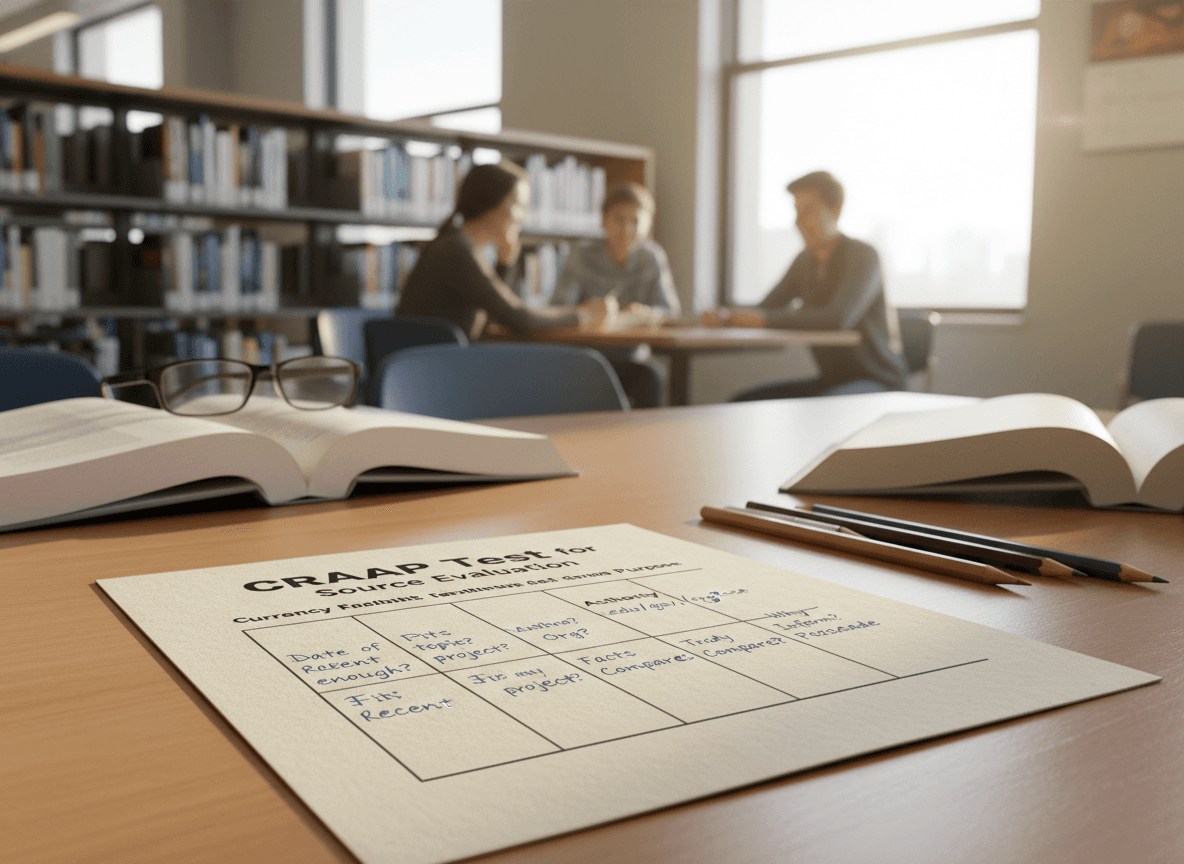
Information literacy is the skill that makes every other library lesson work. A kid who cannot tell a reliable source from an unreliable one will write a great-looking report built on garbage. The information literacy newsletter is the librarian's chance to teach the same framework to families that the kids are learning in class, so the skill follows the kid home.
What the newsletter is for
Two jobs. Name the framework the kids are using in class, and give families a way to use it at home. Most parents have never been formally taught how to evaluate a source. The newsletter is the most efficient way to teach the parent and the kid at the same time. Two paragraphs, one example, one home activity.
The CRAAP test, explained simply
Five questions, asked of any source. Currency: when was this written or last updated. Relevance: does this actually answer my question. Authority: who wrote it and what do they know about the topic. Accuracy: can I check the facts against another source. Purpose: why was this written, to inform, to sell, or to persuade. Five questions, ninety seconds, and the kid has a real evaluation, not a guess.
How to teach it in one newsletter section
Drop a short box in the newsletter with the five questions, one sentence each, in plain language. Then write three sentences below it: "This is what your kid is using in the library to evaluate sources. We call it the CRAAP test in middle school and 'the five checks' in elementary. The questions are the same."
One concrete classroom example
Pick one real moment. "This week, fifth graders ran the CRAAP test on a website about endangered jaguars. Currency check failed: the site was last updated in 2009. Authority check failed: the page had no author. Accuracy check failed: the jaguar population number did not match any other source. By the end, the kids had retired the site and moved to a source from the World Wildlife Fund. They did it in fifteen minutes."
The home activity
One paragraph. "This week, pick any article you read in a news app, a magazine, or a website. Ask your kid three of the five CRAAP questions: who wrote this, when was it written, and why was it written. Two minutes per article. Do it three times this week and your kid will start doing it without being asked."
Why families need this, not just kids
Most parents were not taught a source evaluation framework. They do not know the questions. They cannot reinforce what they do not know. The newsletter gives them the language for the first time. Parents who learn the CRAAP test from the library newsletter often tell us they are now using it on their own news reading. That is the whole point of an information-literate community.
Cadence and timing
Information literacy belongs in the regular monthly newsletter rotation, not in a separate email. Pair it with the digital literacy issue every other month so families build the skills in tandem. Send on the first Tuesday of the month, 7 to 9 AM, the same window as your other library sends.
How Daystage helps with information literacy newsletters
Daystage gives media specialists a template that handles framework boxes, plain-language sections, and a home practice block in one clean email. Build the CRAAP block once, refill the classroom example each month, and the newsletter goes out looking like a teaching tool families want to keep. Information literacy stays on the parent radar instead of getting buried under book picks.
Get one newsletter idea every week.
Free. For teachers. No spam.
Frequently asked questions
What does CRAAP stand for and is it really safe to say in school?
Currency, Relevance, Authority, Accuracy, Purpose. Yes, every middle school librarian uses it. The acronym is unfortunate and the kids laugh at it on day one, which is exactly why they remember it. Elementary schools sometimes rename it 'the five checks' to avoid the giggle, but the framework is the same.
At what grade should information literacy start?
Authority and accuracy start in second grade. 'Who wrote this' and 'is this true' are questions even seven-year-olds can answer when given a simple example. Currency and purpose belong in fourth or fifth grade. Relevance is taught everywhere but never named, which is why kids do not transfer the skill. Naming it in the newsletter helps families reinforce it at home.
How is information literacy different from media literacy?
Information literacy is about evaluating sources for research. Media literacy is about evaluating messages for influence. A kid writing a report on whales needs information literacy. A kid watching a YouTube ad disguised as a video needs media literacy. The library newsletter should cover both, but separately. Mixing them turns into a vocabulary list, not a teaching tool.
What is one home activity families can do to reinforce this?
Pick any article in the house newspaper, news app, or magazine. Ask the kid three questions: who wrote it, when was it written, and does the writer want me to think a certain way. Three questions, two minutes, and a lifetime of skepticism. Families who do this weekly raise kids who notice things other kids miss.
What is the easiest way to send a newsletter explaining a framework like CRAAP?
Daystage was built for school staff who need to send branded newsletters with framework boxes, simple graphics, and clean formatting. Build the CRAAP block once as a template, refill the example each month, and the email goes out looking like a teaching tool, not a wall of text. Media specialists who use it tend to keep information literacy in the parent rotation all year.

Adi Ackerman
Author
Adi Ackerman is a former classroom teacher and curriculum writer with 8 years in K-8 schools. She writes about school communication, parent engagement, and what actually works in real classrooms.
More for School Librarian
Ready to send your first newsletter?
3 newsletters free. No credit card. First one ready in under 5 minutes.
Get started free