

Library Newsletter on Citation Skills: A Plain-Language Template
Citation is the part of research kids fear most and parents understand least. The format looks like a foreign language. The rules look arbitrary. The penalty for getting it wrong feels bigger than it actually is. The citation skills newsletter is the librarian's chance to make the whole thing feel routine instead of scary, for the kid and for the family.
What citation actually is, in plain language
Two sentences. "Citation is the credit you give to the people whose ideas or facts you used. Done right, it shows your reader where you got your information so they can check it themselves." That is the whole concept. Format is the second layer. Purpose comes first, and the newsletter should lead with it.
The four MLA basics
Title, author, year, URL. Four pieces of information. Every citation a kid writes will use some combination of these four. Drop them in a small box: "Every MLA citation needs four things: the title, the author, the year it was published, and the URL if it lives online. If your kid has these four, they have a citation, even if the punctuation is not perfect."
In-text citation, the basic case
"When your kid uses a fact from a source in the middle of a sentence, the last name of the author goes in parentheses at the end of that sentence. That is the whole rule for the basic case." Add one example. "Like this (Smith). The period goes after the parentheses. If there is no author, use the title in quotes." That paragraph covers 80 percent of what fifth graders actually need to do.
EasyBib and Zotero, named and explained
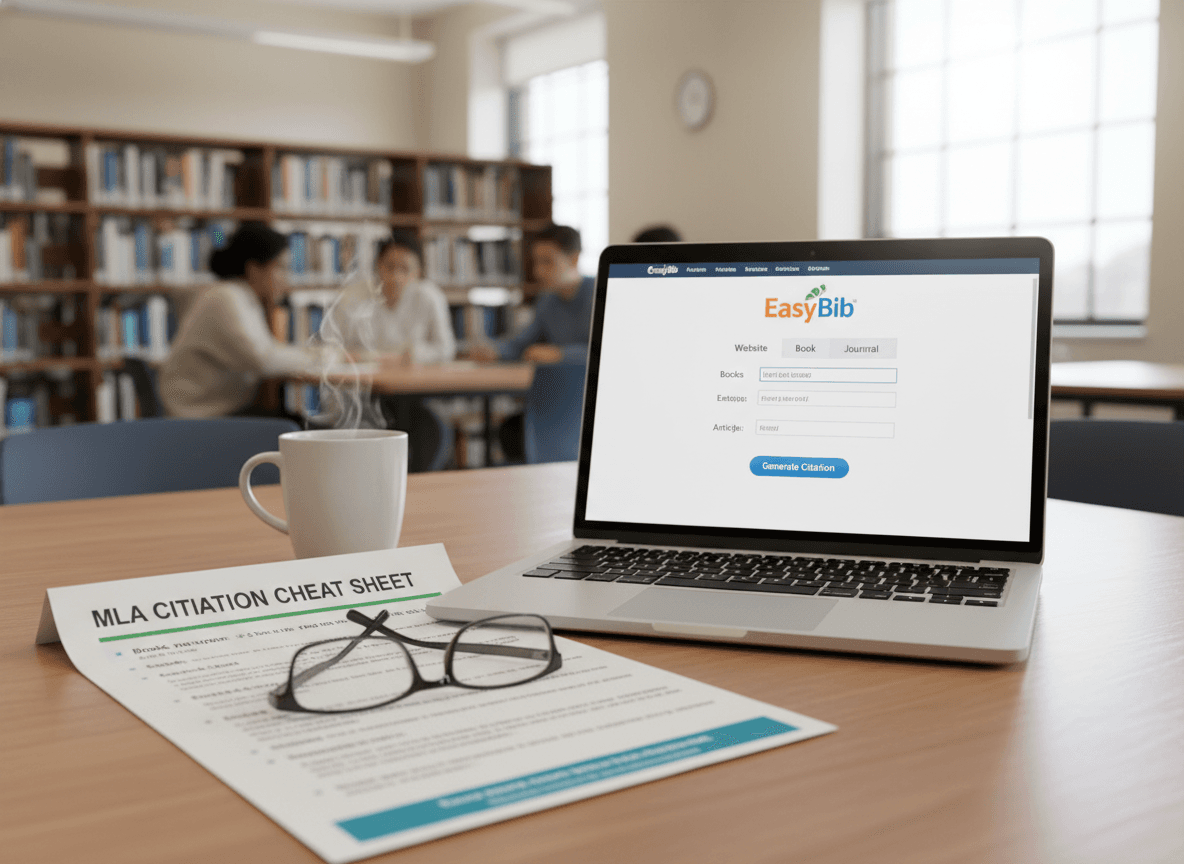
Two tools, two sentences. "EasyBib is the fast option for one-off citations. Paste the URL or type the title, and it builds a citation in any format. Zotero is the bigger tool that saves sources across projects and integrates with Google Docs." Then the rule: "Always spot-check the output against a cheat sheet. Citation tools get most things right, but not all things."
One concrete classroom example
"This week, a sixth grader was working on a wolves report. She had three sources: a National Geographic article, a library book, and a wolf sanctuary website. She pasted the URL into EasyBib for the first source, typed the book details for the second, and the sanctuary URL for the third. Then she ran each citation against the cheat sheet, fixed two small errors, and her works cited page was done in about fifteen minutes. Six months ago this would have been an hour of frustration."
The home support paragraph
One paragraph for families. "If your kid is doing research this month, ask them to show you their works cited page. You do not need to know MLA to spot a problem. If the page has fewer citations than the kid had sources, something is missing. If all the citations look identical, something is wrong. Just having a parent look is enough to catch most issues."
Cadence
Send the citation newsletter during the heaviest research season for your school, usually November or March. One issue dedicated to citation, paired with a downloadable cheat sheet, covers most of the year. Mention citation in passing in other newsletters, but do not re-teach it every month. Families will tune it out.
How Daystage helps with citation skills newsletters
Daystage gives media specialists a template that handles a clean MLA basics box, a tool comparison section, and a downloadable cheat sheet attached in one email. Build the citation block once, refill the example each project season, and the newsletter goes out branded and easy for families to follow. Citation stops being scary, which is the only outcome that actually matters.
Get one newsletter idea every week.
Free. For teachers. No spam.
Frequently asked questions
When should kids start learning citations?
Simplified citations start in third grade. Title and author is enough at that age. Full MLA usually starts in fifth or sixth grade. Trying to teach proper MLA before fifth grade tends to confuse kids and turn citations into a source of homework dread. The newsletter should match the school's actual scope and sequence.
What is the simplest way to explain in-text citation to families?
One sentence: 'When your kid uses a fact from a source, the last name of the author goes in parentheses at the end of that sentence.' That is the whole rule for the basic case. Page numbers and other variants come later. Families who get the one-sentence version stop being scared of citations.
Is it OK for kids to use EasyBib or other citation generators?
Yes, with one rule: always check the generated citation against a cheat sheet. The tools get about 80 percent of citations right and 20 percent wrong. Kids who use the tool and check it learn the format faster than kids who do it by hand. Kids who use the tool and never check it never learn the format. The newsletter should name both EasyBib and Zotero as options and remind families to spot-check.
Should middle schoolers learn Zotero?
Yes if the school supports it. Zotero is the real research tool that follows kids into college. EasyBib is fine for quick one-off citations. Zotero is better for projects with five or more sources. Most middle school librarians introduce Zotero in seventh or eighth grade. The newsletter is the right place to tell families it exists and that it is free.
What is the easiest way to send a newsletter with a citation cheat sheet attached?
Daystage was built for school staff who need to send branded newsletters with PDF handouts, cheat sheets, and clean formatting. Attach the citation cheat sheet, drop in the rule of the month, and the email goes out without fighting with attachments or layout. Media specialists who use it tend to keep citation skills on the parent radar through the whole research season.

Adi Ackerman
Author
Adi Ackerman is a former classroom teacher and curriculum writer with 8 years in K-8 schools. She writes about school communication, parent engagement, and what actually works in real classrooms.
More for School Librarian
Ready to send your first newsletter?
3 newsletters free. No credit card. First one ready in under 5 minutes.
Get started free