
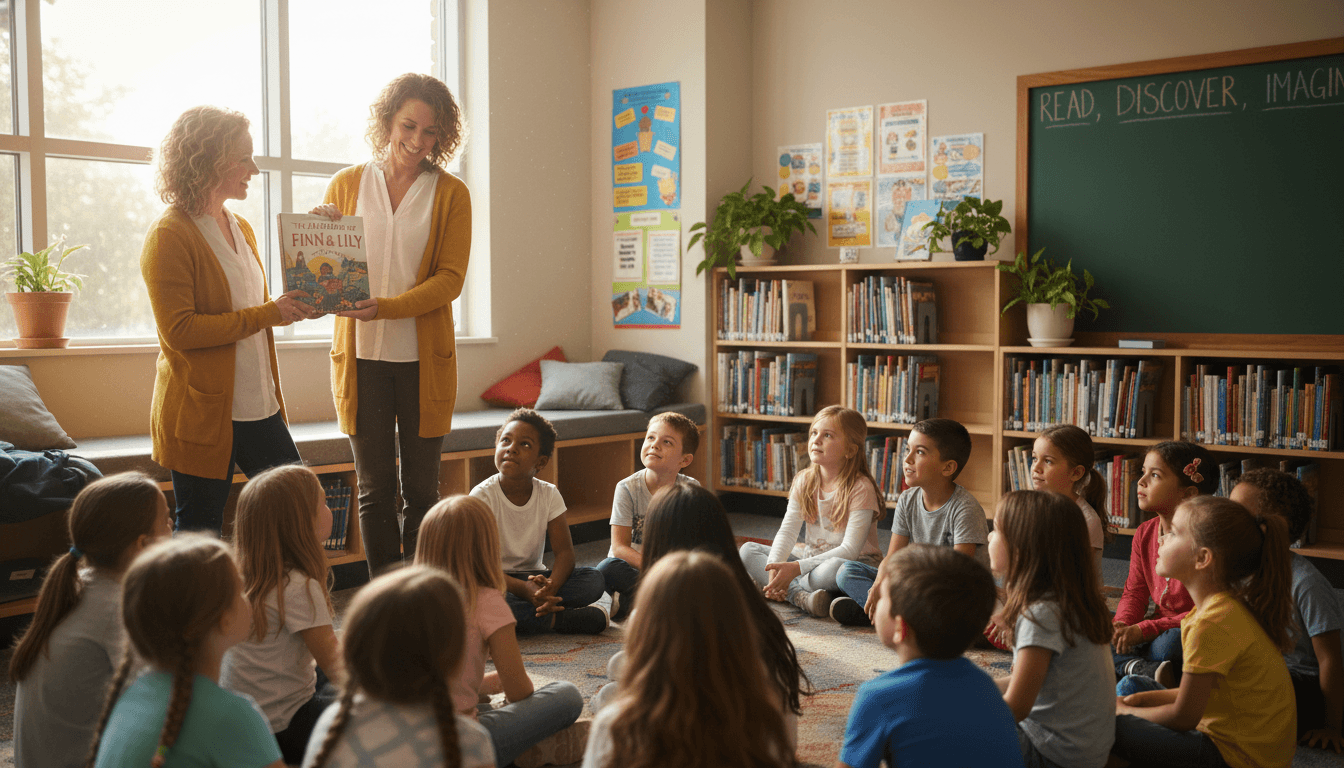
Library Newsletter on Book Talks: A Template With Examples
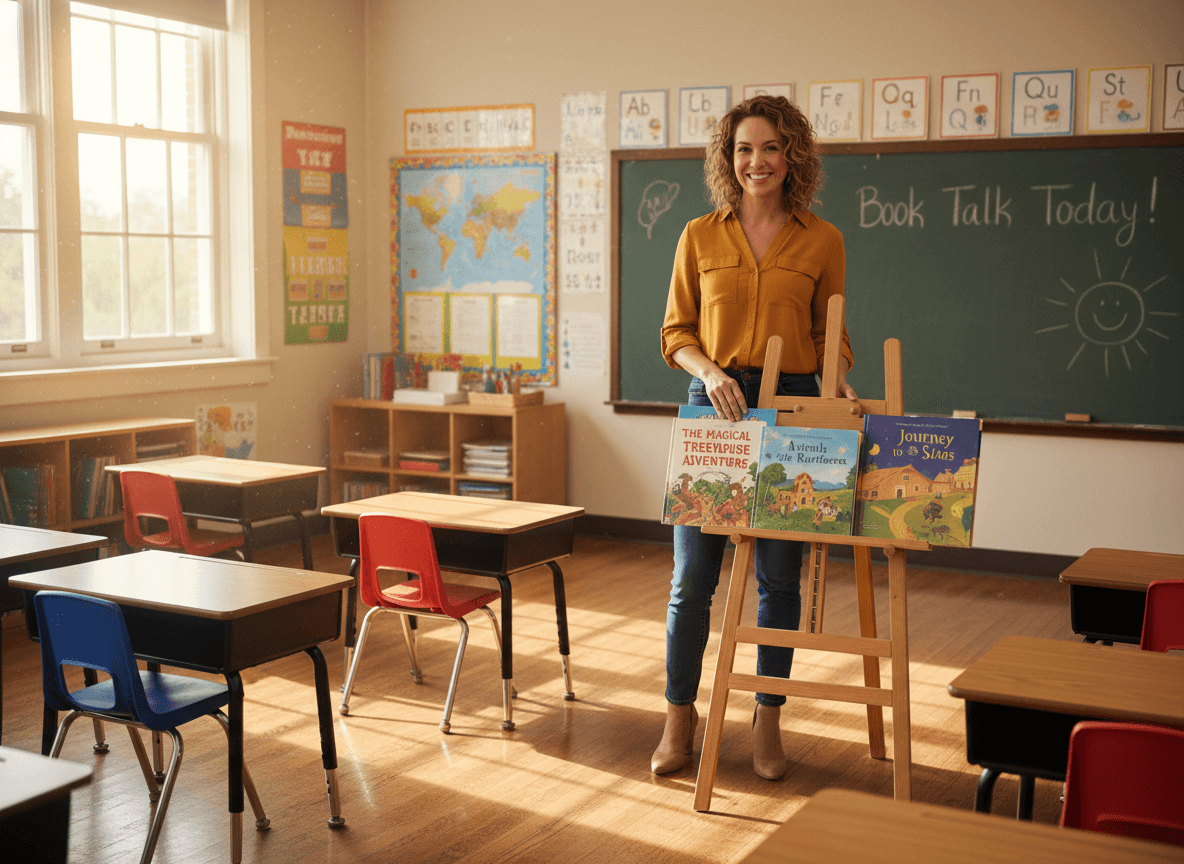
A book talk is the most efficient way a school librarian moves books into kids' hands. A weekly book-talk newsletter is the way families see what their kid saw at school and decide whether to request the title at the public library or buy it at the book fair. Here is the template that works.
The 60-second pitch template
Four parts, 15 seconds each. Hook (the one weird or specific thing about the book). Setup (who the main character is and what they want). Scene (one specific moment from the first 30 pages). Stop (refuse to say what happens next, hand the book to a kid). Sixty seconds total. Anything longer is a lecture.
The three-book weekly structure
Pick three books per week. One picture book or early chapter, one middle-grade, one upper-middle or YA. The range covers the siblings in most families. Three is the working number, more becomes a list, fewer feels thin. The newsletter mirrors what the librarian book-talked in the school that week.
Sample 60-second book talk
Hook: "A girl wakes up in her own house and her family does not recognize her." Setup: "She is 11, her name is Aza, and the only thing she remembers is her mom's voice and a song from when she was 4." Scene: "On page 22, she finds a photograph of herself with a name written on the back that is not her name." Stop: "I am 80 pages in. I am not telling you what happens. Who wants to check it out?"
The weekly bookmark giveaway
Print three bookmarks each week, one per book-talked title. Hand them out at the end of book talks. Kids who want the book grab a bookmark. The bookmark has the title, author, and a one-line librarian note. Kids who do not check out that day take the bookmark home and remember the title the next week. Costs almost nothing, drives requests through the roof.
The "I have not finished it yet" rule
Allow yourself to book-talk a book you are still reading. State it plainly. "I am 100 pages in. Here is what I know so far." The honesty does two things: it models real reading life, and it removes the pressure to wait until a book is finished before recommending it. Kids see the librarian as a reader, not as a finished-book delivery system.
Example: Lakeside Middle School, 480 students. Last fall the librarian started a weekly book-talk newsletter with three picks and a bookmark giveaway. Circulation on book-talked titles jumped from an average of two checkouts per book per week to nine. The 60-second format kept the in-school book talks under five minutes total per class, which the teachers appreciated.
The family hand-off line
At the bottom of the newsletter, one line for families. "If your kid mentions one of these books tonight, the easiest thing to do is request it at the public library or pick it up at the next book fair. We have copies at school too, but the wait list builds fast." That line moves families from "interesting newsletter" to "okay, I will request it."
How Daystage helps with book-talk newsletters
Daystage lets school librarians build the three-book template once and send weekly book-talk picks without rebuilding the layout. The hook, setup, scene, and stop structure plugs into the same format every week. Families see the books their kid saw at school, and the weekly cadence builds a reading rhythm across the year.
Get one newsletter idea every week.
Free. For teachers. No spam.
Frequently asked questions
How long should a book talk be?
Sixty seconds, max. Anything longer and the kids check out. A 60-second pitch is a hook, a setup, a stopping point, and a hand-off. The kid who is going to check out the book has decided in the first 20 seconds. The next 40 are for the kids who needed a little more.
How do you write a book talk that does not give away the ending?
Pitch the first 30 pages, never more. The premise, the main character, and one specific scene from the early chapters. Then stop and say 'I am not going to tell you what happens next.' Kids are far more likely to check out a book where the librarian refused to spoil it than a book where they got a full plot summary.
Is it okay to book-talk a book you have not finished?
Yes, and saying so honestly is a feature, not a bug. 'I have not finished this one yet. I am 80 pages in. Here is what I know so far and why I am still reading.' Kids respect the honesty and it models real reading life. Adults rarely finish every book they start, and pretending otherwise teaches kids that not finishing is a moral failure.
Should book talks happen in the library or in classrooms?
Both work. In-library book talks during class visits reach the kids who are already in the library. Classroom book talks (rolling a cart of five books into a 5th grade room) reach the kids who would never come to the library on their own. A weekly rotation across grades hits both audiences and keeps the books moving.
Is there an easy way to send the weekly book-talk picks as a newsletter?
Daystage lets school librarians build a book-talk template once and send weekly picks without rebuilding the layout. The three-book structure, the 60-second hook, and the stopping point all plug into the same format. Families see the same titles their kids saw in book talks that week.

Adi Ackerman
Author
Adi Ackerman is a former classroom teacher and curriculum writer with 8 years in K-8 schools. She writes about school communication, parent engagement, and what actually works in real classrooms.
More for School Librarian
Ready to send your first newsletter?
3 newsletters free. No credit card. First one ready in under 5 minutes.
Get started free