
Library Newsletter Explaining AASL Standards: A Template

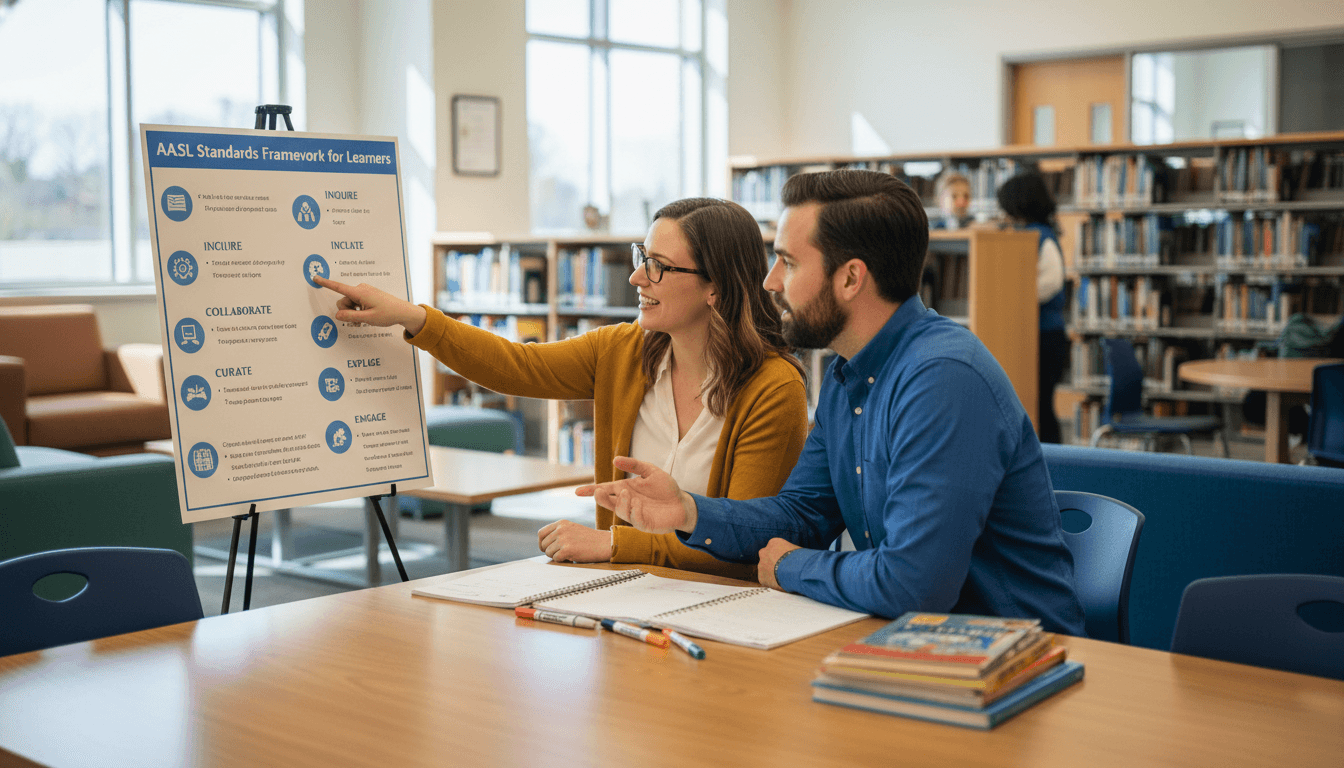
The American Association of School Librarians (AASL) standards are the backbone of what a school librarian actually teaches, and almost no parent has heard of them. A short newsletter that translates the four shared foundations into plain language does more for the library's standing than any data point a media specialist could report. Families want to know what the library teaches. Tell them, without the jargon.
Open with the question parents actually ask
First sentence is the parent question, not the framework name. "What does my kid actually do in the library?" Then the answer in one short paragraph. "More than picking books. There is a real curriculum behind library time, built around four ideas. Here is what those ideas look like in our school."
Foundation one: inquire
Kids learn how to ask a good question and how to find an answer. In second grade, that looks like deciding what a research project is even about. In fifth grade, it looks like narrowing a broad topic into one that fits a one-page report. Inquire is the muscle most adults wish they had practiced more, and library time is where it gets built.
Foundation two: include
Kids see themselves and others in the books they read and in the work they do. The collection reflects the families in the building, the lessons invite different perspectives, and group projects pair kids who would not otherwise pair up. Include is not a slogan. It is a daily set of small choices about what is on the shelf and who is at the table.
Foundation three: collaborate
Kids work with each other and with teachers, not in isolation. In third grade, that looks like two-kid research pairs sharing one document. In fifth grade, it looks like a class-wide project where every kid owns one piece. Collaborate is also what the librarian does with classroom teachers behind the scenes, planning units together so library time supports what is happening in the classroom.
Foundation four: curate
Kids learn to organize what they find so it makes sense to someone else. A second grader sorting books by topic for the reading corner is curating. A fifth grader putting sources in order on a slides deck is curating. The skill scales straight into adult life: nobody finishes school without needing to organize information for a real audience.
Show one real lesson tied to one foundation
After the four blocks, one paragraph showing a current lesson and which foundation it lives in. "Fourth grade is researching local animals this month. Each kid picked a species, found three reliable sources, and built a one-page profile. That is what curate looks like in fourth grade." One example does more than ten bullet points.
Acknowledge what this is not
One line. "This is not test prep, and it is not a separate subject. It is the thinking that holds reading, writing, and research together." Families worry that any new framework name is another thing competing for class time. Telling them the standards run underneath the work, not on top of it, removes the worry.
Invite parents in
Close with an invitation. "Want to see one of these foundations in action? Family research night is October 22, 6 to 7 PM, in the library. Bring a kid, leave with one project idea." Standards land better when families can see them used, not just read about them.
A working example for a September standalone
"Hi families, here is what your kid actually does in the library. The work is built around four ideas. Inquire: ask good questions and find real answers. Include: see yourself and others in the books and the work. Collaborate: do real work with classmates and teachers. Curate: organize what you find so it makes sense to someone else. One example: fourth grade is researching local animals this month, three sources each, one-page profile, that is curate in fourth grade. Want to see it live? Family research night is October 22. See you then."
How Daystage helps with AASL standards newsletters
Daystage holds the four-foundation explainer as a saved template, with slots for the monthly lesson example and the invitation block. Send the full version once at the start of the year, then each month swap in a fresh lesson tied to one foundation. The framework becomes part of the regular rhythm instead of a one-time download.
Get one newsletter idea every week.
Free. For teachers. No spam.
Frequently asked questions
Why would parents care about AASL standards?
They mostly do not, until they ask 'what does my kid actually do in the library?' AASL standards answer that question, but in language that does not translate. The newsletter is the translator. Parents do not need the framework name. They need to know what the work looks like.
What are the four shared foundations in one sentence each?
Inquire: kids ask questions and learn how to find answers. Include: kids see themselves and others in the collection and in their work. Collaborate: kids do real work with classmates and teachers, not alone. Curate: kids organize what they find so it makes sense to someone else.
Should I send a separate AASL newsletter or weave it into regular ones?
Send one standalone explainer at the start of the year, then weave one foundation per month into the regular newsletter. The standalone gives parents the map. The monthly weave shows them the map being used.
How do I tie a foundation to a real lesson without sounding academic?
Skip the standard codes. Describe the lesson in three sentences. 'Fourth grade is researching local animals this month. Each kid picked a species, found three reliable sources, and built a one-page profile. That is what curate looks like in fourth grade.' One foundation, one lesson, one outcome.
Is there a tool that makes this kind of explainer easier to send?
Daystage holds the AASL explainer template alongside the regular monthly one. Build the four-foundation block once, drop a different lesson example in each month, and the standards stay visible without taking over the newsletter. Families see the framework gradually instead of all at once.

Adi Ackerman
Author
Adi Ackerman is a former classroom teacher and curriculum writer with 8 years in K-8 schools. She writes about school communication, parent engagement, and what actually works in real classrooms.
More for School Librarian
Ready to send your first newsletter?
3 newsletters free. No credit card. First one ready in under 5 minutes.
Get started free