
Middle School Library Newsletter: A Template Worth Stealing
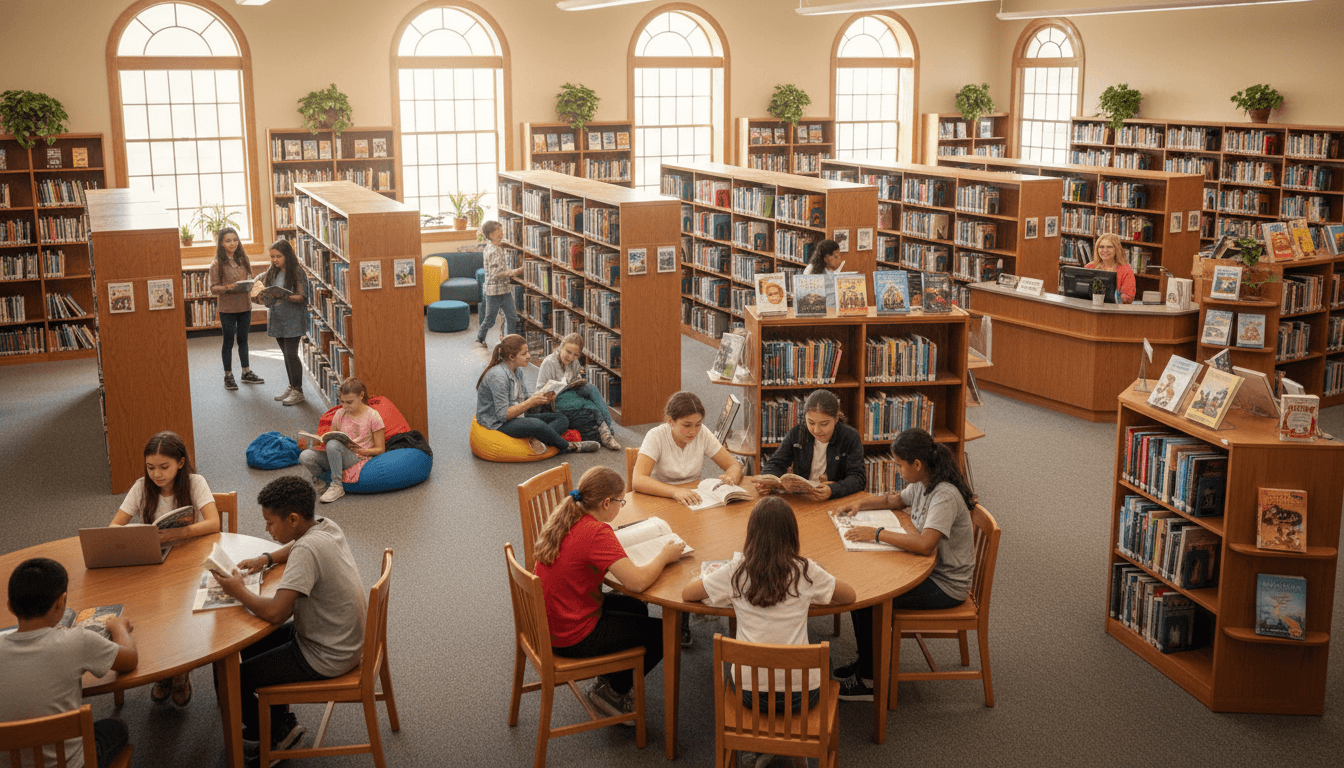
Middle school libraries do five jobs at once. Quiet reading space, loud group space, research room, graphic novel hub, and the only place in the building where sixth graders and eighth graders pass through the same door. The newsletter has to acknowledge all of that without trying to cover all of it in every issue.
Write to the parent, with the teacher as a bonus reader
Middle schoolers will not read the newsletter. Their parents will, if it is short and useful. Teachers will scan it for program info. Build every section assuming a parent on a phone. Short paragraphs, clear actions, no jargon.
Section 1: librarian note
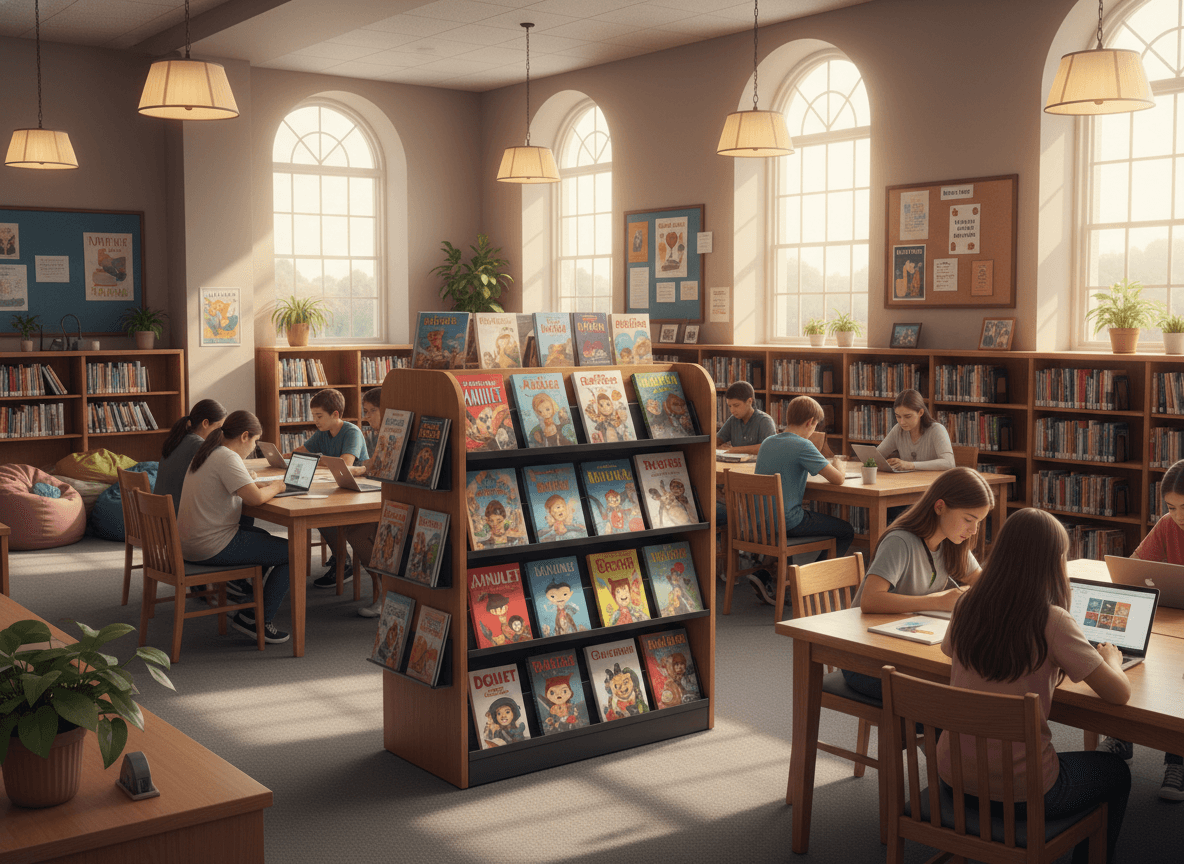
Two or three sentences about what is happening this month. Example: "Seventh grade is in research mode for the civil rights unit. Sixth grade has discovered graphic novels in a serious way: we have circulated 84 copies of the Amulet series in three weeks. Eighth grade is in a quieter month, mostly recreational reading."
Section 2: book pick of the month
Pick one book or two when the grade span needs it. Example: "Sixth grade pick: Amulet Book 1 by Kazu Kibuishi. A brother and sister fall into a parallel world after their dad disappears. Best for sixth graders who like fantasy and graphic novels. Eighth grade pick: Long Way Down by Jason Reynolds. A 60-second elevator ride told in verse with seven ghosts. Best for strong readers ready for harder themes."
Section 3: the graphic novel shelf
Five titles, grade ranges, no synopsis. Example:
- Amulet by Kazu Kibuishi (grades 5-8)
- New Kid by Jerry Craft (grades 6-8)
- Roller Girl by Victoria Jamieson (grades 5-8)
- Hey Kiddo by Jarrett Krosoczka (grades 7-9)
- American Born Chinese by Gene Luen Yang (grades 7-9)
Section 4: what is happening in the library
One paragraph. Example: "Civil rights research runs through November 21. Each seventh grader is investigating one figure using two books and one database article. Library research blocks every Wednesday. Sixth and eighth grade have flex library access during ELA every other day."
Section 5: try this at home
One concrete activity. Example: "Try a 'shared book' run this month. You pick one book from the school library list and read it at the same time as your kid. Two chapters a night, no required discussion. Most middle schoolers will not say they like it, but they will read it. The parents who try this say it is the single best reading habit they have built."
Footer: how the middle school library works
Same block every month at the bottom. "Library is open before school, during lunch (silent half, group half), and after school until 4 PM. Checkout limit is five books. Books are due in three weeks. Lost books: see me, we have a fund."
Handling content questions before they happen
Middle school book recommendations land in tricky territory. A sixth grade family and an eighth grade family read the same newsletter and have very different tolerances for content. Use grade ranges and brief content notes when needed. "Long Way Down by Jason Reynolds (grades 7-9, content note: gun violence, loss)." Two extra words save you the email chain that would otherwise eat your Friday afternoon. Most families appreciate the heads-up. The ones who do not will scroll past.
The research class sidebar
Middle school libraries co-teach more units than most parents realize. Once a quarter, add a sidebar that lists which research projects are happening that month. Example: "Research this quarter: sixth grade Ancient Egypt, seventh grade civil rights figures, eighth grade local history. Each unit uses the library for at least three blocks plus database time." Parents who care about academics read this section twice. Most others scroll past, which is the whole point of a layered newsletter.
Database tips middle schoolers will actually use
Middle school is when databases become real. Send a database tip in most issues, written for the student even though the parent is forwarding it. Example: "Gale In Context tip: the Lexile filter at the top of the results page lets you see only sources at your reading level. Use it once and your search results stop being overwhelming. Login is your school Google account." Two sentences. A paragraph like this gets passed around because it solves a real problem the kid is having that week.
The before-and-after-school window
Middle school libraries are often the only quiet space in the building before first period and after last period. Use one section every few issues to remind families that the space exists for that reason. Example: "Library opens at 7:15 AM and stays open until 4 PM. The back tables are quiet study, the front tables are group work, and you do not need a pass to come in before school or after. If your kid needs a quiet place to start homework before the bus, this is it." Families who did not know often start sending their kid in early after reading this once.
How Daystage helps with middle school library newsletters
Daystage gives you a template you build once and refill each month. Middle school families get a clean, branded email that reads well on a phone and looks like the school sent it on purpose. You write the content, Daystage handles the layout and sends to your full parent list.
Get one newsletter idea every week.
Free. For teachers. No spam.
Frequently asked questions
Who is a middle school library newsletter actually for?
Parents first, with teachers as a secondary audience. Middle schoolers themselves rarely read library newsletters, but their parents do. The newsletter is your channel into the home, and that is where reading habits live or die at this age. Write to the parent, not to the student.
How do you handle the wide range between sixth and eighth grade in one newsletter?
Sections, not one-size copy. The book pick section can have a sixth grade pick and an eighth grade pick when needed. The just-added shelf carries grade ranges in parentheses. Most other sections speak to the whole grade band because the library programs and rules apply equally.
Should graphic novels get their own section?
If circulation supports it, yes. Most middle school libraries see graphic novels driving 30 to 60 percent of total checkouts. Pretending that is a side category misreads the building. A monthly graphic novel callout with three to five titles is a high-engagement section.
How do you write about research class collaborations without sounding internal?
Say what the kid is doing, by when, and where the library fits. 'Seventh grade is in research mode this month. Each kid is investigating one civil rights leader using two books and one database article. Final products due November 21.' Plain language. No mention of co-planning, scope and sequence, or other internal terms.
Is there a tool that handles middle school newsletter design without wrestling with templates?
Daystage was built for school staff who want a branded, clean newsletter without fighting with image sizes or columns. The five-section middle school template plugs in cleanly, you save it once, and each month the refill takes 30 to 45 minutes. The email looks like the school sent it on purpose.

Adi Ackerman
Author
Adi Ackerman is a former classroom teacher and curriculum writer with 8 years in K-8 schools. She writes about school communication, parent engagement, and what actually works in real classrooms.
More for School Librarian
Ready to send your first newsletter?
3 newsletters free. No credit card. First one ready in under 5 minutes.
Get started free