
First Grade Library Newsletter: A Template With Examples
First grade is the year reading becomes real for most kids. The squiggles on the page turn into words, the words turn into sentences, and the kid suddenly knows they are a reader. The first grade library newsletter exists to keep that momentum going, by giving families the same signals at home that the librarian is giving in class. Two short paragraphs from the library each week or two is worth more than a wall of advice twice a year.
What the newsletter is for
Three jobs. Tell families what is happening in the library this week, give them one book they can read at home together, and name one habit the kids are learning so the family can reinforce it. Three jobs, under nine hundred words, friendly tone, short paragraphs. First grade families read fast and skim often.
Section 1: we visit every Tuesday
Specific cadence. "First grade visits the library every Tuesday at 9:45. Each visit is forty-five minutes. We start with a short read-aloud, then the kids spend time in the leveled bins choosing their books, then we check out and head back to class." Three sentences cover the rhythm of the visit.
Section 2: leveled bins, explained simply
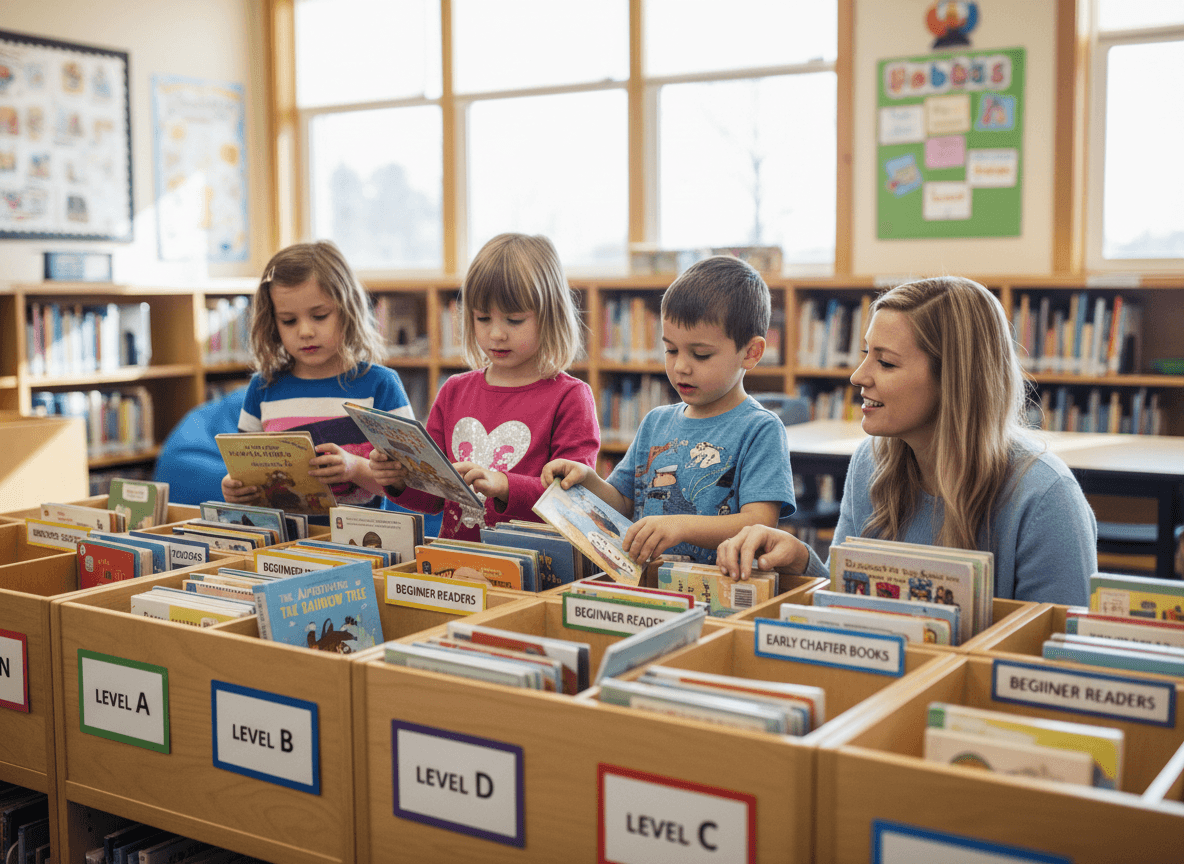
Two paragraphs. "First graders pick books from two kinds of bins. The picture book bins are the same ones they used in kindergarten, sorted by topic. The leveled bins are new in first grade, sorted by reading difficulty. The easiest level has one short sentence per page. The hardest level has full paragraphs and beginner chapter books."
Then the family note: "Your kid picks one book from each kind of bin every week, so they always come home with something they can read and something they can enjoy looking at. Both count as reading."
Section 3: the look-at-the-cover rule
One paragraph. "We teach first graders a quick check before any book leaves the library. Look at the cover, does it look interesting? Look at the first page, can you read most of the words? If both are yes, the book comes home. If one is no, the book goes back. This two-second check saves a week of a book sitting unread on a desk."
Section 4: book of the week
Pick one book. Three sentences. Include the cover. "This week we read Elephant and Piggie: My Friend Is Sad by Mo Willems. First graders loved acting out the silly voices. Look for any Elephant and Piggie book at the public library, your kid will recognize them and probably want to read four in a row."
Section 5: home checkout, the basics
One paragraph. "Each first grader brings home two books a week. Books need to come back the following Tuesday so the kid can pick new ones. Books come home in a sleeve with the kid's name on it. If something happens to a book, send a note. We never charge families for accidents. We just want the kid to come back to the library next Tuesday."
Section 6: one concrete classroom example
"Last week, one of our first graders picked a beginner chapter book on her own for the first time. She is reading Mercy Watson by Kate DiCamillo, which is the first chapter book a lot of first graders pick. She told her mom she felt like a 'real reader' that night. That single moment is what first grade in the library is about. Confidence catches up with skill, and the rest of elementary school follows."
Section 7: the home reading habit
Two sentences. "If your kid only reads ten minutes a day at home, that is fine. Ten minutes of real reading beats thirty minutes of forced reading every time. Pick a time that is already calm in your house, sit close, and let the kid choose the book."
How Daystage helps with first grade library newsletters
Daystage gives first grade librarians a template that handles book covers, leveled-bin explanations, and warm short paragraphs in one email. Build the template once with the routine and the look-at-the-cover rule, refill the book-of-the-week each issue, and the newsletter goes out looking like a friendly note. Families read it, kids carry the habit home, and first grade reading lands where it is supposed to.
Get one newsletter idea every week.
Free. For teachers. No spam.
Frequently asked questions
How is first grade different from kindergarten in the library?
First grade is the year kids start picking books they can read themselves, not just look at. The picture book bins from kindergarten stay, but leveled bins of early readers join them. Story time gets shorter, choosing time gets longer. The newsletter should reflect that shift. Kindergarten was about routine. First grade is about independence.
What is the look-at-the-cover, look-at-the-first-page rule?
It is the first-grade version of book selection. Before checking out a book, the kid looks at the cover and the first page. Cover should look interesting. First page should have words the kid can read most of. If both check out, the book comes home. If not, back to the bin. Two seconds of checking saves a week of a book sitting on a desk untouched.
Should first graders be reading on their own yet?
Many can read simple text by mid-year, but not all. The newsletter should hold space for both. 'Some kids read every word, some kids read some words and look at the pictures for the rest. Both are reading in first grade.' Families who hear this stop panicking about progress and start enjoying book time again.
How many books should a first grader bring home each week?
One to two, depending on the school. The newsletter should name the number. 'Each first grader picks two books a week, one we choose together and one they pick on their own.' That structure gives the kid agency, gives the librarian a chance to recommend, and keeps the home checkout count manageable.
What is the easiest way to send a friendly first grade newsletter that families actually open?
Daystage was built for school staff who need to send warm, branded newsletters with book covers, short paragraphs, and clean formatting for families with young readers. Drop in the book of the week, name the routine, and the email goes out clean. First grade librarians who use it tend to keep the weekly or every-other-week cadence going through the whole school year.

Adi Ackerman
Author
Adi Ackerman is a former classroom teacher and curriculum writer with 8 years in K-8 schools. She writes about school communication, parent engagement, and what actually works in real classrooms.
More for School Librarian
Ready to send your first newsletter?
3 newsletters free. No credit card. First one ready in under 5 minutes.
Get started free