

Fifth Grade Library Newsletter: What to Send Each Month
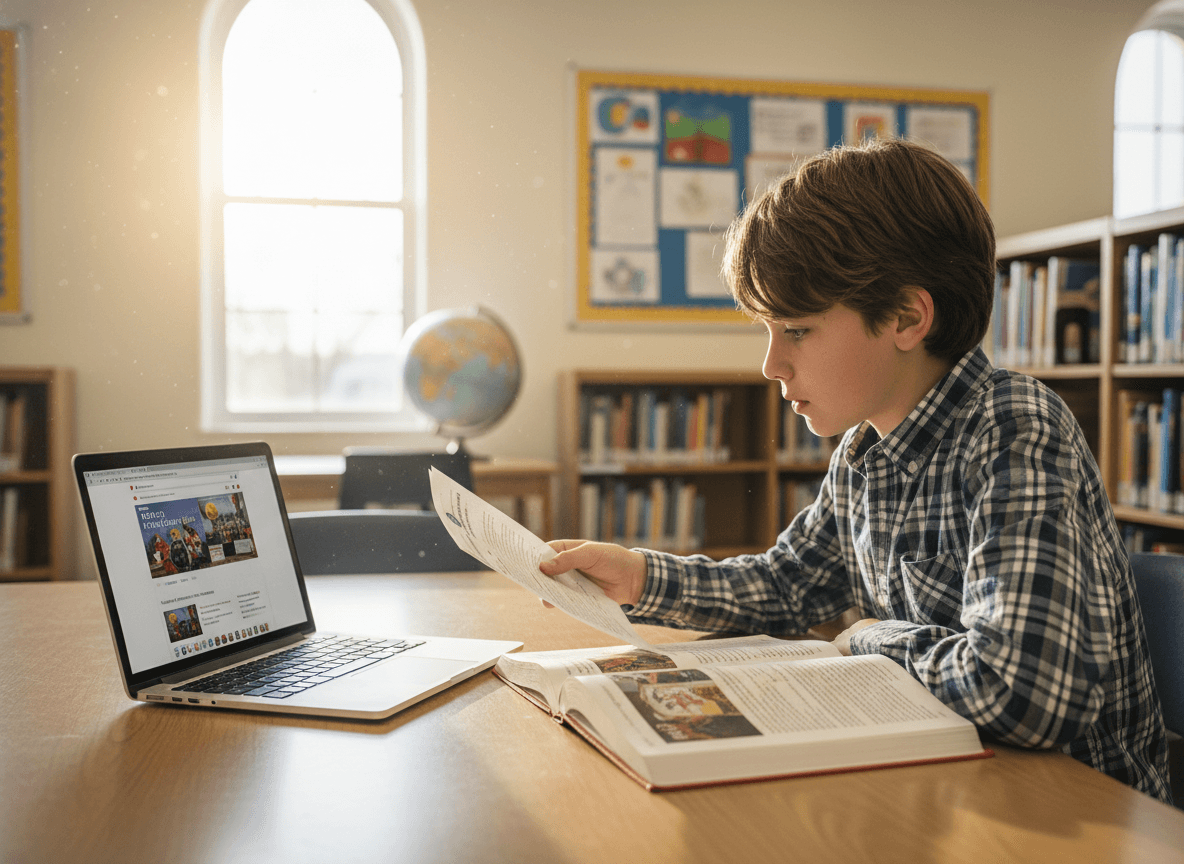
Fifth grade is the last year before everything shifts. Reading habits that hold through fifth grade tend to carry into middle school. Reading habits that fall apart in fifth grade tend to stay broken. The newsletter has a real job: keep families engaged with the library right when the temptation to disengage is strongest.
Write for the parent who is already half checked out
Most fifth grade parents are reading fewer school emails than they used to. Make every section earn its place. Short paragraphs. Concrete actions. No insider terms. If a section reads like a curriculum doc, cut it or rewrite it in plain language.
Section 1: librarian note
Two or three sentences about what fifth grade has been doing. Example: "Fifth grade started source evaluation this month. They are comparing a book, a database article, and a random website on the same topic and arguing about which one is most trustworthy. Some of the arguments are excellent."
Section 2: book pick of the month
One book, three sentences. Example: "Refugee by Alan Gratz. Three kids in three different time periods all flee their homes and try to find safety. Best for fifth graders ready for harder themes and a longer book. One of our fifth graders finished it in four days and asked for A Long Walk to Water next."
Section 3: book club sign-ups or updates
Fifth grade is the right year for choice-based book clubs. If clubs are running, put them here every month. Example: "Three book clubs meeting in November. Group A is reading Wonder, group B is reading Amari and the Night Brothers, group C is reading the When You Trap a Tiger. We meet at lunch on Wednesdays. Sign-ups for January clubs open December 1."
Section 4: what is happening in the library
One paragraph on programs or units. Example: "Source evaluation runs through November. Each fifth grader picks one topic and finds three sources of different types, then ranks them on a one-page rubric. We are using the CRAAP test. If your kid mentions arguing about whether a website is trustworthy, that is the unit."
Section 5: try this at home
One concrete activity. Example: "Try the same-article-two-ways challenge this week. Find any news event and read two different articles about it from different sources. Ask your kid which one they trust more and why. Most fifth graders will have an actual opinion, and the conversation is short, useful, and over before dinner."
Footer: how fifth grade library works
Same block at the bottom each month. "Fifth graders visit the library Thursdays. Checkout limit is four books. Books are due the following Thursday. Replacement cost for lost books is the list price, but talk to me first if that is a problem."
The middle school transition sidebar
Add a small standing sidebar starting in February. Two lines: what is coming and what the library is doing about it. Example: "Middle school transition: the middle school librarian visits our fifth graders March 14. Each kid gets a short tour of the middle school library and a checkout card preview. Summer reading list goes out in May." Three mentions across the spring is the right number. More than that becomes anxiety.
The choice problem in fifth grade
Fifth graders read more when they get to pick. The newsletter should reinforce this for parents who are pushing one specific book at home. Once a quarter, in the family tip section, say it directly: "Fifth graders who read at home and pick the book themselves read about three times as much as fifth graders who are assigned a book by a parent. If your kid is in a slump, the first move is to drop the assignment and walk them through the library catalog instead." Plain language. No research citations. Most parents accept it because they have already noticed it.
Database tips for fifth grade
Fifth grade is when databases stop being optional and start being part of the grade. Send a database tip in most issues, not just during research units. Example: "Gale In Context tip: the Topic Overview at the top of every entry is the fastest way to know if a source is worth your time. Read the overview first, decide if the source is on-topic, then read the rest. Most fifth graders waste 20 minutes per project because they skip this step." Paragraphs like this one get forwarded between parents, which is the highest-trust signal a school newsletter can earn.
Summer reading without the homework feel
The May issue is the summer reading issue. Keep it short and non-prescriptive. A short list of 8 to 12 titles across genres, a one-line "no required reading log, no required number of books" note, and an invitation to email you for a personal recommendation. Fifth graders who finish the year with a positive library relationship and a stack of summer book ideas walk into middle school in a much stronger reading position than fifth graders who got a 30-book mandatory log.
How Daystage helps with fifth grade library newsletters
Daystage gives you a template you build once and refill each month. The fifth grade families, the ones who are starting to scroll past school emails, get a newsletter that reads clean on a phone, looks branded, and respects their time. You write, Daystage sends.
Get one newsletter idea every week.
Free. For teachers. No spam.
Frequently asked questions
What is the biggest library shift between fourth and fifth grade?
Source evaluation becomes real. Fifth graders are old enough to be told that not every website is true, and they can practice the CRAAP test or a similar framework. The library moves from finding sources to picking between sources. The newsletter should reflect that without sounding like a curriculum doc.
Are book clubs worth running in fifth grade and putting in the newsletter?
Yes. Choice-based book clubs in fifth grade are one of the most reliable ways to keep kids reading right before middle school, where reading often drops. Six to eight kids per club, four meetings, kid-picked book. Mention sign-ups in the newsletter the week before they open, then follow up with what each club picked.
How do you handle the middle school transition in a newsletter?
Mention it twice in the spring, not five times. Once in March to say the middle school librarian will visit and what to expect. Once in May with a short reading list for the summer. Parents do not want monthly anxiety about the transition. They want concrete information when it is useful.
What chapter book picks land in fifth grade?
Longer realistic and historical fiction, the harder fantasy series, and well-written graphic novels. Wonder if they have not read it, Refugee, A Long Walk to Water, Amari and the Night Brothers, Six of Crows for the strongest readers (with a note about content). Fifth graders can handle 350 pages and themes with weight.
Is there a tool that handles the layout so you can focus on writing?
Daystage was built for school staff who want a branded, clean newsletter without wrestling with image sizing or columns. The fifth grade template plugs in cleanly, you save it once, and each month the refill takes 30 to 45 minutes. The email goes out looking like the school sent it on purpose.

Adi Ackerman
Author
Adi Ackerman is a former classroom teacher and curriculum writer with 8 years in K-8 schools. She writes about school communication, parent engagement, and what actually works in real classrooms.
More for School Librarian
Ready to send your first newsletter?
3 newsletters free. No credit card. First one ready in under 5 minutes.
Get started free