
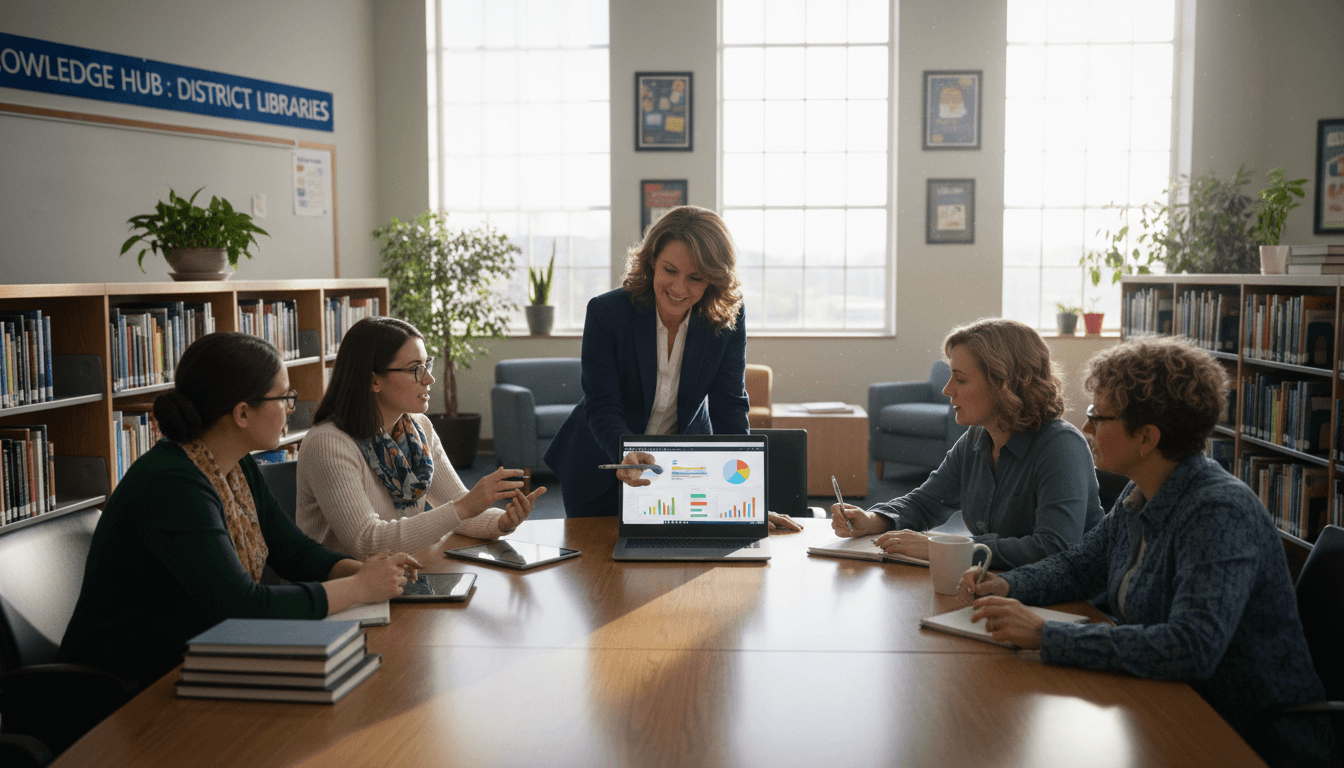
District Library Coordinator Newsletter: A Working Template

A district library coordinator sits between buildings and central office. The job is half logistics, half advocacy. The newsletter is the easiest place to do both at once: keep building librarians aligned, keep central office aware, and keep the paper trail that proves the district is doing real work on collections, equity, and access.
Write for the building librarian first
Most district newsletters fail because they read like memos written for the superintendent. The primary reader is a librarian in a building, on a Monday morning, with five things on their plate. Every section needs to be useful to that person. Central office readers can keep up with content written for the building level.
Section 1: a note from the coordinator
Two or three sentences. Example: "Vendor contracts for next school year are locked in this week. Follett stays our primary, MackinVIA renews for digital, and we are adding Library Aware for newsletter templates after the building survey came back 14 to 2 in favor. Details on each below."
Section 2: budget and orders update
One paragraph on where things stand. Example: "End-of-year orders close April 15. Building allocations posted to the shared drive. Equity reserve fund (the $40K we held back from last year's split) opens for application March 1 for schools below the $8 per student threshold. Application is a one-page form, due March 21."
Section 3: collection development focus this month
One paragraph on a district-wide collection priority. Example: "March focus is bilingual and dual-language picture books across all elementary buildings. Target is 8 percent of each elementary collection by June. Current district average is 4 percent. Vetted vendor list and recommended titles in the shared drive, folder name 'Bilingual K-5 March 2026'."
Section 4: professional learning and meetings
Bulleted list with dates and what to bring. Example:
- March 6, 8 AM: monthly coordinators call, 30 min, Zoom link in calendar invite
- March 14, full day: K-5 collection development workshop, in person at the district office, lunch provided
- March 22, 3 PM: 6-12 cohort drop-in, optional, agenda set by attendees
Section 5: from the buildings
A short rotating spotlight. Example: "Lincoln Elementary's first-grade family read-aloud night drew 84 families last week. Format and promo materials shared in the drive (folder: 'Lincoln family read-aloud Feb 2026'). Worth borrowing if you are planning a spring family event."
Section 6: central office watch
One paragraph that gives building librarians awareness of what central office is tracking. Example: "Board meeting March 18 includes the library access report. Headline numbers: total circulation up 6 percent year over year, digital circulation up 22 percent, gap between highest and lowest building collection budgets narrowed from 5x to 3.2x after the equity fund."
The vendor relationship sidebar
Vendor cycles run on their own calendar and tend to surprise building librarians who are focused on the school year. A short standing sidebar each month keeps the dates visible. Example: "Vendor cycle: Follett spring catalog drops April 2, end-of-year order window closes April 15, summer processing window runs June 10 through August 5. MackinVIA digital renewal locks July 1." Three lines. Building librarians copy this into their calendars and stop missing deadlines.
Equity in plain numbers
District coordinators carry the equity conversation across buildings. The newsletter is one of the better places to do that, because it builds a paper trail and a shared baseline. Once a quarter, share three numbers: highest building collection budget per student, lowest, and what the district is doing to narrow the gap. "This quarter: highest is $14 per student at Lincoln, lowest is $5.20 per student at Madison, gap fund applications open March 1." No commentary needed. The numbers do the work.
The advocacy paper trail
The district newsletter is also a quiet advocacy tool. Every issue that lists circulation numbers, equity actions, and district-wide collection priorities builds a record that someone in central office can point to when the library line item comes up in the next budget cycle. Keep the tone factual, not promotional. Numbers build trust over time. "Library circulation across the district this year: 312,000 books, up 6 percent year over year, 22 percent up on the digital side." Sentences like that one carry weight in board meetings without ever sounding like a pitch.
What to do with the buildings that are not engaged
Every district has one or two buildings where the librarian does not read the coordinator's newsletter. Do not call them out in the newsletter itself. Use it as the public record and handle the engagement in person. If a building is consistently missing deadlines or skipping monthly calls, the issue is relational, not informational, and the newsletter cannot fix it. The newsletter exists to support the librarians who are engaged and to keep central office informed. That is enough.
How Daystage helps with district library coordinator newsletters
Daystage gives district coordinators a template they build once and refill each month. The newsletter goes to every building librarian plus central office, looks branded to the district, and reads well on a phone. You write the content, Daystage handles the layout, send, and tracking.
Get one newsletter idea every week.
Free. For teachers. No spam.
Frequently asked questions
Who is the district library coordinator newsletter for?
Two audiences. School librarians across the district as the primary readers, and central office leadership as a secondary audience that gets cc'd. The newsletter has to be useful to a building librarian on a Monday morning and also defensible if a curriculum director skims it from a phone.
How often should a district coordinator send a newsletter?
Once a month during the school year, plus one summer issue around August 1. Weekly is too much, quarterly is too rare to maintain coordination across buildings. The monthly cadence matches budget cycles, vendor cycles, and the rhythm of how building librarians actually plan.
How do you talk about budget equity without it sounding political?
Show the data. If two schools have a $20K collection budget and three schools have $4K, say so. Then say what the district is doing about it this year. Coordinators who hide the numbers lose trust with the schools on both ends. Coordinators who show the numbers and the plan keep it.
Should vendor relationships and orders be in the newsletter?
Yes, when timing matters. New vendor contracts, deadline reminders for end-of-year orders, vendor-specific tips that save building librarians time. Skip the vendor pitches. The newsletter is not an ad channel for vendors, it is a coordination tool for librarians.
Is there a tool that handles a district-wide newsletter without design work?
Daystage was built for school staff who want a clean, branded newsletter without wrestling with image sizes or columns. The district coordinator template plugs in cleanly, you save it once, and the monthly refill takes about 45 minutes. The email goes out to all building librarians plus central office.

Adi Ackerman
Author
Adi Ackerman is a former classroom teacher and curriculum writer with 8 years in K-8 schools. She writes about school communication, parent engagement, and what actually works in real classrooms.
More for School Librarian
Ready to send your first newsletter?
3 newsletters free. No credit card. First one ready in under 5 minutes.
Get started free