

School Counselor Mindfulness Newsletter: Calming Strategies
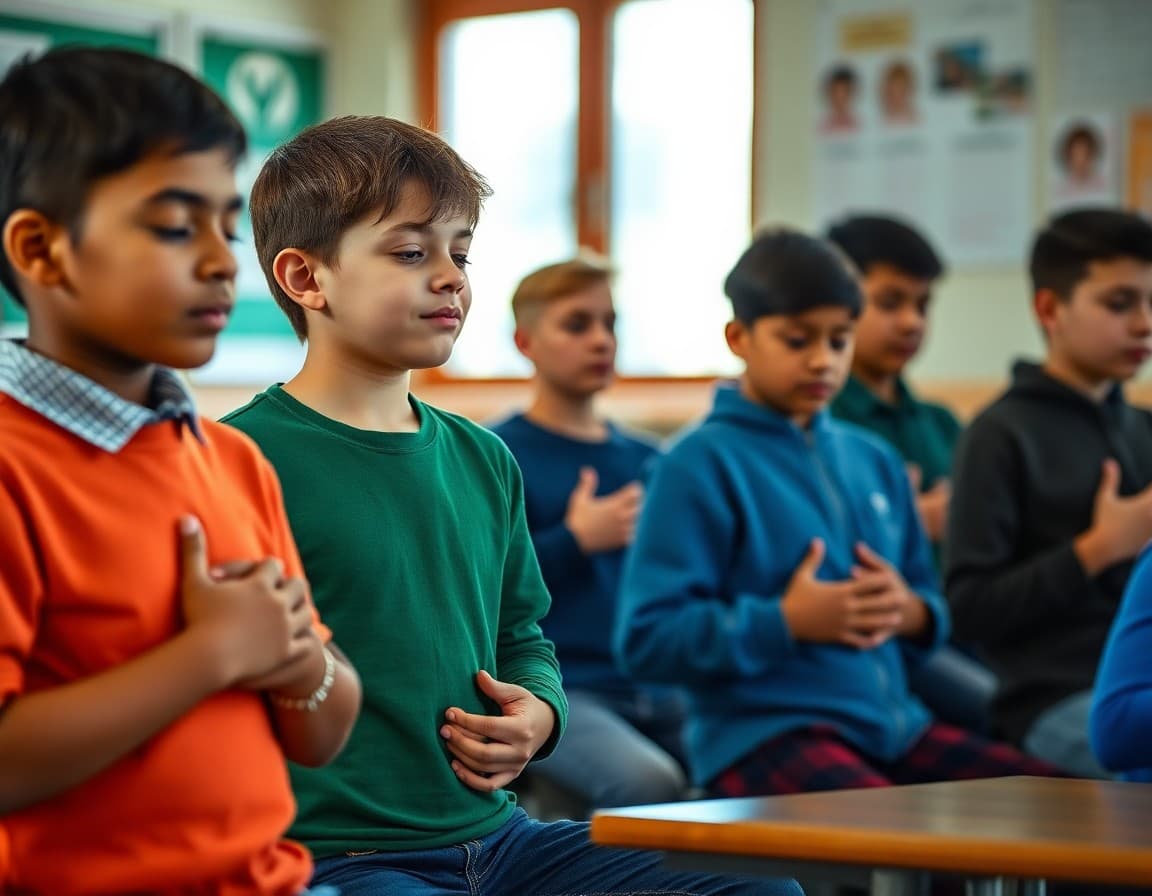
A mindfulness newsletter from the school counselor faces a unique challenge: the audience includes families who are enthusiastic early adopters, families who are skeptical but open, and families who think mindfulness is something that happens in a yoga studio for adults, not in a school for their child. A good newsletter serves all three groups by leading with what students are actually learning and why it matters for their performance and well-being.
What Mindfulness Is and Is Not in a School Setting
School-based mindfulness is not meditation in the religious sense, though it draws on practices from contemplative traditions. It is the deliberate training of attention, specifically the ability to notice what is happening in the present moment (in thoughts, emotions, and body sensations) without immediately reacting to it. This skill is valuable for students because it creates a gap between stimulus and response where choice becomes possible. A student who can notice that they are feeling flooded with anger before throwing a pencil has that gap. A student who cannot notice has no choice in the moment.
The techniques taught in school counseling programs typically include breathing exercises, body scan relaxation, grounding tools using the senses, and brief check-in practices. None of these require any particular spiritual belief, and all of them have evidence of effectiveness from research conducted in secular school settings.
The Physiology Behind Calming Strategies
When students understand why calming strategies work, they are more likely to use them. Here is the short explanation worth putting in any newsletter: the stress response (fight-or-flight) is controlled by the sympathetic nervous system. Slow, deep breathing activates the parasympathetic nervous system, which signals the body to calm down. This is not metaphorical. Controlled breathing physically slows the heart rate, reduces cortisol levels, and restores access to the prefrontal cortex, which is the part of the brain responsible for problem-solving and self-control.
A student in acute stress has reduced access to rational thinking. This is why telling a dysregulated student to "calm down and think about what you are doing" rarely works. The body needs to shift physiological state before the mind can engage cognitively. Teaching students to manage that physiological shift is one of the most practical things a school counselor can do.
Three Techniques Worth Teaching in the Newsletter
Box breathing: breathe in for 4 counts, hold for 4, breathe out for 4, hold for 4. Repeat 4 times. Takes 64 seconds. Can be done anywhere, anytime, without any equipment. This is the technique with the strongest evidence base and the most crossover to performance contexts that older students find credible.
5-4-3-2-1 grounding: identify 5 things you can see, 4 things you can touch, 3 things you can hear, 2 things you can smell, 1 thing you can taste. This technique breaks acute anxiety by redirecting attention to the physical present environment. It is particularly effective for students who experience anxious rumination or dissociation under stress.
Progressive muscle relaxation: tense each muscle group for 5 seconds, then release. Start with hands and move up through arms, shoulders, face, core, and legs. The physical contrast between tension and release produces relaxation that purely cognitive techniques cannot always achieve. This technique is especially useful for students with somatic anxiety symptoms (stomach aches, headaches, muscle tension).
A Template for the Mindfulness Newsletter Section
This section can be sent any month and adapted for any grade level:
"This month in counseling groups, we practiced box breathing: a technique used by athletes and first responders to reset their nervous system in stressful moments. Here is how to try it at home: breathe in for 4 counts, hold for 4, breathe out for 4, hold for 4. Do this 4 times. The whole thing takes about one minute. Try it together before a stressful event (a test, a game, a difficult conversation). Children who practice this with their family are more likely to use it independently when they need it."
Building a Mindfulness Culture in the School Community
Individual mindfulness practice produces individual benefit. A school culture that practices mindfulness together produces collective benefits: calmer classrooms, fewer behavioral escalations, and students who remind each other to use their tools in high-stress moments. The counselor's newsletter is one of the ways to build that culture beyond the walls of the counseling office. When families practice the same techniques at home that teachers use in the classroom, students get the repetition that builds automatic, accessible skills rather than knowledge they can access only when reminded.
When Mindfulness Is Not Enough
Mindfulness techniques are effective tools for managing typical stress responses. They are not substitutes for clinical intervention when a student is dealing with clinical anxiety, depression, trauma, or other mental health conditions that require professional treatment. The newsletter should include a clear statement about when to seek additional support: if a student's anxiety, difficulty regulating emotions, or stress response is interfering significantly with daily function, school performance, or relationships, a conversation with the counselor is the right first step, and a referral to community mental health services may be appropriate.
Get one newsletter idea every week.
Free. For teachers. No spam.
Frequently asked questions
Is there research supporting mindfulness in schools?
Yes. A substantial body of research supports mindfulness-based interventions in school settings. A 2019 meta-analysis of 61 studies found that school-based mindfulness programs produced significant improvements in student attention, stress reduction, and emotional regulation. The effects are strongest when programs are delivered with fidelity, are developmentally appropriate, and are sustained over at least eight weeks. Brief, one-time mindfulness activities produce minimal lasting effect. Consistent practice, even five minutes daily, produces measurable neurological changes in the prefrontal cortex over a semester.
How do you teach mindfulness to students who resist or roll their eyes?
Frame it differently. Students who resist 'mindfulness' often respond well to 'stress management' or 'performance techniques.' Athletes and performers have used focus and breathing techniques for decades, and framing mindfulness in that context reduces resistance in many secondary students. Start with the most concrete, physical techniques: box breathing, grounding exercises using the five senses, and progressive muscle relaxation. Abstract concepts like 'present-moment awareness' land better after students have experienced the physical benefits of calming techniques.
What is box breathing and how does it work?
Box breathing is a technique used by military special operations units and high-performance athletes to reduce acute stress responses. The process: breathe in for 4 counts, hold for 4 counts, breathe out for 4 counts, hold for 4 counts, repeat 4 times. The technique works by activating the parasympathetic nervous system, which counteracts the fight-or-flight response. A student using box breathing before a test, during a conflict, or at the start of a stressful school day is using the same physiological regulatory tool used by Navy SEALs preparing for operations.
How can families practice mindfulness with their children at home?
The most accessible home mindfulness practice is a brief check-in before the school day and at bedtime. Before school: 'Take three slow breaths with me. What is one thing you are looking forward to today?' At bedtime: 'Take three slow breaths with me. What is one thing that was hard today? What is one thing that went well?' These bookend check-ins take less than two minutes total and build the mindfulness habits of pausing, breathing, and noticing that formal programs attempt to teach over many weeks.
How can the school counselor newsletter make mindfulness practical for families who are skeptical?
Lead with the outcome rather than the practice. 'Your child has been learning techniques to help them focus before tests and calm down when they feel overwhelmed' lands better with skeptical families than 'we have been practicing mindfulness.' Daystage newsletters can include short video demonstrations of specific techniques so families can see exactly what their child has been learning rather than reading about it abstractly. A 60-second video of box breathing is more effective than three paragraphs describing the same technique.

Adi Ackerman
Author
Adi Ackerman is a former classroom teacher and curriculum writer with 8 years in K-8 schools. She writes about school communication, parent engagement, and what actually works in real classrooms.
More for School Counselors
Ready to send your first newsletter?
3 newsletters free. No credit card. First one ready in under 5 minutes.
Get started free