

School Counselor Divorce Newsletter: Supporting Students of Divorced Families
Parental separation and divorce affect roughly 40% of children in the United States before their 18th birthday. A school counselor who never addresses this in their newsletter is missing one of the most common and consequential stressors affecting students across every grade level. The challenge is addressing it without stigmatizing students or appearing to take sides in family situations.
Why School Counselors Need to Address Divorce
Divorce is not a school issue in the narrow sense, but its effects on students make it very much a school concern. A student in the acute phase of parental separation often shows drops in attention, changes in social behavior, increased emotional reactivity, and decreased academic engagement. Teachers who are not aware of the family situation may respond to these symptoms with disciplinary measures rather than supportive intervention, which makes outcomes worse for the child.
A counselor's newsletter that normalizes divorce support and gives families clear guidance about how to communicate with the school creates the conditions for early, effective intervention rather than after-the-fact crisis response.
What to Tell a Child About Divorce: Age-Appropriate Guidance
Parents going through separation often struggle with what to say to their children and how much information is appropriate. The counselor's newsletter can provide practical guidance that reduces both over-sharing and under-sharing. For young children (ages 3-7): keep it simple and concrete. "Mom and Dad are not going to live together anymore. You will live at Mom's house some days and Dad's house some days. We both love you and that will never change." Avoid explaining adult reasons for the separation. Children this age need to understand the logistics, not the marital dynamics.
For older children and adolescents: they need more information to make sense of the change, but should still be protected from being confidants in adult conflict. "Our marriage is not working, and we have decided it is better for our family if we live separately. This is between us as adults and is not something you caused or could have fixed. You will always have two parents who love you."
The School's Role During Family Transitions
Schools are in a unique position during family changes: they represent continuity for children at a time when everything else is shifting. A student who comes to school every day, sits in the same seat, interacts with familiar teachers, and maintains established routines has an important anchor point during a disorienting time at home. Teachers and counselors who understand this can provide that continuity intentionally rather than by default.
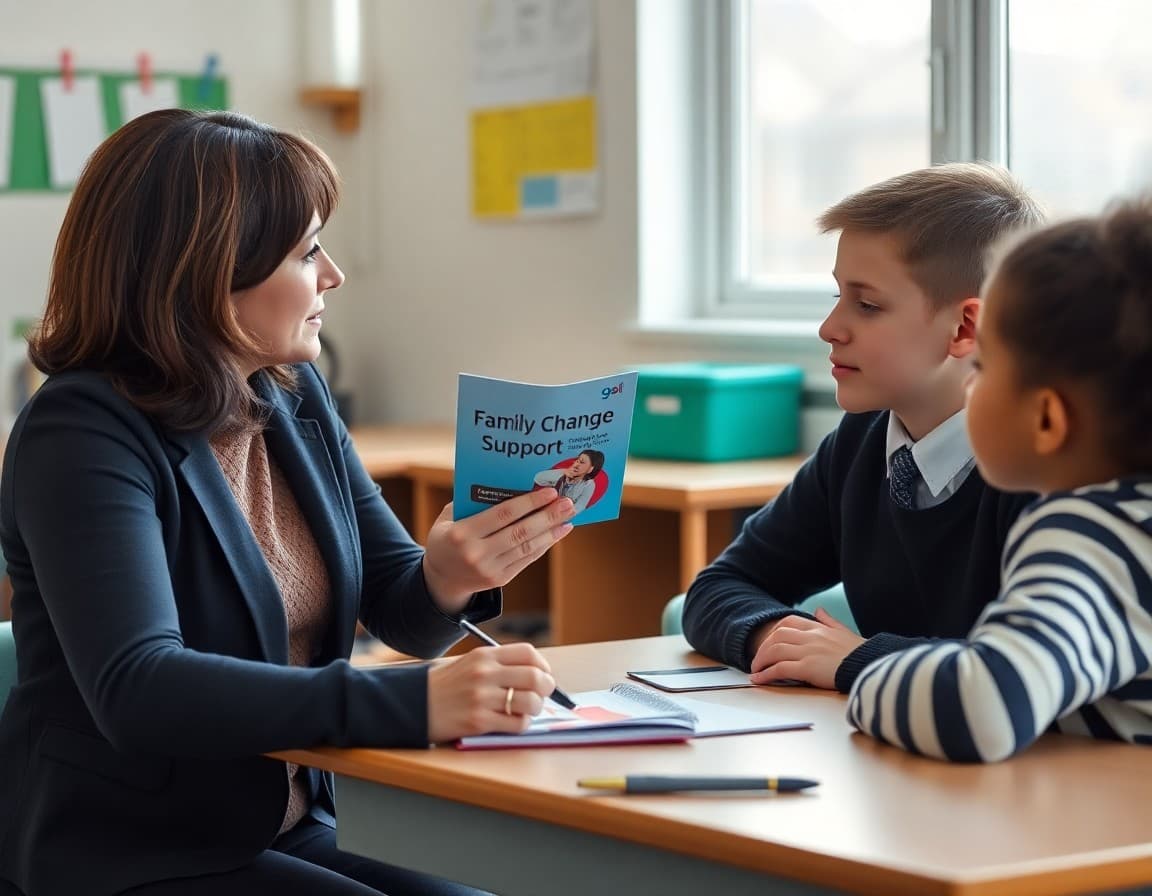
Specific school-based supports include: allowing a predictable daily check-in with the counselor or a trusted adult, flexibility with homework deadlines during the acute transition period, advance communication to teachers about the family situation so they can respond to mood changes with support rather than discipline, and access to a family change support group if the school offers one.
A Template for Divorce Support Communication
This language works for a general family resources newsletter section that addresses divorce support universally:
"Family changes, including parental separation and divorce, are among the most common stressors affecting students across all grade levels. If your family is going through a significant change right now, please let me know. I can help coordinate teacher communication, provide individual support for your child at school, connect your family with community resources, and make sure your child has a trusted adult they can check in with during the school day. There is no paperwork required and no judgment. Reaching out early produces better outcomes than waiting until a situation becomes a crisis."
Co-Parenting Communication and the School
Schools are not equipped to manage co-parenting conflicts, but they regularly find themselves in the middle of them. A parent who demands that the school exclude the other parent from communications without a court order, who uses the school as a message relay between adults who are not communicating directly, or who arrives to pick up a child in violation of custody arrangements creates a crisis that affects the child, the staff, and the school community.
The newsletter can address this clearly and without blame: "Our school communicates with all adults listed on a child's enrollment record unless a court order specifies otherwise. If you have a custody order that affects school communication or pickup procedures, please provide a copy to the main office. We are not able to mediate co-parenting disputes, and we ask that all adults work through their attorney or mediator for those conversations rather than through school staff."
Community Resources for Divorced Families
Including a resource list in the divorce support newsletter section gives families a starting point for support beyond what the school can provide. Relevant resources include: divorce support groups for children through community organizations, counseling services with sliding-scale fees, family mediation services that help co-parents communicate more effectively, and legal aid organizations for families who need legal guidance but cannot afford private attorneys. Providing three to five specific resources with contact information is more useful than a general instruction to "seek support."
When Divorce Involves Domestic Violence or Safety Concerns
Some family separations involve domestic violence, restraining orders, and genuine safety concerns for the child or a parent. Schools need to know when this is the situation. A restrained parent who arrives to pick up a child creates a safety crisis that requires immediate response. A child who is witnessing ongoing domestic violence needs a specific support plan, not a standard family change intervention. The newsletter can include a brief statement: "If your family situation involves safety concerns or a protective order, please contact the counselor or principal confidentially. We have specific protocols to protect students and families in these situations."
Get one newsletter idea every week.
Free. For teachers. No spam.
Frequently asked questions
How does parental divorce typically affect children's school performance?
Research consistently shows that children going through parental divorce experience decreased academic performance, increased behavioral problems at school, and higher rates of anxiety and depression compared to peers from stable two-parent households. The effects are most pronounced in the first one to two years after separation and tend to stabilize as the family adjusts to the new structure. Factors that moderate the impact include: the degree of conflict between parents (high conflict produces worse outcomes than civil divorce), the consistency of the child's routines, and the child's access to supportive adults at school and at home.
What should parents tell the school when they are going through a divorce?
Parents should notify the school when they are separating so that teachers and counselors can provide appropriate support and watch for behavioral changes. Key information to share includes: whether the child is aware of the separation, what language the family is using with the child, whether there are custody arrangements that affect pickup and emergency contact procedures, and whether the child has any current support (therapist, religious leader, extended family). Schools do not take sides in custody disputes, but they need to know which adults are authorized to pick up and receive information about the child.
What are the behavioral warning signs that a child is struggling with parental divorce?
Warning signs that a child needs additional support include: sudden decline in academic performance, increased aggression or withdrawal from peers, regression to younger behaviors, frequent physical complaints without medical cause, significant sleep changes, persistent sadness that does not lift within a few weeks, statements of wishing to live with the other parent or not wanting to live at all, and avoidance of school. Any single sign may have another explanation, but a cluster of signs appearing after a family change warrants a check-in with the school counselor.
How can divorced parents work with the school to support their child without creating conflict?
Both parents should be included in school communications unless a legal order specifies otherwise. Schools generally communicate with both parents on a child's roster. If one parent attempts to exclude the other from school communication without a court order, the school is typically required to provide information to both. Parents who are in conflict should notify the school of the situation so staff can avoid being put in the middle of custody disputes. The child's academic and social well-being should be the shared frame for all school communications.
How can the school counselor newsletter support students from divorced families without stigmatizing them?
A newsletter that includes family change support resources as a standard section, rather than as a response to a specific crisis, normalizes the experience for the students who need it and provides universal information to all families. Daystage lets counselors include a recurring 'Family Resources' section in their newsletter that covers divorce support, grief support, and other family challenges across the year without any one newsletter being specifically about divorce. This approach reduces stigma while ensuring that families who need the information receive it.

Adi Ackerman
Author
Adi Ackerman is a former classroom teacher and curriculum writer with 8 years in K-8 schools. She writes about school communication, parent engagement, and what actually works in real classrooms.
More for School Counselors
Ready to send your first newsletter?
3 newsletters free. No credit card. First one ready in under 5 minutes.
Get started free