

School Counselor Career Exploration Newsletter: Finding Your Path
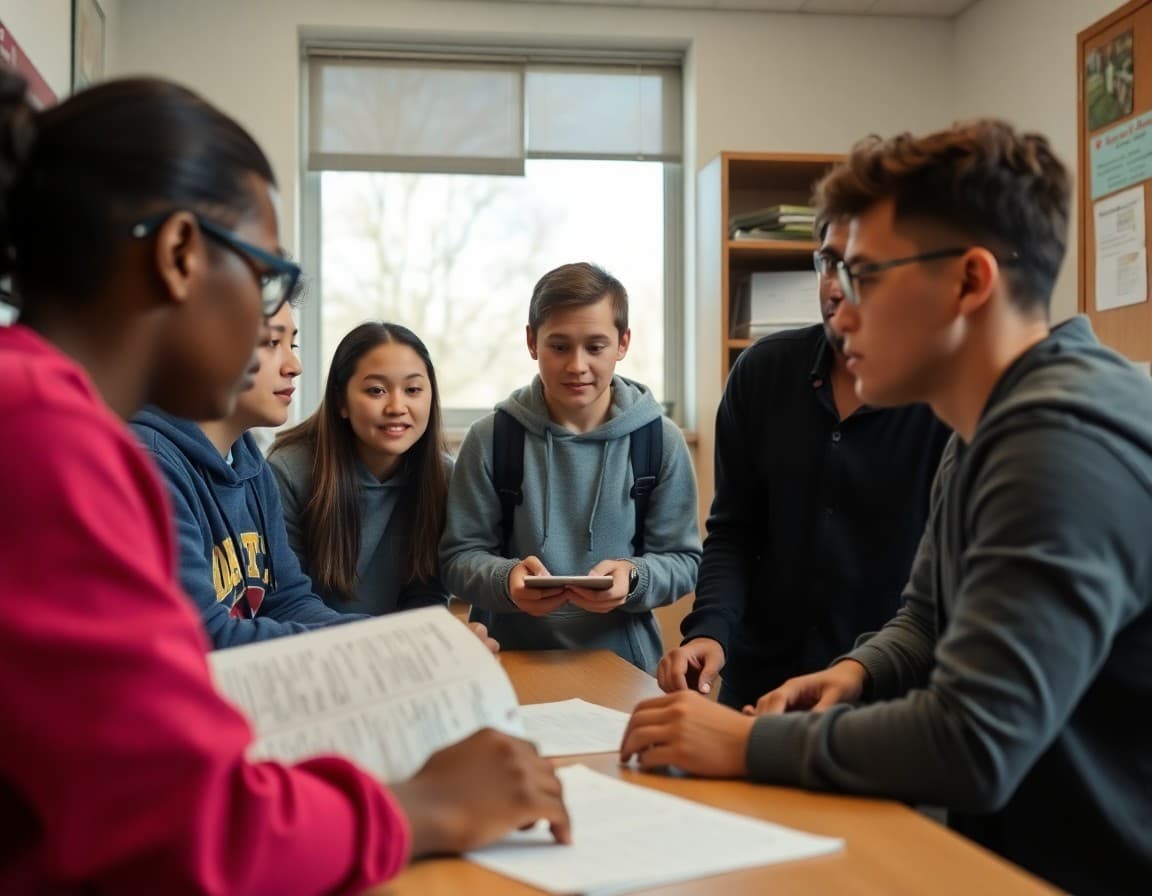
A career exploration newsletter from the school counselor accomplishes something no class period can do alone: it reaches families and students outside of school, at a moment when they are actually thinking about the future rather than focused on the immediate demands of the school day.
Why Career Exploration Belongs in the Counselor's Newsletter
Career decisions are among the most high-stakes choices students and families face, and most of them are made with inadequate information. A student who has heard about two career fields from two adults in their immediate family is working with a dramatically narrower picture than one who has been systematically introduced to careers across all 16 career clusters. The counselor's newsletter is one of the most efficient tools for broadening that picture because it reaches families, not just students, during evenings and weekends when conversations about the future actually happen.
The goal is not to direct students toward specific careers. It is to provide enough information about enough possibilities that every student can find something that connects to their genuine interests and abilities.
Interest Inventories: How to Use Them Well
Interest inventories are starting points, not answers. When a student completes the Holland RIASEC inventory or the O*NET Interest Profiler and discovers they score high on Investigative and Artistic dimensions, that information opens a conversation about what fields combine those orientations (research, design, science journalism, architecture) rather than providing a career prescription. The tool is only valuable if the counselor or the student does something with the results.
One practical approach: after students complete an interest inventory, have them identify three careers from their results that surprise them. Those surprises are worth investigating. A student who assumed they wanted to be a doctor but discovers they match strongly with scientific research careers might be redirecting toward something that fits them better. The inventory did its job.
Career Spotlight: A Monthly Newsletter Section That Works
A monthly career spotlight in the counselor's newsletter requires 200-300 words and produces measurable impact on student career awareness over time. The format: Name of the career field. What people in this field actually do (two to three specific examples). Typical educational pathway (high school courses, college major or certificate, licensure if applicable). Wage range for entry-level and mid-career positions. One local person in this field who is willing to talk to students. A link to one online resource for more information.
Over the course of a school year, a monthly career spotlight introduces students and families to eight to ten career fields they might not have considered. Over four years of high school, that is 32-40 career spotlights, which is a genuinely comprehensive career exploration curriculum delivered through a newsletter.
Informational Interviews: The Most Underused Tool
An informational interview is a 20-minute conversation with a professional working in a field of interest. It is the single most effective career exploration activity available to students, and it is almost entirely free. The challenge is logistics: students need a contact, a prepared question set, and a structured way to process and share what they learn.
The counselor's newsletter can facilitate this at scale. A section that says "This month we are looking for local professionals in [field] who are willing to answer five questions from a student by email or phone. If you work in this field or know someone who does, please email [address]" produces a list of willing contacts that benefits dozens of students across the year. Families who work in diverse fields are often happy to help and have never been asked.
A Template for the Career Exploration Newsletter Section
This section can run monthly with minimal modifications:
"Career Spotlight: Environmental Engineering. Environmental engineers design systems that protect air, water, and land from pollution. On any given day, they might test water samples from a local river, review a company's pollution compliance plan, or design a waste treatment facility. Getting there: take science and math through calculus in high school, then pursue a bachelor's in environmental engineering or civil engineering with an environmental focus (4 years). Starting salary: approximately $55,000/year. Mid-career: $85,000-$110,000/year. Want to know more? [Name], an environmental engineer at [local company], has offered to answer questions by email. Contact information: [email]."
Career Exploration for Different Grade Levels
Elementary counselors focus on career awareness: what different jobs exist, what skills different jobs require, and that every job contributes something to the community. Career day events and classroom visits from community helpers are the primary tools. Middle school counselors add exploration: structured interest inventories, job shadow days, and explicit connections between academic strengths and career areas. High school counselors move into planning: course selection, credential requirements, post-secondary research, and application support.
The counselor's newsletter reflects this progression. An elementary newsletter might feature a "career of the month" with a child-friendly description and a connection to a subject students are currently studying. A high school newsletter might feature a detailed career pathway breakdown for a specific field, including college major options, expected salary ranges, and specific schools or programs with strong outcomes in that area.
Connecting Career Exploration to Course Planning
The most practical outcome of career exploration is better course planning. A student who is interested in healthcare takes biology, chemistry, anatomy, and health sciences electives with a purpose rather than choosing classes at random. A student interested in technology takes computer science, statistics, and physics because they understand how those courses connect to their goals. When the counselor's newsletter shows these connections explicitly, students and families can plan with intention rather than fulfilling minimum requirements without direction.
Get one newsletter idea every week.
Free. For teachers. No spam.
Frequently asked questions
At what grade level should career exploration begin?
Career awareness can begin as early as elementary school, where students learn about different types of work and connect jobs to the skills and interests they already have. Middle school is the appropriate time for more structured career exploration, including interest inventories and job shadowing opportunities. High school is when career planning becomes specific: course selection, credential pathways, and post-secondary preparation. Starting earlier does not narrow options; it expands them by giving students more time to explore before decisions become consequential.
What free career exploration tools are available for school counselors?
Several high-quality free tools are available. The O*NET Interest Profiler (free from the US Department of Labor) matches interest patterns to career clusters. My Next Move provides the same data in a more student-friendly format. Career One Stop is a comprehensive database with labor market information, wage data, and credential requirements. The College Board's BigFuture connects career interests to college majors and programs. Most state departments of education also maintain career exploration platforms connected to state workforce data.
How can families support career exploration at home?
The most effective thing families can do is facilitate conversations about work. Not 'what do you want to be when you grow up' but 'what do you notice you are good at?' and 'what problems do you find yourself wanting to solve?' Arranging informal informational interviews with family friends in careers of interest is more valuable than most formal assessments. A student who spends an afternoon with an engineer, nurse, or small business owner comes away with more concrete career understanding than one who took a standardized interest inventory.
How does career exploration connect to academic planning?
Career exploration drives more meaningful academic planning than any other tool. A student who knows they are interested in environmental science takes biology, chemistry, and statistics with a purpose. A student who is interested in graphic design takes art, computer design, and media production rather than the minimum required courses. Connecting academic choices to career interests produces students who are more engaged in their coursework and more intentional in their planning than those who take whatever is required with no sense of purpose.
How can the school counselor use a newsletter to support career exploration for students and families?
A monthly career spotlight in the counselor's newsletter introduces one career field, the typical educational pathway, wage range, and a local professional families can contact for an informational interview. Daystage makes it easy to embed career interest survey links directly in the newsletter so students can complete a brief inventory from their phone and receive tailored suggestions by email. That kind of interactive newsletter content produces significantly more engagement than static articles about career planning.

Adi Ackerman
Author
Adi Ackerman is a former classroom teacher and curriculum writer with 8 years in K-8 schools. She writes about school communication, parent engagement, and what actually works in real classrooms.
More for School Counselors
Ready to send your first newsletter?
3 newsletters free. No credit card. First one ready in under 5 minutes.
Get started free